


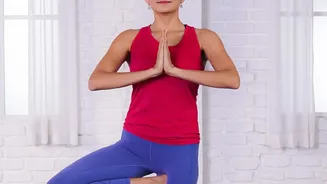
Feeling a little unsteady? Tree Pose, or Vrikshasana, is a foundational yoga posture that cultivates physical balance and mental focus. It's more than just standing on one leg; it's about finding stillness and strength from the ground up.
Mastering the Foundation: Basic Tree Pose
Vrikshasana,
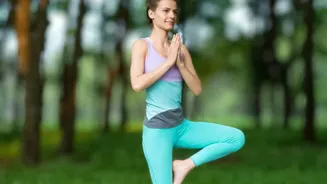
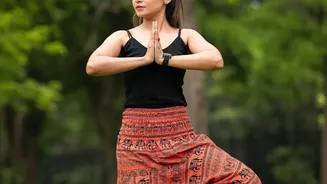
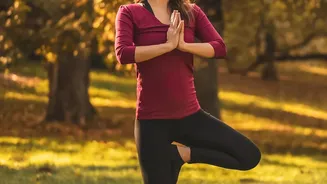
from the Sanskrit 'vriksha' (tree) and 'asana' (pose), mimics the steady, grounded nature of a tree. To begin, stand tall in Mountain Pose (Tadasana), with your feet a few inches apart. Shift your weight onto your left foot, pressing firmly into the ground. Bend your right knee and place the sole of your right foot on your inner left calf or thigh. A crucial safety tip is to always avoid placing your foot directly on the knee joint, as this creates pressure. Press the sole of your foot and your standing leg into each other to create stability. Bring your palms together at your heart in a prayer position (Anjali Mudra). Find a fixed point to gaze at in front of you—your 'drishti'—to help maintain balance. Hold for 20-60 seconds while breathing steadily, then gently release and repeat on the other side.
Tips for Stability and Common Pitfalls
Wobbling is a natural part of the learning process. To build a stronger foundation, focus on keeping the knee of your standing leg slightly soft, not locked. Gently engage your core muscles to help stabilize your torso and keep your hips level and facing forward. Many people lean into their standing hip, but try to actively lift out of the hip to engage your stabilizing muscles. If you're new to the pose, practicing near a wall for light support can build confidence. Remember to breathe; holding your breath creates tension, which is the enemy of balance.
Beginner Variation: Toes on the Ground
If lifting your foot feels too challenging at first, a fantastic modification is to keep your toes on the floor. From Mountain Pose, shift your weight to your standing leg. Bend your other knee out to the side and rest the heel of your lifted foot against your inner ankle, keeping the ball of the foot on the ground like a kickstand. This variation allows you to experience the hip-opening action and alignment of the pose without the full balance challenge. You can still practice bringing your hands to your heart and finding your drishti, building the muscle memory and focus needed for the full expression of the pose.
Intermediate Variation: Exploring Arm Positions
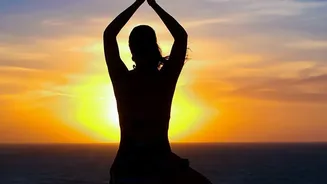
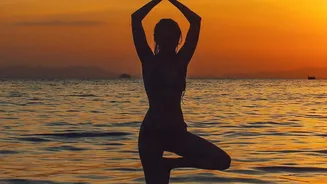
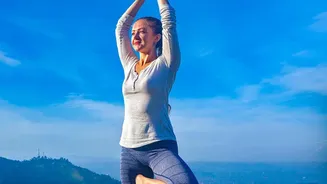
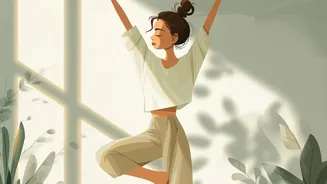
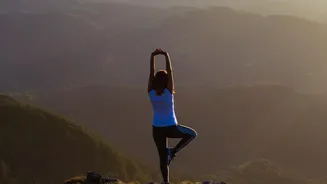
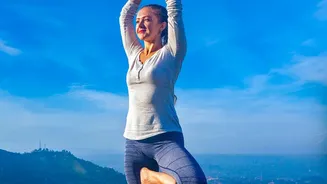
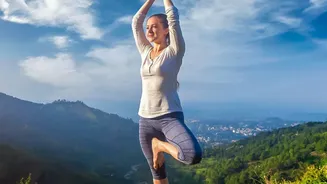
Once you feel stable in the basic Tree Pose, changing your arm position is a great way to explore the posture further. While hands at the heart is the classic expression, raising your arms overhead like branches reaching for the sun deepens the pose. You can keep your palms pressed together or separate them to shoulder-width apart. This not only challenges your balance differently but also creates a full-body stretch, lengthening the spine and opening the shoulders. Playing with different arm positions can change the entire feeling of the pose, from grounding to expansive.
Advanced Variation: Half_Lotus Tree Pose
For experienced practitioners with open hips, the Half_Lotus Tree Pose (Ardha Padmasana in Vrikshasana) offers a deeper stretch. To attempt this, carefully draw your lifted foot up and place the top of the foot onto the opposite hip crease, with the sole facing the sky. This variation requires significant hip flexibility and should never be forced. It intensifies the hip_opening benefits and is believed to help release emotional tension stored in the hips. Listen to your body, particularly your knee, and only proceed if you feel no pain. The focus remains on a steady stance and calm breath.
Challenge Variation: Swaying Side Bend
To playfully test your stability, you can add a side bend. Once established in Tree Pose with your arms overhead, release one arm down your side. On an inhale, lengthen your spine, and as you exhale, gently bend to the side, reaching any raised arm up and over. This movement shifts your center of gravity, forcing any small stabilizing muscles in your standing leg and core to work harder. Move slowly and with control, holding any side bend for a few breaths before returning to center and switching sides. This variation transforms any static pose into a dynamic balance challenge.