




The Problem with 'Boring' Cardio
Let’s be honest: the hamster wheel of traditional cardio can be mind-numbingly dull. Whether it’s 30 minutes on the elliptical or a steady jog on the treadmill, repetitive, single-plane movements can lead to mental burnout and fitness plateaus. Your body
is an incredibly adaptive machine. When it gets used to the same old routine, it becomes more efficient, meaning you burn fewer calories and see diminishing returns. Furthermore, this type of cardio often neglects a crucial component of overall fitness: strength. You might improve your endurance, but you aren't building the functional muscle that powers your daily life, protects your joints, and boosts your metabolism.
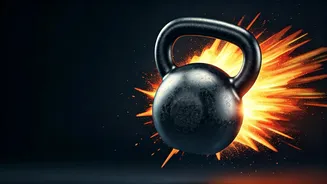
What Exactly Is a Kettlebell Flow?
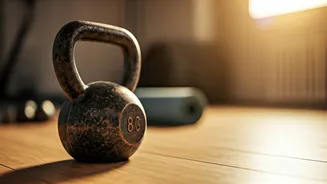
Imagine linking a series of exercises together so seamlessly that one movement melts into the next. That’s a kettlebell flow. It’s not about performing a set of an exercise, resting, and then starting the next. Instead, it’s a dynamic sequence, almost like a dance, where you transition from a swing to a clean, then to a squat, and perhaps into an overhead press without ever putting the kettlebell down. This continuous motion is what makes it so potent. It challenges your cardiovascular system relentlessly while forcing dozens of muscles to work in coordination. The focus shifts from counting reps to mastering the smooth, controlled transitions between movements, making it a mental workout as much as a physical one.
The Ultimate Two-for-One Workout
The magic of the kettlebell flow lies in its efficiency. You are getting a high-intensity cardio session and a full-body resistance workout simultaneously. Because the movements are compound (using multiple joints and muscle groups), you engage everything from your legs and glutes to your core, back, and shoulders. Your heart rate soars to keep up with the demand, providing cardiovascular benefits that rival any running session. Meanwhile, the weight of the kettlebell builds muscular strength and endurance. This combination is a game-changer for busy people. In just 15-20 minutes, you can achieve what might otherwise take twice as long with separate cardio and strength workouts.
Four Foundational Moves to Master
Before you can flow, you need to know the basics. Focus on mastering these four movements with proper form using a light kettlebell. 1. **The Kettlebell Swing:** This is the cornerstone. It’s a hip-hinge movement, not a squat. Stand with feet shoulder-width apart, hinge at your hips to send the kettlebell back between your legs, then explosively drive your hips forward to propel the weight up to chest height. Your arms are just guides; the power comes from your glutes and hamstrings. 2. **The Goblet Squat:** Hold the kettlebell by its 'horns' close to your chest. Keeping your chest up and back straight, squat down as if sitting in a chair. Go as deep as your mobility allows while keeping your heels on the floor, then drive back up to the starting position. 3. **The Kettlebell Clean:** A way to bring the kettlebell from the floor or a swing into the 'rack' position (resting on your forearm, tucked into your chest). It’s an explosive pull that finishes with you rotating your hand around the bell to catch it softly. 4. **The Strict Press:** From the rack position, engage your core, squeeze your glutes, and press the kettlebell straight overhead until your arm is fully locked out. Lower it back down with control.
Your First Beginner Flow
Once you feel comfortable with the individual moves, you can link them together. Here is a simple, effective flow to start with. Perform the entire sequence on one side before switching to the other. * Start with **one** Kettlebell Swing. * At the top of the swing, transition into a **Kettlebell Clean** to bring the weight to the rack position. * From the rack position, perform **one** Goblet Squat. * Drive up from the squat and go straight into **one** Strict Press. Lower the weight safely back down and repeat the sequence. Aim to perform the flow for 5-10 minutes, resting as needed but focusing on making the transitions smoother each time. This is where the real work—and fun—begins.