





Flexibility vs. Mobility: What’s the Difference?
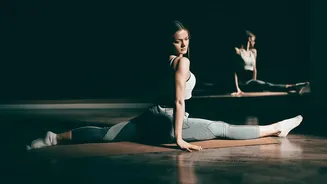
We often use the terms 'flexibility' and 'mobility' interchangeably, but they describe two distinct functions that are crucial for a healthy, pain-free body. Flexibility refers to the ability of your muscles to lengthen and stretch. Think of touching
your toes; that's primarily a display of hamstring flexibility. Mobility, on the other hand, is the ability to move a joint actively through its full range of motion. It's about control and strength within that range. You can be flexible without having good mobility, but true, functional movement requires both. Beginner yoga asanas excel at developing both aspects simultaneously. Static holds help lengthen muscle fibers, while flowing between poses trains your joints to move freely and with support.
How Asanas Build Everyday Resilience
A daily yoga practice gently pushes muscles and connective tissues to become more elastic. Regular, mindful stretching signals the nervous system to relax its grip on chronically tight muscles, which gradually increases your resting muscle length. This improved flexibility means your body is less prone to the strains and pulls that can happen during everyday activities, from picking up groceries to reaching for something on a high shelf. Poses like Downward-Facing Dog (Adho Mukha Svanasana) create a full-body stretch, lengthening the entire back of the body from the heels to the hands, targeting hamstrings, calves, and the spine all at once. This helps counteract the effects of prolonged sitting, which can lead to a stiff back and tight hips.
Unwinding Strain and Soothing the Nervous System
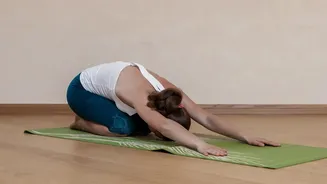
Much of the strain we feel isn't just muscular; it's neurological. Stress causes muscles to tighten as part of the body's 'fight or flight' response. Gentle yoga practices, with their focus on controlled breathing, activate the parasympathetic nervous system—the 'rest and digest' state. This conscious breathing helps lower stress hormones like cortisol, encouraging muscles to release deeply-held tension. Poses like Child's Pose (Balasana) are particularly effective for this. By folding the body inward, it creates a sense of security and calm, gently stretching the back, hips, and shoulders while quieting the mind. It's a physical and mental reset that helps drain away the day's accumulated stress and fatigue.
Foundational Asanas for Daily Practice
You don't need to perform complex postures to reap the benefits. Consistency with a few simple asanas can create profound change. A great starting point is the Cat-Cow Stretch (Marjaryasana-Bitilasana). This gentle flow mobilises the spine, relieving stiffness in the back and neck while syncing breath with movement. It warms up the entire body and improves circulation to the spinal discs. Following this with Downward-Facing Dog (Adho Mukha Svanasana) builds strength in the arms and shoulders while providing a deep stretch for the legs and spine. Finally, resting in Child's Pose (Balasana) offers a moment of restorative calm, releasing tension in the lower back and hips. These three poses alone form a powerful mini-sequence for daily maintenance.
Consistency Over Intensity
The key word in the headline is 'daily'. Lasting flexibility and mobility are not achieved through occasional, intense stretching sessions. In fact, pushing too hard, too soon can lead to injury. The body adapts more sustainably to frequent, gentle invitations to move. A consistent 15-minute practice each day will yield far greater long-term benefits than one gruelling 90-minute class per week. This regularity teaches your muscles and joints that this new range of motion is safe and accessible. Over time, what once felt stiff and restricted becomes fluid and easy, making your body feel more at home and strain-free in all its daily movements.