


A Mission to Decode Alien Skies
The Atmospheric Remote-sensing Infrared Exoplanet Large-survey, or Ariel, is a European Space Agency (ESA) mission with a truly ambitious goal. Scheduled for launch in 2029, its objective is to perform a chemical census of about 1,000 exoplanets. By focusing
on planets as they transit, or pass in front of, their host stars, Ariel will analyze the starlight that filters through their atmospheres. This technique allows scientists to detect the chemical fingerprints of gases like water vapor, carbon dioxide, and methane. This data will provide unprecedented insights into what these worlds are made of, how they formed, and how they evolve, effectively conducting planetary science far beyond our own solar system. The mission will target a wide variety of planets, from hot gas giants to rocky super-earths, creating a diverse catalogue of atmospheric compositions.
The Unseen Enemy: Stray Light
To detect the incredibly faint signals from exoplanet atmospheres, Ariel's instruments must be extraordinarily sensitive. This sensitivity, however, also makes the telescope vulnerable to a form of interference known as stray light. Stray light is any unwanted light that reaches the detector from sources other than the target star. This can include faint thermal glows from the telescope's own components or scattered light from bright objects outside its direct field of view. For a mission like Ariel, which aims for a stability of less than 100 parts per million, this stray light could easily overwhelm the delicate scientific data, rendering it useless. The first line of defense is a careful optical design, including baffles and a field stop, to block as much of this unwanted light as possible. But every surface, no matter how well-designed, can scatter light, making rigorous testing essential.
Simulating Deep Space on Earth
To ensure the telescope can perform as needed, engineers can't wait until it’s 1.5 million kilometers from Earth at the second Lagrange point (L2). Instead, they must replicate the harsh conditions of space on the ground. Recent testing activities for Ariel's components have taken place at facilities like the UK's National Satellite Test Facility (NSTF). These tests involve placing the hardware inside large vacuum chambers to simulate the airless environment of space. More importantly, they use powerful cryogenic systems to cool the components down to their operational temperatures, which for parts of Ariel is a frigid 40 Kelvin, or around -233 degrees Celsius. This is crucial because even small amounts of heat from the instruments can create infrared glow—a major source of stray light.
A Gauntlet of Vibration and Noise
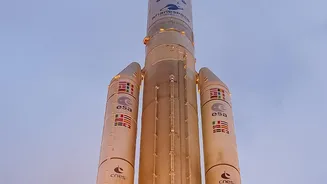
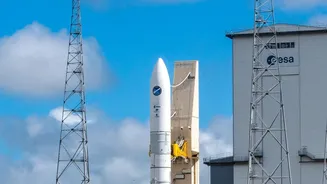
Before it can even begin its scientific work, the Ariel payload must survive the violent chaos of a rocket launch. To verify its structural integrity, a full-scale model of the payload was subjected to a gauntlet of mechanical tests. In the NSTF's acoustic chamber, an array of powerful speakers simulated the deafening roar of a launch, shaking the hardware with intense sound waves. Afterward, the model was placed on a massive shaker table that replicated the extreme vibrations it will experience as it rides its Ariane 6 rocket into space. Passing these demanding tests confirmed that the payload's design, which brings together components from over 50 institutions across 16 countries, is robust enough to reach its destination intact.
Paving the Way for Discovery
These meticulous and punishing ground tests are the unsung heroes of space exploration. By identifying and mitigating the risk of interference from stray light and proving the payload can survive its journey, engineers are giving the mission the best possible chance of success. The performance verification and calibration performed in these test chambers will ensure that when Ariel finally opens its eyes to the cosmos, the data it sends back will be clean, reliable, and ready to transform our understanding of the galaxy. This painstaking work on Earth is what ultimately enables the breathtaking discoveries in the heavens, ensuring that when we get our first detailed look at these distant atmospheres, we can trust what we see.