

The Hidden Vulnerability in the Sky
We rely on satellites for everything from GPS navigation and weather forecasts to global financial transactions and sensitive military commands. The common assumption is that this data is locked down tight. However, recent studies have revealed a shocking
reality: a significant portion of commercial and even government satellite traffic is transmitted without strong encryption. Researchers using off-the-shelf equipment have been able to intercept everything from in-flight Wi-Fi data to text messages and corporate network traffic. This highlights a major present-day vulnerability. But an even bigger threat looms on the horizon: quantum computers. These powerful machines, still in development, are predicted to one day be capable of cracking the mathematical problems that form the basis of our current encryption standards. This creates a scenario known as a "harvest now, decrypt later" attack, where adversaries can collect encrypted data today and simply wait for the technology to exist to unlock it.
What is Quantum Key Distribution?
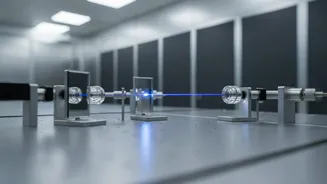
Imagine you and a friend need to create a secret key for a code. Instead of writing it down and risking someone finding the paper, you send it one bit at a time using special coins that shatter if anyone but the intended recipient looks at them. That, in a nutshell, is the core idea behind Quantum Key Distribution (QKD). QKD is a method of sharing an encryption key between two parties with security guaranteed by the laws of quantum mechanics. It works by sending single particles of light, called photons, that are encoded with bits of data. According to a fundamental principle of quantum physics, the very act of observing or measuring a quantum particle inevitably disturbs it. If an eavesdropper tries to intercept these photons to read the key, they will introduce detectable errors into the transmission. The two legitimate parties can then check for these errors. If they find any, they know someone was listening and can discard the compromised key and start over, ensuring a compromised key is never actually used.
Taking Unhackable Keys to Orbit
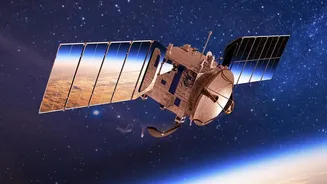
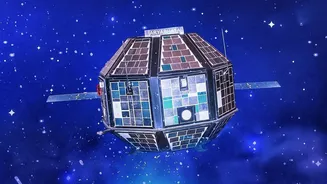
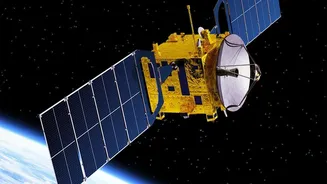
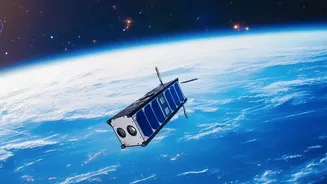
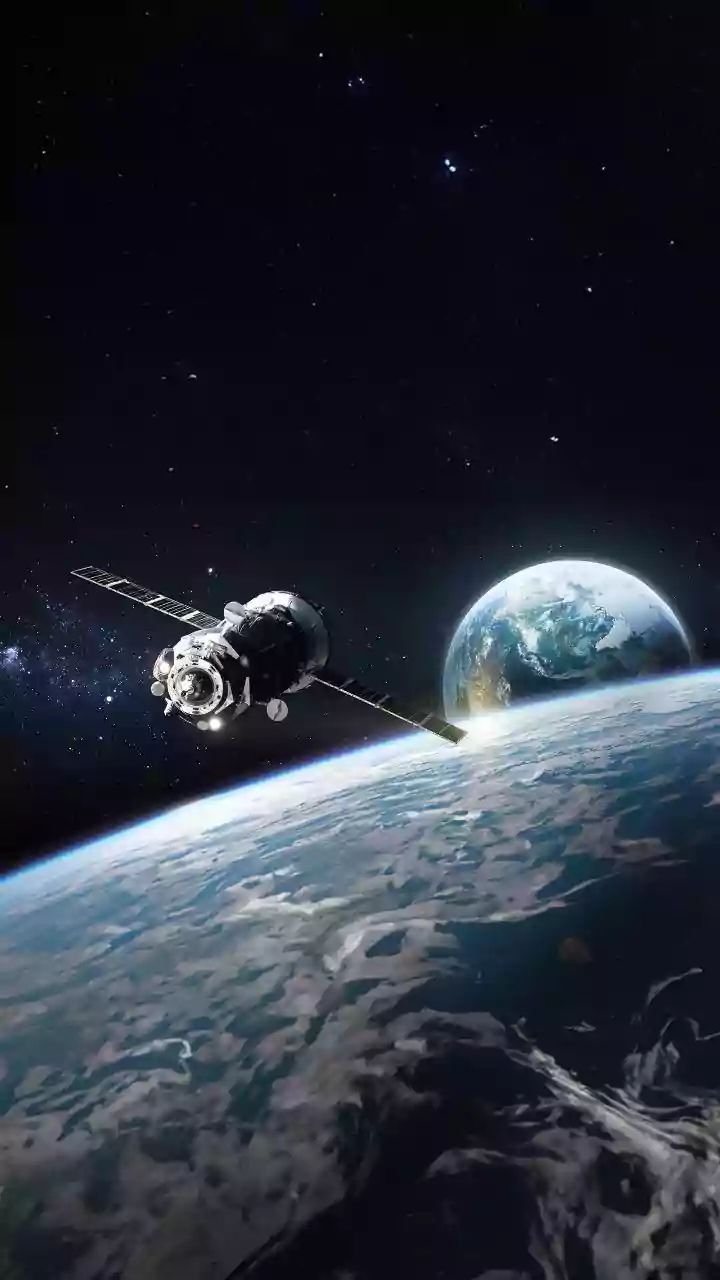
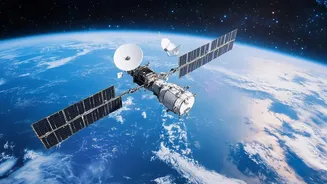
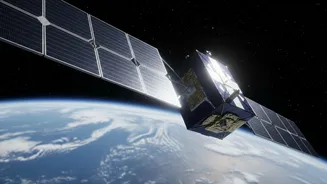
While QKD works well over dedicated fiber-optic cables, the signal degrades over long distances, limiting its practical range to a few hundred kilometers. To create a truly global secure network, we need to go to space. Satellites can act as trusted nodes, relaying quantum keys between ground stations thousands of miles apart. China has been a pioneer in this field, launching the Micius satellite in 2016, the world's first dedicated to quantum science experiments. The Micius satellite has successfully distributed quantum keys between ground stations in China and Austria—separated by 7,600 km—and even hosted an intercontinental video conference secured with a quantum key. However, the process is incredibly challenging. It requires aiming a laser beam with pinpoint accuracy from a fast-moving satellite to a tiny receiver on the ground, all while compensating for atmospheric interference that can disrupt the fragile quantum signal.
A New Global Space Race
The development of satellite QKD is more than just a technological upgrade; it's a new frontier in the global competition for strategic advantage. Recognizing the threat that quantum computers pose to all current forms of secure communication, nations are investing heavily in developing their own quantum-secure networks. China's early lead with the Micius and Jinan 1 satellites has demonstrated the feasibility of a space-based quantum internet. In response, other countries are accelerating their own programs. The UK launched its SPOQC satellite in early 2026 to test quantum transmissions, and Canada is partnering on a transatlantic quantum link. Companies like Boeing are also developing quantum satellite technology. The stakes are enormous, encompassing everything from securing financial systems and critical infrastructure to protecting classified government and military communications in a future where today's encryption is obsolete.