





Join an Ilish Festival Cruise in West Bengal
For Bengalis, monsoon is synonymous with Ilish, or Hilsa, the queen of fish. During the rainy season, when the fish migrates from the sea to the rivers to breed, its flavour is at its peak. Several operators in the Sundarbans and along the Ganges in Kolkata
organise 'Ilish Utsavs' (Hilsa Festivals) on river cruises. This experience combines scenic views of the rain-soaked delta with an elaborate feast. You can savour dozens of preparations, from the classic Shorshe Ilish (mustard gravy) and Ilish Paturi (steamed in banana leaf) to more inventive dishes like Hilsa biryani and smoked Ilish, all while floating on the very waters the fish calls home.
Forage for Wild Mushrooms in Goa
When the first thunderstorms hit Goa, local foragers head to the forests, especially near termite mounds, in search of a rare delicacy: wild ‘Roen Almi’ mushrooms. These cannot be cultivated and are available for only a few weeks a year, making them a prized seasonal ingredient. Instead of just ordering a dish, the real experience lies in visiting local markets like Mapusa or Banastarim to see them being sold wrapped in teak leaves. Many authentic Goan restaurants and homestays serve a special ‘Almi Tonak’, a rich, spicy curry made with roasted coconut and these earthy, meaty mushrooms. It's a true taste of the Goan hinterland during the rains.
Experience a Traditional Karkidaka Kanji Meal in Kerala
In Kerala, the monsoon month of Karkidakam is traditionally a time for rejuvenation, guided by Ayurvedic principles. The centrepiece of this is the ‘Karkidaka Kanji’, a medicinal rice porridge designed to boost immunity and aid digestion during the damp weather. This isn't a dish you'll find in most commercial restaurants. The true experience is at a homestay or a wellness retreat where the kanji is prepared with Navara rice, coconut milk, and a potent mix of herbs and spices like fenugreek, cumin, and dried ginger. Served steaming hot, it’s a nourishing meal that connects you to an age-old wellness tradition.
Master Patoleo Making in a Goan Home
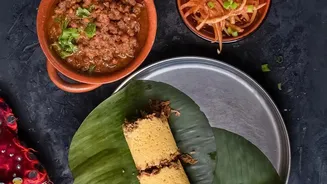
Another Goan monsoon icon, Patoleo, is a sweet dish intrinsically linked to the season. Fresh turmeric leaves, which grow abundantly only during the rains, are used to wrap a mixture of rice paste, freshly grated coconut, and dark palm jaggery. The parcels are then steamed, infusing the sweet filling with an incredible herbal aroma. While you can buy them at local bakeries, a more immersive experience is joining a cooking class or a homestay that teaches you to make them. The process of spreading the paste on the fragrant leaves and steaming them is a sensory delight tied to festivals like Nag Panchami.
Go on a Foraging Walk in the Western Ghats
The Western Ghats, a UNESCO biodiversity hotspot, comes alive during the monsoon with an abundance of wild, edible plants. Several eco-tourism groups and nature enthusiasts in regions like Amboli in Maharashtra or the hills of Karnataka lead foraging walks. On these guided tours, you can learn to identify and sustainably harvest seasonal greens, tubers, and herbs that are staples in local monsoon diets. The experience often culminates in a meal prepared using the foraged ingredients, offering a direct connection between the forest and your plate. It's an educational and delicious way to understand the region's ecology.
Savour Ghewar in the Bazaars of Rajasthan
In the otherwise arid state of Rajasthan, the monsoon brings the celebration of Teej, and with it, the seasonal sweet treat, Ghewar. This disc-shaped dessert made from flour and ghee is deep-fried to a honeycomb-like texture before being soaked in sugar syrup. The experience is not just eating it, but witnessing its creation in the bustling bazaars of Jaipur or Jodhpur. Huge pans of hot ghee are used to fry the batter, a spectacle in itself. Enjoying a fresh piece of plain, malai, or rabdi Ghewar while the rainy season offers a brief respite from the heat is a cultural and culinary highlight.
Discover Paa Saa in Arunachal Pradesh
For the truly adventurous palate, the monsoon in Arunachal Pradesh offers a taste of Paa Saa, a traditional fish soup from the Tai Khamti community. This is a warming, tangy broth made from minced fresh river fish, herbs, and a special ingredient—the juice from Khumpatt leaves, which lends a unique flavour. This dish is a community effort and is best experienced in a local home or at a community festival. It’s a nourishing, culturally rich soup designed for the cold, damp climate of the region and offers a glimpse into the unique culinary traditions of Northeast India.