




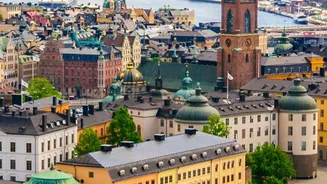
A Fortress of Royal Ambition
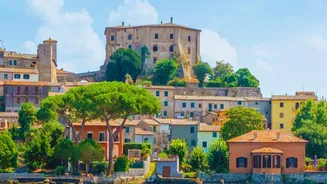
Vadstena Castle stands as a powerful symbol of royal authority, a masterpiece of Renaissance architecture that dominates the waterfront. Its story begins in 1545, when King Gustav I Vasa ordered its construction. Initially conceived as a fortress to defend
against enemies from the south, it was a clear statement of the crown's power during the turbulent era of the Protestant Reformation. This was a time when the king was consolidating control over both state and church, and placing such a massive fortress in a town famous for its spiritual significance was a deliberate political move. Over the following decades, Gustav Vasa’s sons transformed the defensive stronghold into a magnificent royal palace, completing the grand structure by 1620. Today, it is considered one of the best-preserved Renaissance castles in all of Scandinavia, its formidable walls and elegant towers reflecting in the calm waters of Lake Vättern.
The Spiritual Heart of Medieval Sweden
Just a short walk from the castle stands Vadstena Abbey, a testament to a different kind of power. This was the motherhouse of the Bridgettine Order, founded in the 14th century by Saint Bridget of Sweden, one of Europe's patron saints. After receiving a royal estate from King Magnus Eriksson in 1346, Bridget envisioned a new religious order. Though she would spend her later years in Rome and never see the monastery completed, her daughter, Catherine, brought her relics back to Vadstena and became its first abbess. The abbey, with its distinctive 'Blue Church', was consecrated in 1384 and quickly became the most important spiritual and cultural center in medieval Scandinavia. It was a major pilgrimage destination, drawing the faithful from across Europe and housing one of the largest libraries in the region.
A Town Forged by Crown and Cross
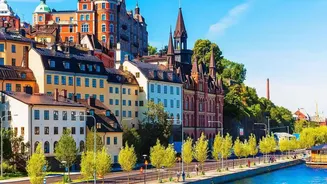
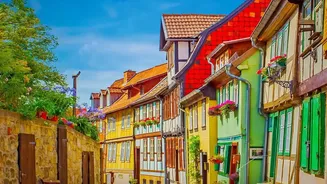
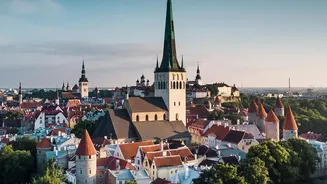
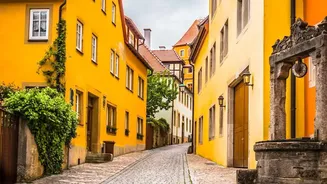
The town of Vadstena grew in the space between these two powerful institutions. Its well-preserved medieval street plan, which largely remains unchanged, is a testament to its rich history. Granted its city charter in 1400, Vadstena is home to Sweden's oldest town hall. Wandering its narrow alleys, you can find buildings from nearly every century since the 15th, including the Bishop's house from 1473 and merchant stone houses. The town's very existence is intertwined with the Abbey that spurred its growth and the Castle that later asserted royal dominance. Following the Reformation, the monastery's influence waned and it was officially closed in 1595. The castle itself was used as a royal residence only until 1716 before being relegated to a grain store. Yet both landmarks endured, defining the town's unique character.
Life on Sweden's Great Lake
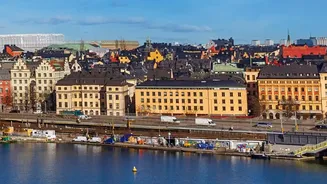
The history of Vadstena is inseparable from its location on the shores of Lake Vättern, Sweden's second-largest lake. The lake was a strategic asset, providing a defensive barrier for the castle and a vital artery for trade and pilgrimage in the medieval era. The beautiful lakeside setting adds a layer of serene beauty to the town's profound history. Today, the waterfront promenade connects the castle grounds to the monastery area, allowing visitors to walk between these two worlds. The marina, tucked into the castle's moat, is a hub of activity in the summer, with boats arriving from across the great lake. This blend of stunning natural scenery and deeply ingrained history makes Vadstena more than just a collection of old buildings; it's a living landscape where centuries of Swedish heritage are on full display, offering a tranquil escape into the past.