






A New Generation of Spacesuit
For the first time since the Apollo program ended in 1972, humanity is preparing to walk on the Moon. But the goals for NASA's Artemis missions are far more ambitious. Astronauts will be exploring the lunar south pole, a region of extreme temperatures
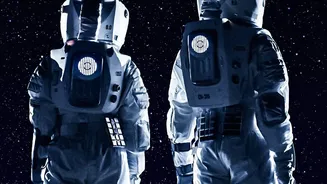
and permanently shadowed craters. This demanding environment requires a completely new generation of spacesuits. NASA has turned to the private sector, awarding contracts to two companies, Axiom Space and Collins Aerospace, to develop these critical systems. Axiom Space's design, the Axiom Extravehicular Mobility Unit (AxEMU), will be used for the Artemis III lunar landing. Collins Aerospace is developing a separate suit, building on its long history of providing spacesuits for NASA, from the Apollo missions to the International Space Station (ISS).
Designed for Unprecedented Mobility
The iconic images from the Apollo missions often feature astronauts awkwardly hopping or struggling to bend over. Their suits, while revolutionary for their time, were incredibly stiff and restrictive. The new Artemis suits are designed to solve this problem entirely. The AxEMU, for example, incorporates advanced bearings and highly articulated joints in the waist, shoulders, elbows, and knees. This design allows for a much greater range of motion, enabling astronauts to walk naturally, kneel down to inspect a rock, and twist their torsos. Early demonstrations have shown testers in a prototype suit squatting with ease, a feat that would have been impossible for an Apollo astronaut. This enhanced mobility is crucial for the complex scientific tasks planned for the Artemis missions, which will involve collecting geological samples and setting up equipment on the rugged lunar terrain.
More Than Just Flexibility
Beyond movement, the new suits are miniature, personalized spacecraft packed with modern technology. They are designed to fit a much wider range of body types for both male and female astronauts, a significant improvement over the custom-tailored but limited Apollo suits. Entry is also easier and safer; instead of struggling into separate top and bottom halves, astronauts will climb into the AxEMU through a rear-entry hatch. The helmets feature integrated HD cameras to send stunning point-of-view footage back to Earth, as well as powerful lights essential for navigating the dark, permanently shadowed craters of the lunar south pole. The outer layers, developed by Axiom in partnership with the fashion house Prada, are engineered to protect the suit's vital systems from the abrasive lunar dust and extreme temperatures, which can swing dramatically.
A New Commercial Model for Exploration
The development of these suits marks a major shift in how NASA operates. Instead of designing the hardware in-house, the agency is purchasing services from commercial partners. Under the Exploration Extravehicular Activity Services (xEVAS) contract, companies like Axiom and Collins are developing the suits with NASA oversight and will lease them to the agency for its missions. This model is intended to foster innovation, reduce costs, and allow the companies to offer their spacesuit platforms to a future market of private space stations and other commercial ventures. Axiom Space, for instance, envisions its AxEMU as a versatile platform that can be adapted for spacewalks in low-Earth orbit, lunar missions, and eventually, trips to Mars. This commercial approach is a cornerstone of the Artemis program, creating a sustainable presence in space by building a robust commercial space economy.