
The Foundation: Classic Tree Pose
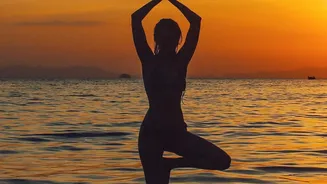
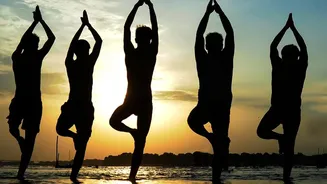
Before you can branch out, you need strong roots. Begin in Mountain Pose (Tadasana), standing tall with your feet together. Shift your weight onto your left foot, grounding it firmly. Bend your right knee and place the sole of your right foot on your inner
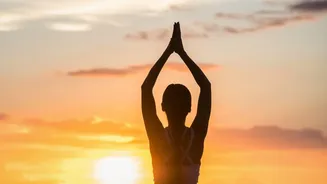
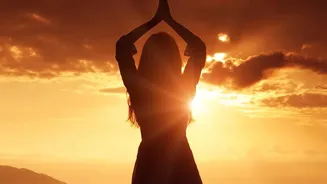
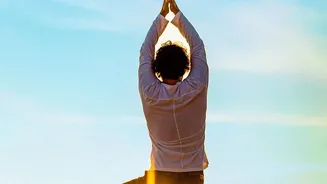
left ankle, calf, or upper thigh. A crucial point is to always avoid placing the foot directly on the knee joint, as this can create unsafe pressure. Press your foot and standing leg into each other to create a stable connection. Bring your hands to a prayer position at your heart or extend them overhead like branches. Fix your gaze (drishti) on a non-moving point in front of you to help maintain your balance. Hold for several deep breaths before gently releasing and repeating on the other side.
Finding Your Roots: Tips for Balance
Feeling wobbly is a normal part of the process; it's how your muscles learn to stabilise. To build a steadier foundation, focus on a few key actions. First, actively engage your core by drawing your abdominal muscles in towards your spine. This simple engagement helps stabilise your entire torso. Second, spread the toes of your standing foot to create a wider, more secure base. Imagine rooting down through all four corners of your foot. Don’t be afraid to use support. Practising next to a wall or a chair for light-touch support is a smart way to build confidence and muscle memory. Finally, remember that your breath is your anchor. A steady, calm breath leads to a steadier, calmer body and mind.
For Beginners: Building a Stable Base
If you're new to Tree Pose or just feeling unsteady, modifications are your best friend. The most accessible version involves keeping the toes of your bent leg on the floor like a kickstand, with your heel resting on your inner ankle. This provides maximum stability while still allowing you to practice the alignment. Another excellent option is to use a prop. Stand beside a wall and rest your fingertips on it for balance. You can also practice with a chair, lightly holding the backrest for support. These variations allow you to experience the hip-opening and strengthening benefits of the pose without the pressure of balancing unsupported.
Intermediate Variations: Branching Out
Once you feel stable with your foot on your inner thigh, you can begin to explore different 'branch' positions with your arms. Instead of keeping them at your heart, try extending them out to the sides in a 'T' shape, palms facing up for energy or down for grounding. For an added challenge, try a 'Windy Tree' by gently swaying your arms overhead as if they are branches moving in a breeze. This tests your core stability and focus. Another common variation is to add a gentle side bend. With your arms overhead, grasp your right wrist with your left hand and gently lean toward the left, creating a crescent shape with your body. This variation adds a wonderful stretch to the side of your torso.
Advanced Challenges: Reaching for the Sky
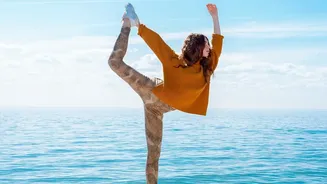
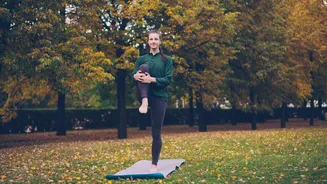
For seasoned practitioners looking to deepen the pose, the challenge often involves a more intense hip opener. Half-Lotus Tree Pose, or Ardha Padmasana in Vrikshasana, is a common advanced variation. In this version, you carefully bring the top of your lifted foot to rest on the opposite hip crease, with the sole of the foot facing the sky. This requires significant hip flexibility and should be approached with care. Other advanced options include closing your eyes to challenge your proprioception or incorporating a forward fold over the standing leg. These variations demand intense focus and a strong connection between mind and body, representing the full expression of balance and concentration the pose offers.
More Than a Pose: The Mental Benefits
The physical act of balancing on one foot has profound mental effects. Vrikshasana is a powerful tool for improving concentration and focus. To stay upright, your mind must remain in the present moment, calming mental chatter and reducing stress. This practice of steady awareness cultivates patience and builds confidence as you learn to embrace the wobbles without self-judgment. Over time, the ability to find a calm center amidst physical instability can translate off the mat, helping you navigate life's challenges with greater poise and emotional steadiness.