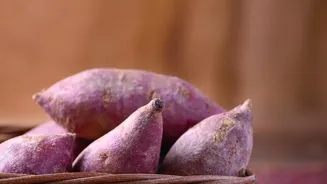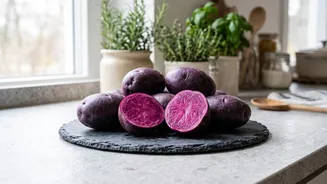




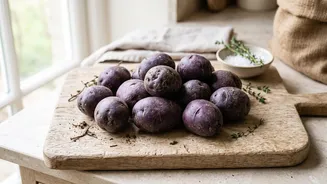

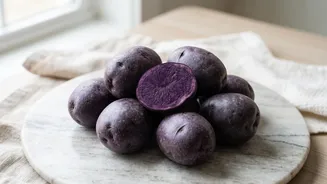
Meet Kufri Jamunia, the eye-catching new potato that’s making waves from farms to kitchens. With a vibrant purple hue inside and out, this spud is more than just a pretty face—it’s a nutritional powerhouse developed right here in India.
An Indigenous Innovation
Imagine a potato
the colour of a jamun. That's Kufri Jamunia for you. Developed by scientists at the ICAR-Central Potato Research Institute (CPRI) in Shimla, this variety is a significant achievement in Indian agriculture. Officially released in 2024, it was created by cross-breeding two different potato lines to produce a crop that is not only visually stunning but also packed with enhanced nutritional value. Unlike some coloured potatoes that only have pigment in the skin, Kufri Jamunia’s vibrant purple colour runs through its entire flesh. This is a key feature, as it means the beneficial compounds are not lost when the potato is peeled for cooking.
The Science Behind the Colour
The deep purple shade of Kufri Jamunia comes from natural pigments called anthocyanins. These are the same powerful antioxidant compounds that give blueberries, blackberries, and of course, jamuns their rich, dark colours. Antioxidants are important for our health as they help fight against oxidative stress in the body caused by free radicals. Anthocyanins are a type of flavonoid known for their potential health benefits. By developing a potato variety rich in these compounds, Indian researchers have created a staple food that does double duty, providing both energy and a boost of valuable phytonutrients.
A Nutritional Powerhouse
Kufri Jamunia isn't just rich in antioxidants; it's a biofortified crop designed to tackle 'hidden hunger'—a lack of essential micronutrients. Compared to conventional potatoes, it contains significantly higher levels of Vitamin C, iron, and zinc. Reports indicate that 100 grams of Kufri Jamunia contain about 42 mg of anthocyanins and an impressive amount of Vitamin C, alongside beneficial carotenoids. This enhanced nutritional profile makes it a valuable addition to the Indian diet, offering a way to boost micronutrient intake through a commonly consumed vegetable.
From the Farm to Your Plate
Beyond its nutritional benefits, Kufri Jamunia is a robust crop for farmers. It is a medium-maturing variety, ready for harvest in about 90-100 days. It has a high yield potential, producing 32-35 tonnes per hectare in standard conditions. Furthermore, it has demonstrated good storability and is recommended for cultivation across the North Indian plains, including states like Punjab, Haryana, Uttar Pradesh, and Bihar. Its development marks a step forward in creating crops that are not only nutritious for consumers but also productive and profitable for growers.
Cooking with a Splash of Purple
So, how do you cook with it? The good news is that Kufri Jamunia is incredibly versatile and its colour remains even after cooking. It has a mealy texture, which makes it suitable for a wide range of dishes. You can use it just like any other potato—for roasting, baking, boiling, or pan-frying. Imagine vibrant purple mashed potatoes, colourful potato salads, or eye catching sabzis and parathas. Researchers have even tested its use in creating purple flour, suji (semolina), and dalia, opening up possibilities for innovative food products like halwa, upma, and idli. Simple preparation methods like steaming or microwaving may help preserve more of its nutrients.