



A Sweet Discovery in a Cosmic Cauldron
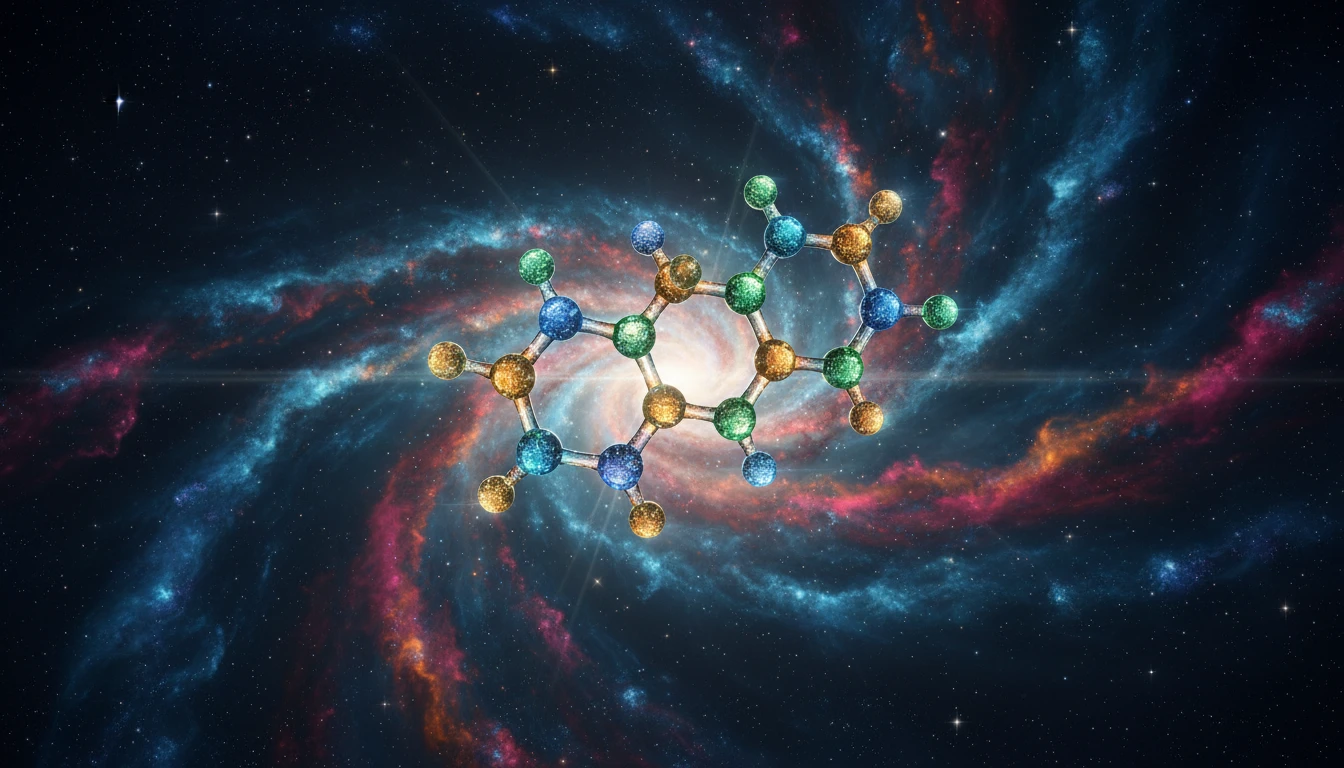
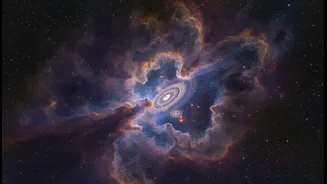
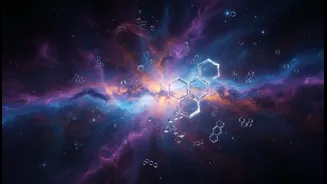
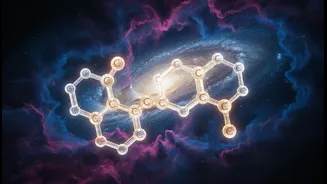
An international team of scientists has identified erythrulose, a four-carbon sugar, in a giant molecular cloud known as G+0.693−0.027. Located roughly 27,000 light-years away near the Milky Way's core, this region is a chaotic and dense stellar nursery
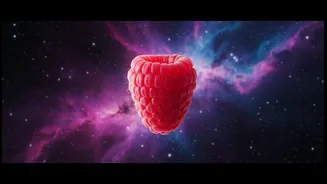
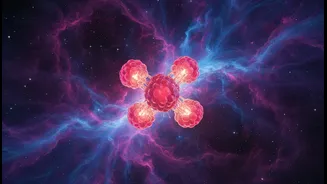
where new stars and planets are born. While on Earth erythrulose is a simple sugar found in raspberries and used in self-tanning cosmetics, finding it floating in space is a landmark discovery. Scientists have long hunted for sugars in the interstellar medium, the vast stretches of gas and dust between stars. Sugars had been found in meteorites before, but this is the first direct detection of a true sugar molecule in deep space, confirming they can form before planets even exist. The detection was made using powerful radio telescopes in Spain, which picked up the faint radio signals emitted by the rotating erythrulose molecules.
More Than Just a Sugar Molecule
Sugars are vital for life as we know it. They form the structural backbone of RNA and DNA, the molecules that carry genetic instructions. One of the biggest questions in astrobiology is how these essential building blocks appeared on the early Earth. Laboratory experiments simulating our planet's primordial conditions have struggled to produce sugars in the necessary quantities. This discovery provides a potential answer: they were delivered from space. Scientists estimate that millions of tonnes of erythrulose could have rained down on the young Earth during the Late Heavy Bombardment, a period of intense asteroid and comet impacts around four billion years ago. This suggests that our planet may have been seeded with prebiotic ingredients, rather than having to create them all from scratch.
The Importance of Being Left- (or Right-) Handed
The discovery also has profound implications for a deeper mystery known as homochirality. Many organic molecules, including sugars and amino acids, are 'chiral', meaning they exist in two mirror-image forms, like a pair of human hands. Curiously, life on Earth exclusively uses right-handed sugars and left-handed amino acids. Why this preference exists is a huge puzzle. Erythrulose is a chiral molecule, and finding it in interstellar space raises the tantalizing possibility that a preference for one 'handedness' might be established in these cosmic clouds, long before life begins. If so, this chemical bias could be passed on to newly forming planets, setting a structural template for life across the galaxy.
Rewriting the First Chapter of Life
Ultimately, the presence of interstellar erythrulose suggests that the chemical journey toward life doesn't start on a planet's surface, but much earlier, in the cold, dark clouds where stars are born. These findings push back the starting line for prebiotic chemistry by millions of years. The discovery was also surprising because researchers expected larger molecules to form by adding carbon atoms one at a time. The abundance of four-carbon erythrulose suggests a different, more efficient formation path might be at play, possibly by combining two-carbon molecules on the surface of icy dust grains. This opens up new avenues for understanding how the complex organic molecules necessary for life are synthesized throughout the cosmos. It implies that the raw materials for biology could be a common feature of star formation everywhere, not a lucky accident unique to our Solar System.