




The magic of a homemade scented candle is undeniable, but getting the fragrance just right can be tricky. Too much scent can ruin your creation, but with a little knowledge, you can achieve the perfect aroma every time. Here's how to master it.
The Golden Rule: Understanding Fragrance Load
In candle
making, 'fragrance load' is the most important term to understand when it comes to scent. It refers to the percentage of fragrance oil relative to the total weight of your candle. It's a precise measurement, not a guessing game. Many beginners assume more oil equals more scent, but the opposite is often true. Every type of wax has a maximum amount of fragrance it can hold before problems arise. Exceeding this limit doesn't make a stronger candle; it makes a faulty one. The key is to find the sweet spot within the recommended range.
Why More Fragrance Can Ruin Your Candle
Adding too much fragrance oil is a common mistake that leads to several issues. The most visible problem is 'sweating', where excess oil that the wax cannot absorb seeps out and pools on the surface of the candle. This not only looks messy but can also be a fire hazard, as the undiluted oil can ignite. Overloading can also clog the wick, leading to a weak flame, excessive smoke, and poor burning performance. Paradoxically, a candle with too much fragrance can have a weaker scent when lit, known as 'hot throw', because the flame can't get hot enough to properly disperse the aroma.
Know Your Wax and Its Limits
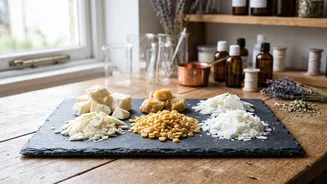
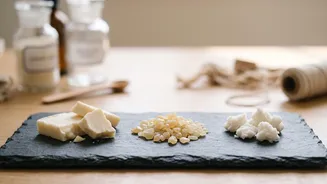
Different waxes have different properties and can hold varying amounts of fragrance. It is crucial to check the manufacturer's recommendation for the specific wax you are using. As a general guide, most soy waxes perform best with a fragrance load of 6% to 10%. Paraffin waxes can sometimes hold a bit more, up to 12%, while natural waxes like beeswax have a much lower capacity, often around 3% to 6%. Just because a wax has a maximum limit of 10% doesn't mean you should always use that much. Often, the best performance is found around 6% to 8%.
How to Calculate Fragrance Load Correctly
Accuracy is your best friend in candle making. Always measure your wax and fragrance oil by weight using a digital scale, not by volume with measuring spoons or cups. Oils and waxes have different densities, so volume measurements are unreliable. To calculate the right amount of fragrance, first decide on your total candle weight (wax + oil). Then, multiply that total weight by your desired fragrance load percentage. For example, for a 200g candle with an 8% fragrance load, the calculation is 200g x 0.08 = 16g of fragrance oil. You would then need 184g of wax (200g - 16g). Starting with a lower percentage, like 6% or 8%, is always a safe bet for your first test batch.
Timing and Temperature Are Everything
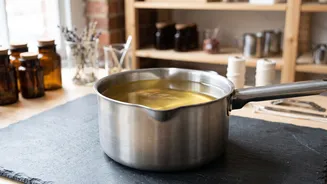
When you add the fragrance oil is just as important as how much you add. If the wax is too hot, it can burn off the lighter, more delicate notes of your fragrance, weakening the final scent. If it's too cool, the oil won't bind properly with the wax, leading to sweating and poor scent throw. A common recommended temperature for adding fragrance to most soy and paraffin waxes is around 185°F (85°C). After adding the oil, stir gently but thoroughly for a full two minutes to ensure the fragrance and wax molecules bond completely before you pour.
Don't Forget to Cure Your Candles
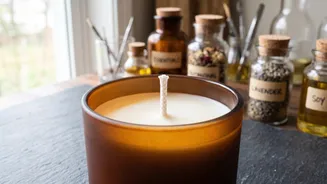
Patience is a virtue, especially in candle making. Once your candle is poured, it needs time to 'cure'. This is the period where the wax and fragrance oil fully bind together and the wax hardens completely. Lighting a candle too soon can result in a weak scent throw, leading you to mistakenly believe you didn't add enough fragrance. Most natural waxes, like soy, should cure for one to two weeks for the best results. Paraffin waxes require less time, usually 3–5 days. This resting period is a simple but critical step for achieving the strongest and most stable scent.