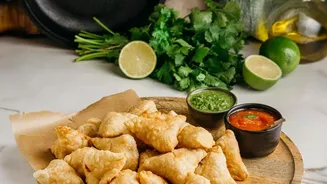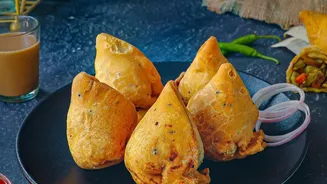

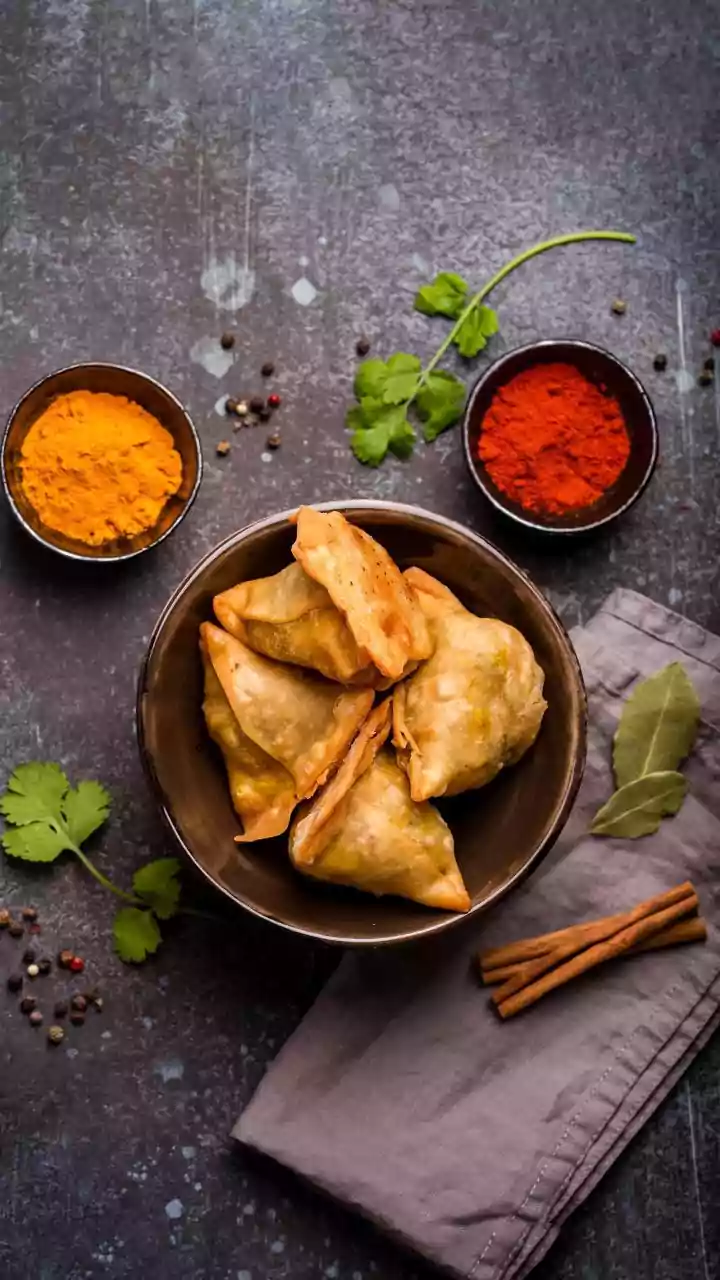
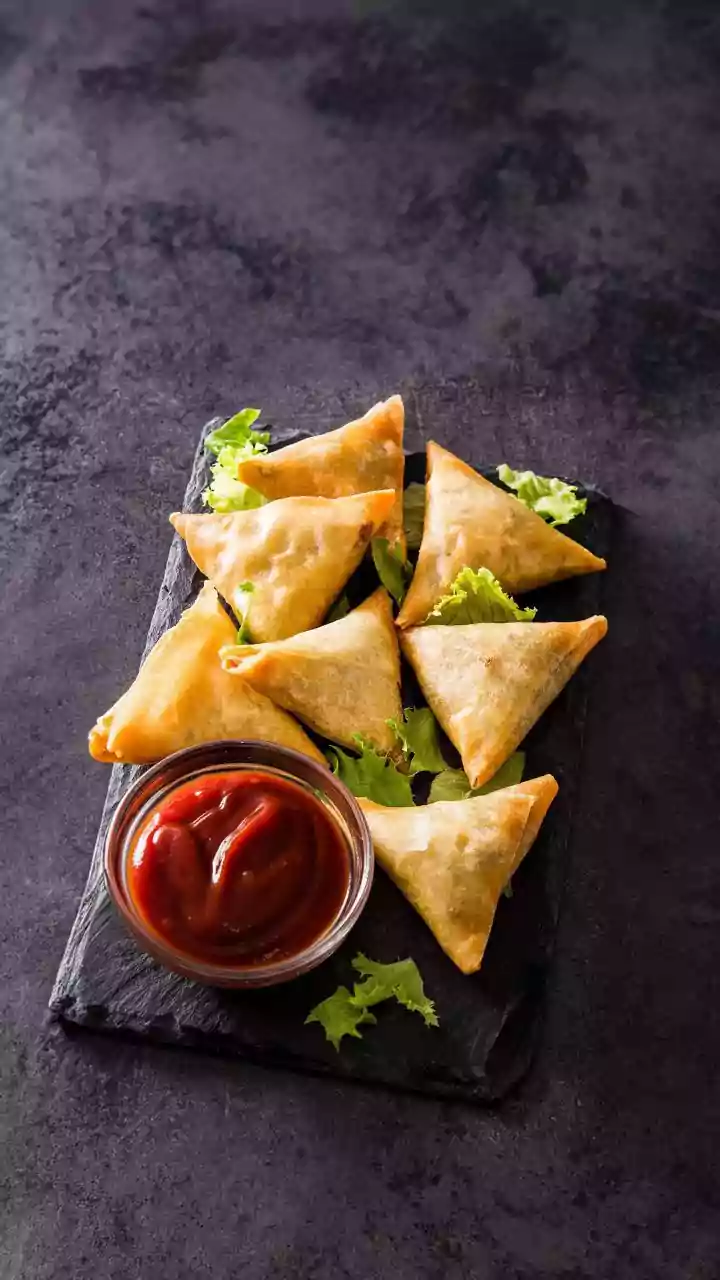
The Allure of a Healthier Snack
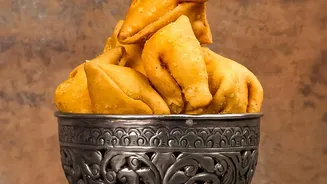
The primary motivation for swapping a deep fryer for an air fryer is health. Traditional samosas are submerged in hot oil, absorbing a significant amount of fat. This process can push a single medium-sized samosa to anywhere between 250 and 300 calories.
In contrast, an air fryer uses circulating hot air to cook, drastically cutting down on the oil needed. An air-fried samosa can contain 70 to 100 fewer calories and up to 60% less fat, with a calorie count closer to 180-220 per piece. This transformation makes it possible to enjoy the snack more often, without the heavy, greasy feeling and with fewer calories.
The Quest for the Perfect Crunch
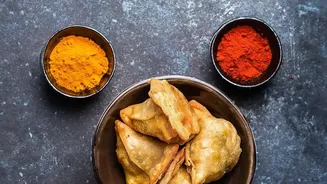
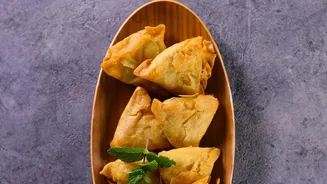
The biggest challenge for home cooks is replicating the unique texture of a deep-fried samosa. While a deep-fried pastry is often described as flaky and rich, an air-fried one leans towards being crispy and lighter, sometimes with a slightly drier texture. The key lies in technique. Many failed attempts at air-fried samosas result in a snack that's either burnt on the outside and cold inside, or pale and soft. The secret isn't to eliminate oil entirely, but to use it strategically. A light brush or spray of oil on the pastry is essential for achieving that coveted golden-brown and crispy finish.
Technique is Everything
To achieve success, several steps are crucial. First, always preheat your air fryer. Putting samosas into a cold basket causes them to steam rather than crisp. Second, do not overcrowd the basket. The samosas need to be in a single layer with space between them to allow the hot air to circulate freely and cook them evenly on all sides. Most recipes recommend cooking at a high temperature, such as 190°C to 200°C (375°F to 400°F), for a total of 15 to 20 minutes. Flipping the samosas halfway through the cooking time is a non-negotiable step to ensure both sides get equally crispy.
Dough and Filling Considerations
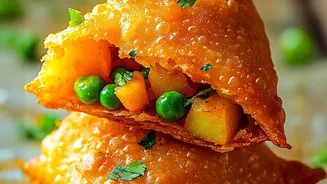
The pastry itself plays a significant role. If making dough from scratch, ensure it is firm and not sticky. Some cooks find that dough made for air frying benefits from a little extra fat (ghee or oil) kneaded in to prevent it from becoming too dry. If using store-bought wrappers like spring roll sheets, they adapt well to air frying but still need a light coating of oil. As for the filling, traditional potato and pea mixtures work perfectly. The main consideration is to use a filling that has been cooled down completely before you stuff the pastry; a warm filling can make the dough soggy and prevent it from crisping up properly.
Expert Tips for a Flawless Finish
To elevate your air-fried samosas from good to great, keep a few pro tips in mind. Ensure the edges of your samosas are sealed very well, using a little water as a sealant, to prevent the filling from bursting out during cooking. Don't be afraid to check on them; cooking times can vary between different air fryer models. Some chefs even employ a two-temperature method, starting at a lower heat (around 160°C) to cook the inside and then increasing to a higher heat (200°C) for the last few minutes to create a blistered, extra-crispy exterior. And if you're using frozen samosas, the same rules apply: preheat, don't overcrowd, and give them a light spray of oil to prevent the pastry from burning before the inside is hot.