



Cleopatra’s Legendary Milk Baths
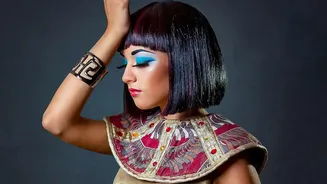
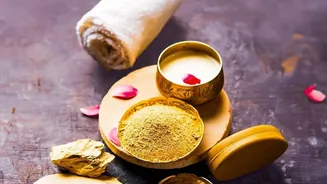
The legend of Cleopatra, the last queen of Egypt, bathing in milk and honey is one of history's most famous beauty tales. While it's hard to separate fact from embellishment, the science behind the ritual holds up. Milk contains lactic acid, a gentle
alpha-hydroxy acid (AHA) that exfoliates by dissolving the bonds holding dead skin cells together. This process reveals softer, brighter skin. Honey, a natural humectant, draws moisture into the skin and possesses antibacterial properties, making the combination a simple but effective treatment for a smooth, glowing complexion. This ancient practice, whether a daily reality for Cleopatra or not, laid the groundwork for today's chemical exfoliants and hydrating masks.
The Opulence of Mughal Empresses
In Mughal India, beauty was a grand affair. Empresses like Nur Jahan, renowned for her influence and elegance, championed ingredients that remain staples in South Asian beauty. She is famously credited with discovering rose oil when she noticed a fragrant film on the surface of her rose petal-filled bath. Rose water became essential for its cooling and toning properties. Saffron, the 'golden spice', was another prized ingredient, often mixed with milk to create facial masks for a radiant glow. Modern science confirms saffron's benefits; it is rich in antioxidants that fight skin damage, can help reduce hyperpigmentation, and possesses anti-inflammatory properties that calm the skin.
Marie Antoinette's Complexion Care
At the court of Versailles, France's last queen, Marie Antoinette, had her own set of beauty secrets. Though known for her lavish style, some of her recorded skincare was surprisingly DIY. One popular recipe attributed to her is a face mask made of cognac, egg white, powdered milk, and lemon juice. The logic was that the milk's lactic acid and the lemon's citric acid would exfoliate and brighten the skin. The cognac was believed to stimulate circulation and tighten pores, while the egg white helped to repair tissue. To keep her hands soft, she reportedly wore gloves filled with wax, sweet almond oil, and rose water to bed at night.
Imperial Secrets from the East
In China and Japan, royal courts also had their preferred methods for achieving flawless skin. For centuries, women have used rice water, the milky liquid left after washing rice, as a facial cleanser and hair rinse. Court ladies in Heian-era Japan were known to use it for long, healthy hair and soft skin. Rice water is rich in vitamins, minerals, and antioxidants like ferulic acid, which helps protect the skin from environmental damage. Another treasured ingredient was pearl powder. Wu Zetian, China's only female emperor, was said to use pearl powder on her skin to maintain a youthful appearance. Believed to stimulate collagen production and even out skin tone, finely milled pearl was used in both topical creams and taken internally.
From Ancient Palaces to Modern Products
The enduring appeal of these ingredients is a testament to their effectiveness. What was once reserved for royalty is now accessible to everyone. Today's skincare shelves are filled with products that echo these ancient traditions. We find lactic acid in our exfoliating serums, rose water in our facial mists, saffron in our brightening creams, and rice extracts in our cleansers. The historical link provides a powerful marketing story, but it’s the genuine, science-backed benefits of these ingredients that have allowed them to stand the test of time. These royal rituals remind us that nature has long provided the keys to effective skincare, blending ancient wisdom with modern formulation.