

What Exactly Are Soft Curtain Bangs?
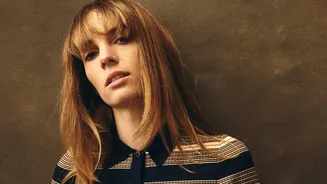
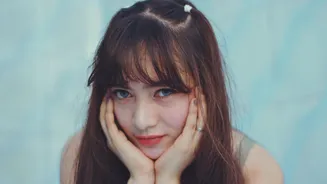
Inspired by 1970s style icons like Brigitte Bardot and Farrah Fawcett, curtain bangs are a fringe parted in the middle and swept to the sides, framing the face like a pair of curtains. The 'soft' variation takes this a step further. Instead of a distinct,
heavy fringe, soft curtain bangs are cut with feathered or razored ends that feel airy and blend seamlessly into the rest of your hair. The goal is to create a whisper-light effect that adds movement and draws attention to the cheekbones and eyes without a harsh, visible line. This makes them incredibly versatile and much easier to grow out than their bolder counterparts.
The Universal Appeal of a Softer Fringe
One of the biggest reasons for the curtain bang resurgence, seen on celebrities like Dakota Johnson and Sabrina Carpenter, is its versatility. Because the length and angle can be customised, this style works for nearly all face shapes and hair textures. For round or square faces, longer bangs that sweep past the cheekbones can create an elongating effect and soften angular features. For oval or heart-shaped faces, a slightly shorter fringe can highlight the eyes and balance a wider forehead. The soft, layered nature also means they integrate beautifully into almost any haircut, from a short bob to long, flowing layers.
Styling Idea: The Classic Blowout
The signature look for curtain bangs is a soft, bouncy sweep away from the face. The most reliable way to achieve this is with a blow dryer and a medium-sized round brush. Start with damp, towel-dried bangs. First, use a concentrator nozzle and brush your fringe forward and down to remove any cowlicks or natural partings. Then, take one side of the fringe, place the round brush underneath, and roll the hair away from your face while applying heat. Hold for a few seconds and, for extra staying power, let the hair cool on the brush before releasing. Repeat on the other side. This method creates lift at the root and that perfect 'swoop' shape.
Styling Idea: The Effortless Air-Dried Wave
Soft curtain bangs are ideal for those who prefer a low-maintenance routine. If you have natural waves or curls, you can simply let them air-dry. To enhance your natural texture, apply a small amount of curl cream or salt spray to your damp fringe. Use your fingers to shape the bangs, pushing them into their center-parted, swept-back position as they dry. For curly hair, a stylist may recommend cutting the bangs slightly longer to account for 'shrinkage' as the hair dries. This heatless method results in a relaxed, bohemian look that feels modern and undone.
Styling Idea: The Quick Flat-Iron Fix
For a quick touch-up on dry hair, a flat iron is your best friend. Instead of clamping and pulling the hair straight down, the key is to create a soft bend. Take one side of your fringe and clamp the flat iron near the root. As you glide it down the hair, twist your wrist away from your face in a gentle 'C' shape motion. This creates a soft curve rather than a stiff, straight finish. It’s a fast and effective way to redefine the shape in the morning or before heading out.
How to Talk to Your Hairstylist
Clear communication is key to getting the bangs you want. When you visit the salon, bring reference photos, but also be specific about the qualities you like. Use clear language like 'soft, wispy ends' and 'blended into my face-framing layers'. It's helpful to point to where you want the shortest piece of the fringe to fall—for example, at your eyebrow, cheekbone, or jawline. Mentioning your natural part and how much time you're willing to spend styling daily will also help your stylist tailor the cut perfectly for you and your lifestyle.