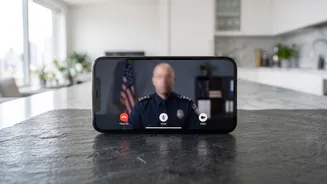






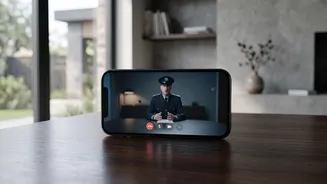

A video call from a supposed police officer, a fake arrest warrant, and urgent demands for money. This is the new face of cybercrime in India, a sophisticated scam known as 'digital arrest' that preys on fear to extort lakhs from victims.
What is a 'Digital Arrest' Scam?
A 'digital arrest'
is a complex cyber fraud where criminals impersonate law enforcement officials to trick you into believing you are under investigation for a serious crime. They might claim a parcel linked to your Aadhaar number contained illegal items or that your bank account was used for money laundering. The scammer then places you under 'digital arrest', ordering you to remain on a video call, isolating you from help, and creating immense psychological pressure. It's crucial to know that there is no legal basis for a 'digital arrest' in India; it is purely a method of intimidation and extortion.
The Anatomy of the Deception
The scam unfolds in carefully planned stages. It often starts with a call from someone pretending to be from a courier company or a telecom provider. This is quickly escalated to a video call with a person posing as a senior police or CBI officer, often wearing a makeshift uniform and sitting in a room designed to look like an official office. To build credibility, they present fake arrest warrants, FIRs, and other official-looking documents. The core of the scam is psychological manipulation; they use urgency, authority, and fear to overwhelm their victims, preventing them from thinking clearly or verifying the claims.
The Psychology of Fear and Authority
These scams are effective because they exploit deep-seated human responses to fear and authority. The sight of a uniform and the threat of legal action can trigger panic, causing people to act irrationally. Scammers explicitly instruct victims not to talk to family or friends, creating a high-pressure echo chamber where the victim feels trapped and alone. They leverage the fact that most people are not familiar with official police procedures and are naturally inclined to trust someone who appears to be an authority figure. This manufactured crisis is designed to short-circuit rational thought and push victims toward the scammer's one and only solution: paying money to make the problem disappear.
Red Flags: How to Spot the Scam
Real law enforcement agencies will never contact you via WhatsApp or video call to announce an investigation or demand payment. Any threat of 'immediate arrest' unless you transfer money is a major red flag. Legitimate authorities do not ask for payments via prepaid cards, cryptocurrency, or instant bank transfers to 'settle' a case. Be suspicious of anyone who insists you stay on the phone or video call and forbids you from speaking to others. Poor grammar in official-looking documents or pressure to act immediately are also tell-tale signs of a scam.
What to Do If You Are Targeted
If you receive such a call, the first and most important step is to disconnect immediately. Do not engage with them or share any personal information. No matter how convincing they sound, do not transfer any money. Remember, you are in control of the call and can hang up at any time. After disconnecting, block the number. Report the incident immediately to the National Cybercrime Reporting Portal by calling the helpline number 1930 or by visiting cybercrime.gov.in. Reporting the incident helps authorities track these criminal networks and prevent others from falling victim.