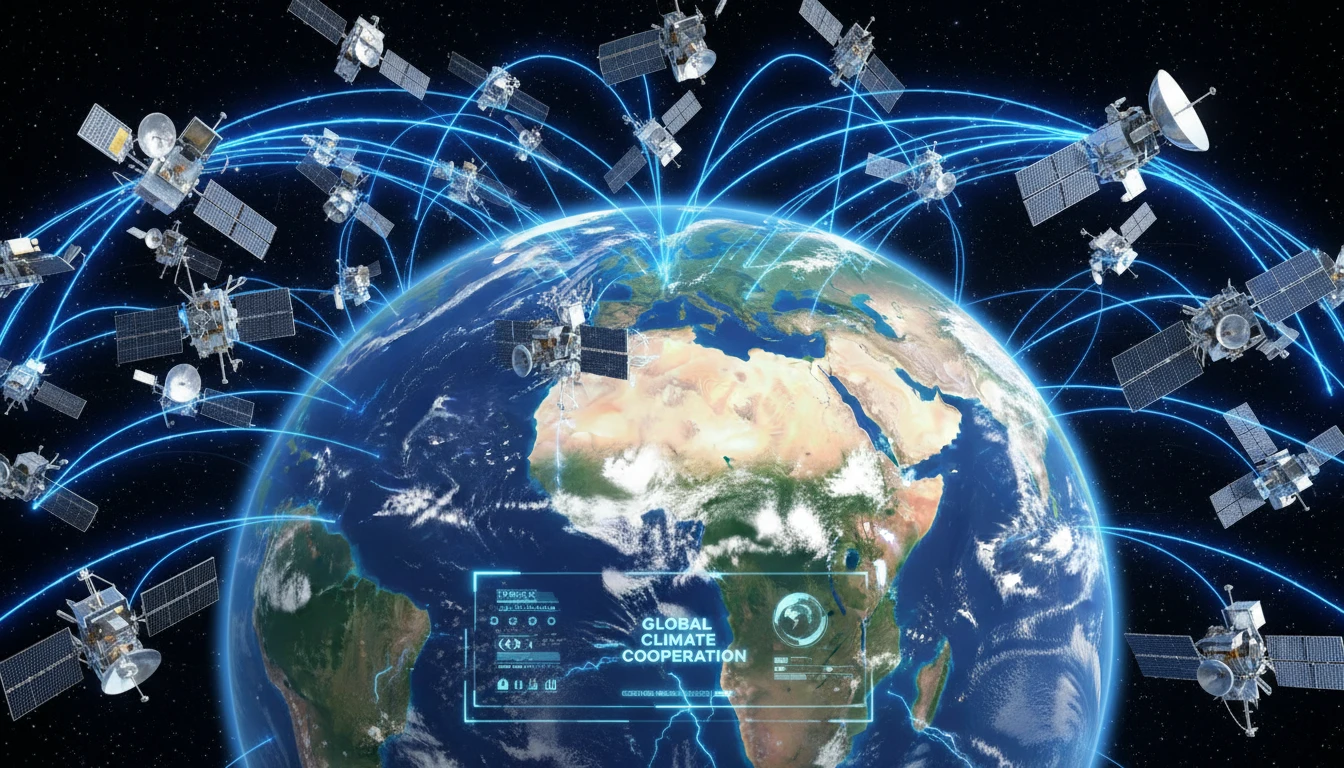









An Eye in the Sky for Earth's Problems
At its core, remote sensing is the science of getting information about Earth's surface without being in direct contact with it. Think of it as a planetary health check-up performed from space. Satellites equipped with advanced sensors can track a vast
range of environmental indicators, from the temperature of the oceans to the density of our forests. This technology allows scientists and governments to monitor deforestation, measure greenhouse gas concentrations, track melting glaciers, and predict extreme weather events with remarkable accuracy. By providing comprehensive data on a global scale, remote sensing has become an indispensable tool in understanding and fighting climate change.
The BRICS Space Handshake
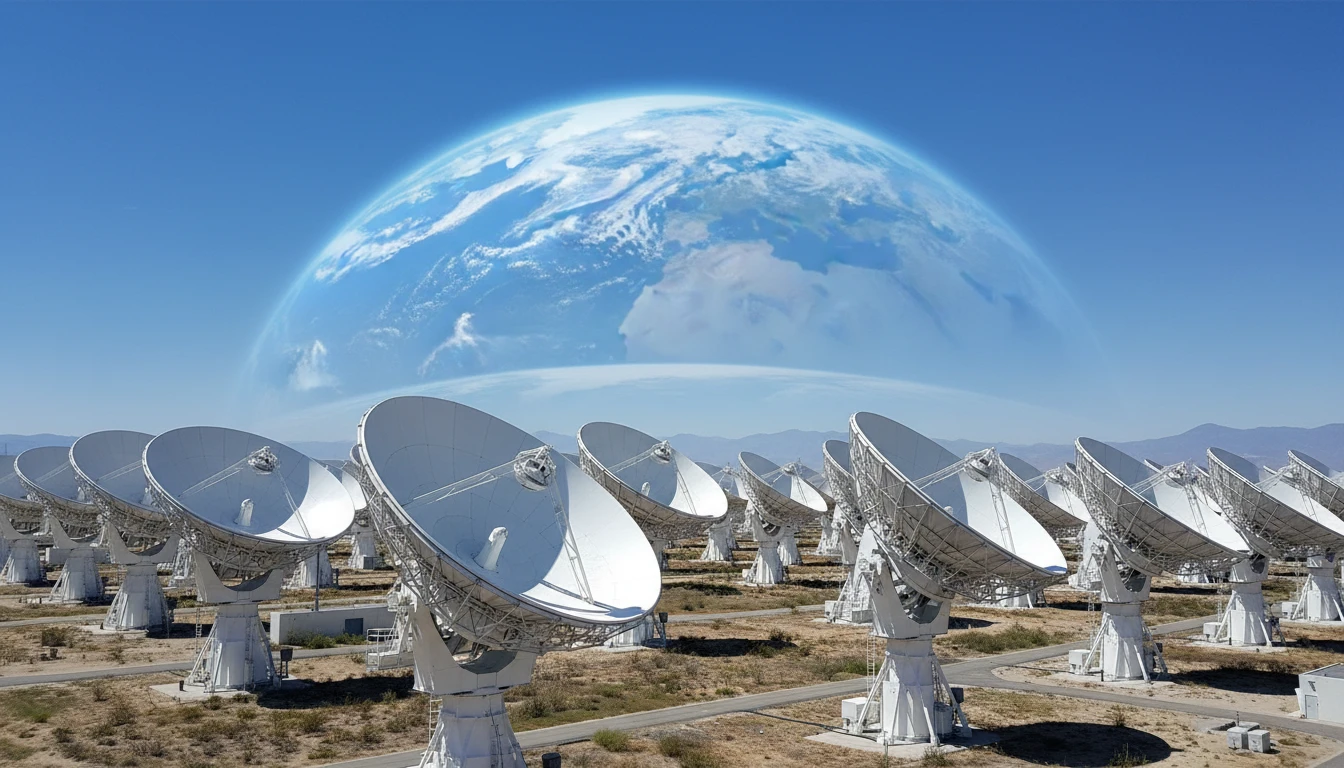
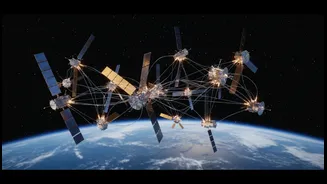
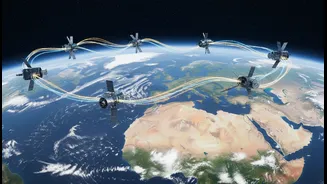
The BRICS bloc, now expanded to include several new members, has recognised the power of this technology. In August 2021, the space agencies of Brazil, Russia, India, China, and South Africa signed a landmark agreement to create a 'virtual constellation' of remote sensing satellites. This isn't about launching new hardware in unison, but rather a clever data-sharing mechanism. Each country contributes data from its existing satellites—like India's Resourcesat-2 and 2A, China's Gaofen-6, and Russia's Kanopus-V—to a shared pool. This allows member nations to access a wider range of data more frequently, effectively creating a powerful, combined toolkit for environmental monitoring.
From Data to Climate Action
The goal of this cooperation is explicitly to tackle shared challenges like climate change, natural disasters, and environmental protection. For instance, shared satellite imagery can help Brazilian authorities monitor deforestation in the Amazon, while Indian officials can access data to better manage water resources or respond to cyclones. In its first year, the original five members exchanged data covering over 27 million square kilometres. Russia has provided India with satellite information following earthquakes, and China has shared data to assist with environmental monitoring, demonstrating the real-world utility of the pact. This collaborative approach helps all member countries make more informed policy decisions, from sustainable agriculture planning to disaster risk reduction.
India's Pivotal Role and the Road Ahead
India, through the Indian Space Research Organisation (ISRO), has been a key driver of this initiative. In June 2026, ISRO hosted a meeting of BRICS space agency heads in Bengaluru to advance the cooperation. Discussions focused on amending the agreement to formally include new BRICS members like Egypt, Ethiopia, Iran, and the UAE, and deliberating the creation of a BRICS Space Council to provide a more structured governance framework. This meeting also showcased India's burgeoning private space industry, highlighting the nation's capacity for both international collaboration and commercial innovation. The cooperation continues to expand, with a recent agreement between Brazil, China, and South Africa to establish a network of telescopes for observing astronomical phenomena, building on the collaborative spirit.