




A New Generation of Observatory
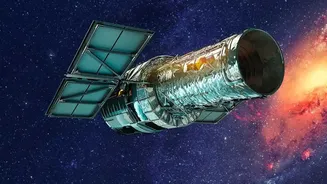
The Nancy Grace Roman Space Telescope is a next-generation space observatory scheduled to launch on August 30, 2026, aboard a SpaceX Falcon Heavy rocket. Named after Dr. Nancy Grace Roman, NASA’s first chief of astronomy and the “Mother of Hubble,” this
mission is engineered to tackle some of the biggest questions in astrophysics today. It will explore the secrets of dark energy and dark matter, search for and image planets outside our solar system, and investigate infrared astrophysics. The telescope features a 2.4-meter primary mirror, the same size as the Hubble Space Telescope's, but it is coupled with instruments that give it a vastly different and complementary view of the cosmos. With a planned five-year primary mission, Roman is set to become a crucial tool for astronomers worldwide.
Seeing the Bigger Picture
Roman's greatest strength is its incredible field of view. Its primary science instrument, the Wide Field Instrument (WFI), is a 300-megapixel camera that can capture an area of the sky at least 100 times larger than Hubble's infrared camera in a single snapshot. To put that in perspective, a single image from Roman will contain the detail equivalent to 100 pictures from Hubble. This panoramic capability will allow the telescope to survey huge swaths of the sky with unprecedented speed and efficiency. Where Hubble and the James Webb Space Telescope (JWST) provide deep, narrow views—like looking at the sky through a drinking straw—Roman provides the wide-angle context, mapping the cosmic forest to find the most interesting trees for other telescopes to study in more detail.
The Hunt for Dark Energy and Exoplanets
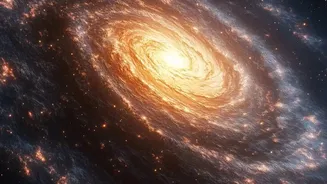
The telescope has two primary scientific goals. The first is to probe the nature of dark energy, the mysterious force believed to be causing the universe to expand at an accelerating rate. By mapping the distribution of a billion galaxies and tracking their movement over cosmic time, scientists hope to understand how dark energy has shaped the universe's evolution. The second major goal is to discover thousands of new exoplanets. Roman will conduct a massive survey using a technique called gravitational microlensing. This method can detect planets far from their host stars, including rogue planets that wander through space untethered to any star. Roman is expected to find thousands of new worlds, dramatically expanding our census of planetary systems in the Milky Way.
How It Differs from Hubble and Webb
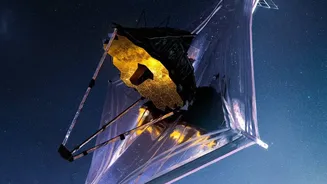
While Roman shares a legacy with Hubble and Webb, it is not a replacement but a powerful complement. Its 2.4-meter mirror is the same size as Hubble's, and it will deliver images with similar sharpness. However, its Wide Field Instrument gives it a survey speed 1,000 times faster than Hubble. The James Webb Space Telescope has a much larger mirror (6.5 meters) and can see further into the infrared, allowing it to peer deeper into the early universe. Roman's strength lies in its breadth. It will identify countless targets—from distant supernovae to nearby exoplanets—that Webb can then inspect in greater detail. Think of Roman as the scout that draws the map, and Webb as the specialist that performs the in-depth analysis.
A New Cosmic Tool
In addition to its wide-field camera, Roman carries a technology demonstration called the Coronagraph Instrument. This device is designed to block the overwhelming glare from a star, allowing the telescope to directly image large, Jupiter-sized planets orbiting nearby. This is an incredibly difficult technical challenge, and the instrument will be the first of its kind in space, paving the way for future missions that could one day take direct pictures of Earth-like planets. This instrument, combined with the power of the Wide Field Instrument, positions Roman to not only expand our knowledge but also pioneer the technologies needed for the next generation of discovery.