







The Cardio Conundrum
For decades, the go-to advice for cardiovascular health and fat loss was steady-state cardio: long sessions of running, cycling, or using the elliptical at a moderate pace. While effective, this approach has one major drawback—it consumes a lot of time.
In our increasingly busy lives, finding 45 to 60 minutes for a workout several times a week can feel like an impossible task. This time commitment often becomes a barrier, causing many to skip their cardio sessions altogether. The result is frustration and a feeling that fitness is an all-or-nothing game that’s hard to win.
What Is a Kettlebell Flow?
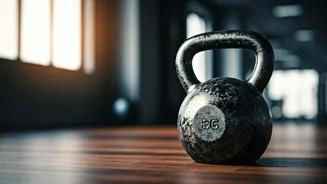
Enter the kettlebell flow. A flow is a series of kettlebell exercises performed back-to-back in a smooth, seamless sequence. Unlike traditional sets and reps where you rest between exercises, a flow links movements together. For example, you might transition from a swing directly into a clean, then into a squat, and finally into an overhead press without ever putting the kettlebell down. This continuous motion is what makes it a 'flow.' It’s a dynamic, dance-like routine that challenges your coordination, strength, and endurance all at once. The goal is to move with grace and control, making each transition as fluid as the last.
The Science of High-Intensity Efficiency
The magic behind kettlebell flows lies in a concept called metabolic conditioning (MetCon). By performing compound movements with little to no rest, you skyrocket your heart rate and oxygen consumption. This creates an effect similar to High-Intensity Interval Training (HIIT). Research has consistently shown that this style of training is incredibly efficient. A landmark study by the American Council on Exercise (ACE) found that a 20-minute kettlebell workout could burn over 20 calories per minute—equivalent to running a six-minute mile. Furthermore, this intense effort creates a significant 'afterburn effect,' or Excess Post-exercise Oxygen Consumption (EPOC), where your body continues to burn calories at an elevated rate for hours after you’ve finished your workout. This is something that moderate, steady-state cardio simply can’t match in a short timeframe.
A Full-Body Workout in One
Traditional cardio primarily targets your heart and lungs, but it does little for building muscle. Kettlebell flows, on the other hand, are a perfect fusion of strength training and cardiovascular work. The ballistic movements, like swings and cleans, build explosive power in your hips and glutes. The slower, grinding movements, like squats and presses, build muscular strength and stability throughout your entire body. You’re working your legs, core, back, shoulders, and arms simultaneously. This means you’re not just improving your heart health; you’re building a stronger, more resilient, and more functional body in one single, efficient session.
A Beginner's Kettlebell Flow to Try
Ready to give it a shot? Start with a light kettlebell to master the form. Perform this three-move flow for 5-10 minutes, focusing on smooth transitions. Rest for 60-90 seconds between rounds.
1. Kettlebell Swing: Start with the kettlebell between your feet. Hinge at your hips, keeping your back straight, and hike the bell back. Explosively drive your hips forward to swing the bell up to chest height. Let gravity bring it back down into the next rep.
2. Kettlebell Clean: From the top of your last swing, as the bell descends, guide it into the 'rack' position—resting softly on your forearm, with your fist under your chin and elbow tucked in. Absorb the momentum with your legs.
3. Goblet Squat: From the rack position, hold the kettlebell with both hands. Keeping your chest up and back straight, squat down until your hips are parallel to or below your knees. Drive through your heels to stand back up.
After the squat, you can safely set the bell down or transition back into a swing to begin the next repetition of the flow.
Form and Safety First
While incredibly effective, kettlebell training requires proper form to prevent injury. Start with a weight that feels manageable, not heroic. Your focus should be on mastering the movements before increasing the load. Keep your core engaged and your spine neutral, especially during swings and hinges. If you are new to kettlebells, it is highly recommended to work with a certified trainer for at least one session. They can provide personalised feedback on your form and help you choose the right weight, ensuring your journey into flows is both safe and effective.