

What Is That Moving Star?
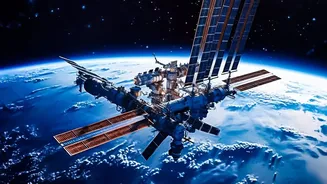
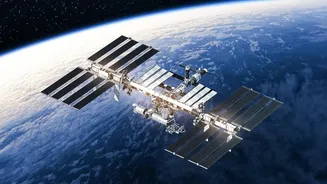
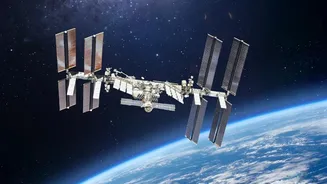
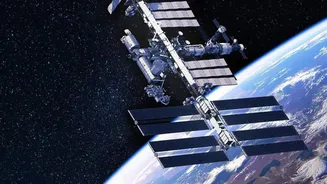
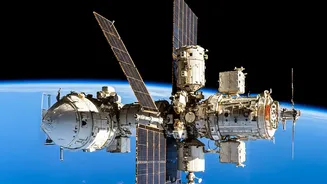
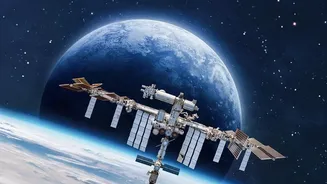
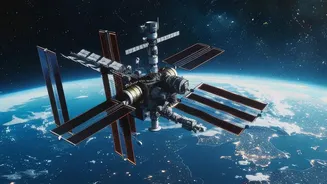
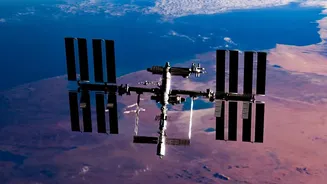
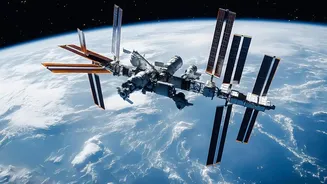
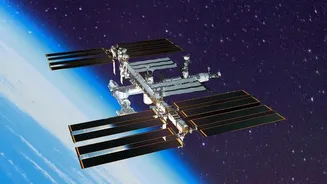
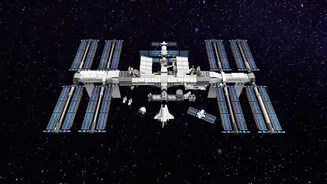
If you notice a bright, steady point of light gliding silently across the night sky, you are likely not seeing a plane or a star. You are probably witnessing the International Space Station. Orbiting the Earth at a blistering speed of about 28,000 kilometres
per hour, the ISS completes roughly 16 orbits every single day. It is visible to the naked eye because its massive solar arrays and modules reflect sunlight, making it one of the brightest objects in the night sky, aside from the Moon. The best times to see it are in the hours just before sunrise or after sunset, when the sky on the ground is dark but the station, flying at an altitude of over 400 kilometres, is still bathed in sunlight.
Prime Viewing Windows This August
Throughout the remainder of August 2026, there will be numerous opportunities for stargazers across India to spot the ISS. These passes will primarily occur in the pre-dawn hours. Because the station travels at such a high speed, each viewing opportunity is brief, typically lasting between three to seven minutes. During this window, you can watch it appear on the horizon, travel steadily across the sky, and then disappear as it moves into Earth's shadow or dips below the opposite horizon. Since India lies well within the station's orbital inclination of 51.6 degrees, high-altitude and very bright passes are common, sometimes appearing to travel almost directly overhead.
How to Find Timings for Your City
Pinpointing the exact moment the ISS will pass over your specific location is simple. The most reliable tool is NASA's own 'Spot The Station' service. By visiting the website, you can select India from the country list and then choose your nearest major city. The site provides a list of upcoming sighting opportunities, including the exact local time, duration of visibility, the maximum height it will reach in the sky, and the direction to look for its appearance and disappearance. For those who prefer using their smartphones, there are several highly-rated apps available. NASA has an official Spot the Station app, while other popular choices like ISS Detector, Heavens-Above, and ISS Live Now also provide detailed tracking, alerts for upcoming passes, and even augmented reality features to help you orient your view.
What to Expect and How to Watch
You do not need a telescope or binoculars to see the ISS. It is easily visible to the naked eye as a consistently bright, white light moving at a steady pace. Unlike an airplane, it does not have blinking lights. For the best experience, find a viewing spot with a clear view of the horizon, preferably away from the glare of city lights, although it is bright enough to be seen from urban areas. Give your eyes a few minutes to adjust to the darkness. When the viewing time arrives, look towards the direction indicated by your tracking app or website. Remember that the pass might be low on the horizon or high overhead, so the 'maximum height' information is key. A 90-degree height means it will be directly above you, while lower degrees indicate it is closer to the horizon.
More Than Just a Light in the Sky
As you watch that silent dot of light glide by, remember that you are witnessing a continuously inhabited human outpost in space. For over two decades, the ISS has been home to astronauts from around the world who live and work while orbiting our planet. They conduct vital scientific research in microgravity, studying everything from human health to climate patterns, with the goal of benefiting life on Earth and preparing for future missions to the Moon and Mars. Each pass is a fleeting chance to connect with one of humanity's greatest collaborative achievements, a floating laboratory and a home for the small number of people living off our planet.