

The Gift That Keeps on Giving
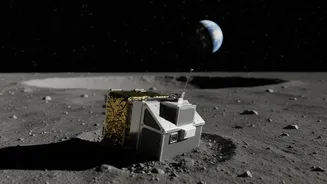
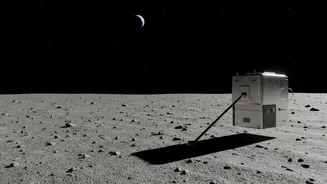
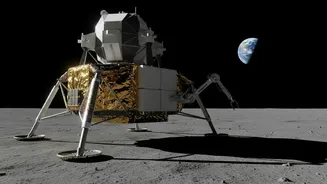
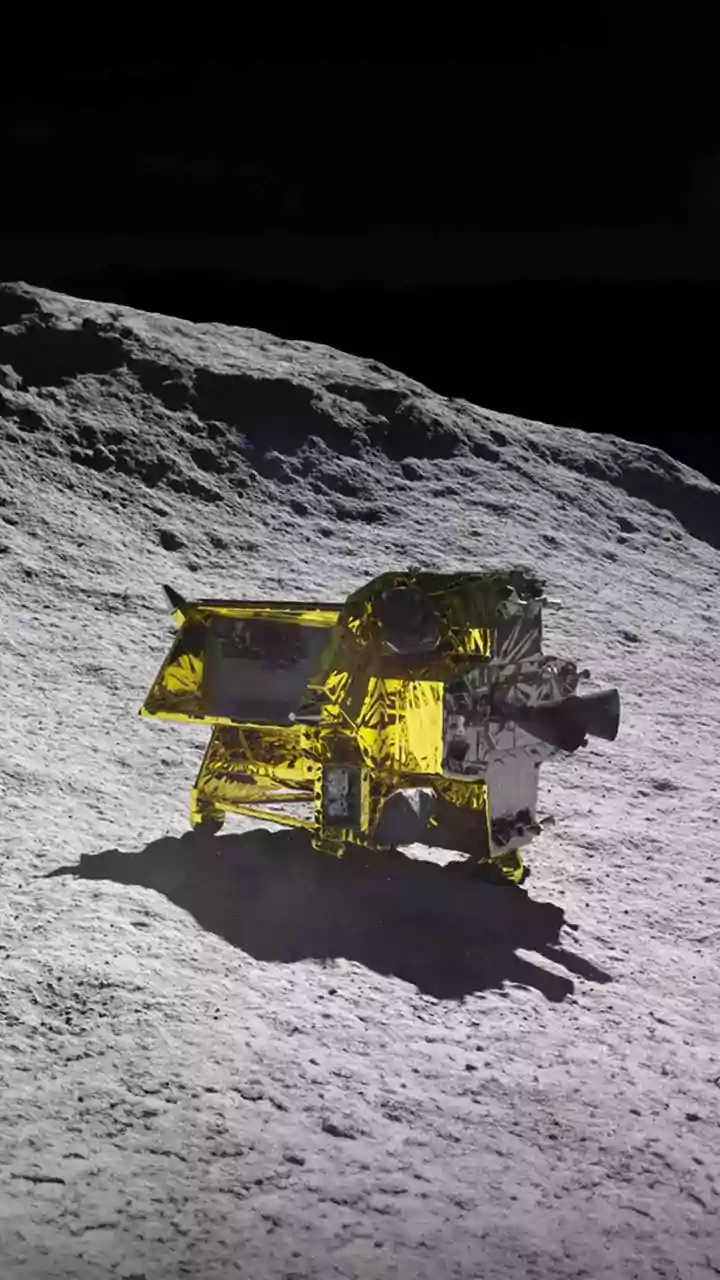
While the Vikram lander and Pragyan rover fell silent after their heroic 14-day mission in 2023, their work is far from over. The true triumph of Chandrayaan-3 lies in the precious data they transmitted back to Earth. This information, gathered from the Moon's
largely unexplored south polar region, has become a treasure trove for scientists. Teams at ISRO and research institutions across India and the world are still meticulously poring over this data, publishing new findings that reshape our understanding of our closest celestial neighbour. The mission’s success was not just in the landing, but in providing the raw materials for years of future discoveries.
A Surprising Temperature Shock
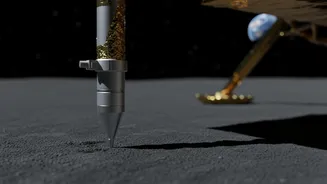
One of the most stunning early results came from the ChaSTE (Chandra’s Surface Thermophysical Experiment) payload. By penetrating the lunar topsoil to a depth of 10 centimetres, it delivered the first-ever in-situ temperature profile of the region. The findings were startling: while the surface temperature hovered around 50-60 degrees Celsius, just 8 cm deeper, it plummeted to a frigid -10 degrees Celsius. This massive temperature gradient of nearly 70 degrees over just a few centimetres demonstrated that the Moon's surface soil, or regolith, is an incredibly effective thermal insulator. This has huge implications for future lunar habitats, suggesting that just a shallow layer of regolith could provide significant protection from extreme surface temperatures.
Listening for a Lunar Heartbeat
The lander also carried the Instrument for Lunar Seismic Activity (ILSA), the first seismometer placed on the Moon since the Apollo missions decades ago. During its operational window, ILSA recorded over 250 seismic events. While many of these were attributed to the Pragyan rover's movements, about 50 signals had no clear terrestrial cause and are being studied as potential 'moonquakes'. Whether caused by thermal stresses or micrometeorite impacts, this data provides a crucial baseline for understanding the Moon's internal geology and the frequency of impacts in the polar regions—vital information for planning any future long-term human presence.
What's in the Soil?
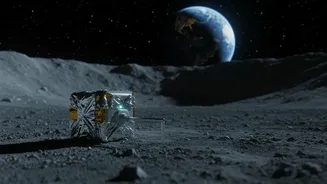
The Pragyan rover, though small, was a mobile geology lab. Its Laser-Induced Breakdown Spectroscope (LIBS) and Alpha Particle X-ray Spectrometer (APXS) instruments conducted the first-ever on-site analysis of the elemental composition of the lunar south pole's soil. The instruments confirmed the presence of expected elements like aluminium, silicon, calcium, and iron. But they also made an unambiguous confirmation of sulphur, something that orbiting instruments had not been able to definitively identify before. The presence of sulphur has profound implications for understanding lunar geochemistry and the volcanic history of the Moon. The rover was also searching for signs of hydrogen, a key component of water.
Secrets Revealed by a 'Hop'
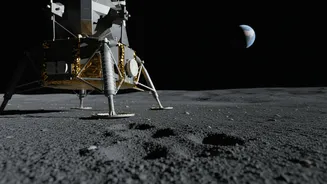
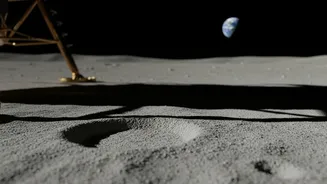
Towards the end of its mission, the Vikram lander fired its engines and performed a short 'hop', rising about 40 cm and landing again a short distance away. This wasn't just a technology demonstration; it was a unique scientific experiment. The rocket exhaust blew away the top layer of loose dust, allowing the ChaSTE probe to measure a freshly exposed surface. The data revealed that the lunar regolith isn't uniform. It has a distinct two-layer, 'cake-like' structure just within the top few centimetres, with a loose, fluffy layer on top of a more compact and cohesive material. This finding provides unprecedented insight into how the lunar surface is processed by micrometeorite impacts and is crucial for designing future excavation and construction equipment.