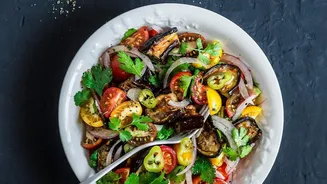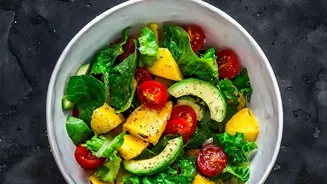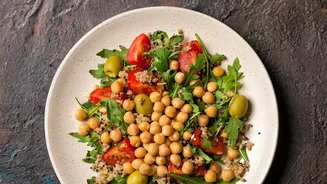




The Power of Freshness
The vibrant, complex flavours of Mediterranean cuisine are heavily reliant on fresh ingredients, and herbs are no exception. While dried herbs have their place, fresh herbs offer a brighter, more nuanced taste and aroma that can elevate a simple bowl
of greens and vegetables into a memorable meal. Using them correctly is a simple skill that unlocks a new level of flavour in your cooking, adding layers of freshness, aroma, and authentic regional character. A handful of chopped herbs can do more for a salad than the most complex bottled dressing.
Parsley: The Bright Workhorse
Often relegated to a mere garnish, fresh parsley is a foundational herb in Mediterranean salads. Flat-leaf (or Italian) parsley is generally preferred over its curly counterpart for its more robust, less bitter flavour. Its bright, peppery, and slightly grassy notes cut through richness and complement a wide range of ingredients, from tomatoes and onions to grains like bulgur in tabbouleh. For the best texture, gather the leaves into a tight ball before finely chopping them. Don't be afraid to use it in abundance; many Mediterranean recipes use parsley as a green, not just a flavouring.
Mint: The Cooling Counterpart
Mint brings a burst of cool, sweet freshness that is quintessentially Mediterranean. It’s a powerful herb that can balance savoury and salty ingredients. Paired with cucumber, feta cheese, and lemon, it creates a classic flavour profile that is both refreshing and satisfying. It is also a key component in dishes like tabbouleh, where it works in tandem with parsley. When preparing mint, it’s often best to tear the leaves or chop them just before serving to prevent them from bruising and turning brown. It complements everything from lentils and beans to grilled halloumi.
Dill: The Feathery & Fresh Herb
With its feathery fronds and a distinct, slightly anise-like flavour, dill is a star in many Greek and other Mediterranean dishes. It is famously paired with cucumbers and yogurt to create sauces like tzatziki, but it’s just as wonderful tossed directly into salads. Fresh dill adds a unique, aromatic lightness to salads, especially those featuring lettuce, cucumber, and feta. Its flavour is delicate, so it's best to add it toward the end of your preparation. When using, chop the airy fronds finely to release their full flavour.
Oregano: Bold and Peppery
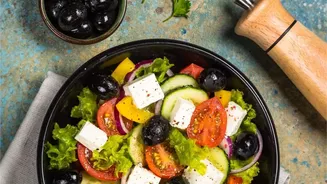
While many are familiar with the dried oregano sprinkled on pizza, fresh oregano offers a more pungent, peppery, and less overwhelming flavour. It is a staple in Greek salads, where its robust taste stands up to strong ingredients like Kalamata olives and feta cheese. Because it is so potent, a little fresh oregano goes a long way. Finely chopping the leaves helps to distribute the flavour more evenly throughout the salad. It's an herb that instantly transports your taste buds to a Greek taverna.
Prep, Storage, and Tips
To get the most from your fresh herbs, a little care goes a long way. Always wash herbs under cool running water and dry them thoroughly, either by patting them with a towel or using a salad spinner. Excess moisture can cause them to spoil faster. For soft-stemmed herbs like parsley, mint, and dill, you can store them upright in a jar with an inch of water in the fridge, like a bouquet of flowers. For hardier herbs like oregano, wrap them in a slightly damp paper towel and store them in a plastic bag in the refrigerator. And don’t discard tender stems, like those on parsley; they are full of flavour and can be finely chopped and added to your salad.