
A Tale of Two Planets
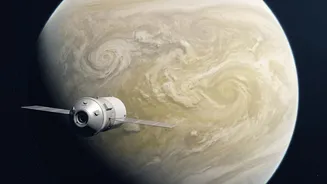
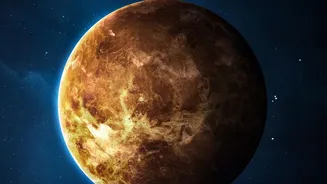
Venus and Earth began as siblings, born from the same cosmic dust. Yet, today they are worlds apart. While Earth blossomed with life, Venus became a hellscape. Its atmosphere, over 90 times denser than Earth's and composed of 96% carbon dioxide, created
a runaway greenhouse effect. This process trapped so much heat that surface temperatures soared to over 460 degrees Celsius, hot enough to melt lead. The planet is shrouded in thick clouds of sulphuric acid, making its surface completely invisible to standard cameras. Understanding how and why Venus diverged so dramatically is a primary goal for planetary scientists, as it offers a cautionary tale for Earth's own climate future.
Peering Through the Veil
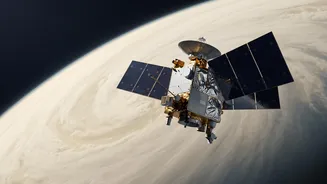
To study a planet whose surface is permanently hidden, you need special eyes. Shukrayaan's primary instrument for this task is a high-resolution Synthetic Aperture Radar (SAR). Unlike optical cameras, radar can penetrate the thick Venusian clouds to map the surface geology below. This will allow scientists to study features like volcanoes, impact craters, and vast plains with a resolution expected to be four times greater than NASA's Magellan mission in the 1990s. Critically, Shukrayaan will also carry a ground-penetrating radar, the first of its kind to be used at Venus. This instrument aims to study the subsurface stratigraphy—the layers of rock and soil—to unveil the planet's geological history.
Decoding a Toxic Atmosphere
The headline-grabbing mysteries of Venus lie within its turbulent, super-rotating atmosphere. Shukrayaan is equipped with a suite of instruments designed to analyse its composition and dynamics. One of the key international payloads is the Venus Infrared Atmospheric Gases Linker (VIRAL), a collaboration with Russia and France. This instrument will study the chemical makeup of the atmosphere, including searching for trace gases like phosphine, which has been speculatively linked to potential biological activity in the cooler upper cloud layers. Other instruments like the Venus Thermal Camera and various spectrometers will map cloud movements, monitor for lightning, and measure the temperatures and composition of different atmospheric layers.
The Solar Wind and a Lost Ocean
Venus has a very weak magnetic field, leaving its upper atmosphere vulnerable to being stripped away by the solar wind—a constant stream of charged particles from the Sun. To study this interaction, Shukrayaan will carry the Venusian Neutrals Analyser (VNA), an instrument developed in collaboration with Sweden. The VNA will measure how particles escape from the planet's atmosphere. This data is crucial for understanding how Venus lost its water. Scientists believe Venus may have once hosted vast liquid water oceans for billions of years, but this atmospheric stripping process, driven by the solar wind, likely played a key role in boiling them away and turning the planet into the arid world it is today.
India’s Next Interplanetary Leap
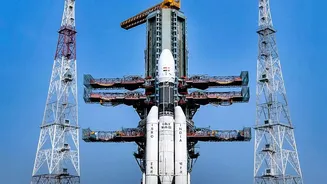
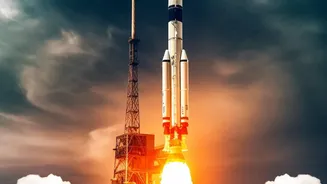
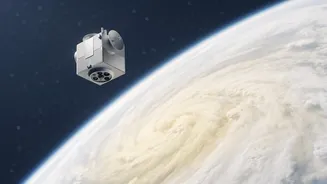
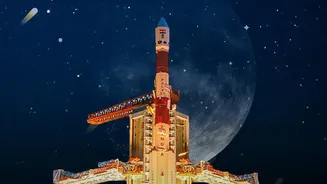
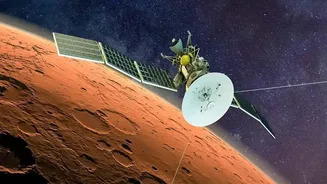
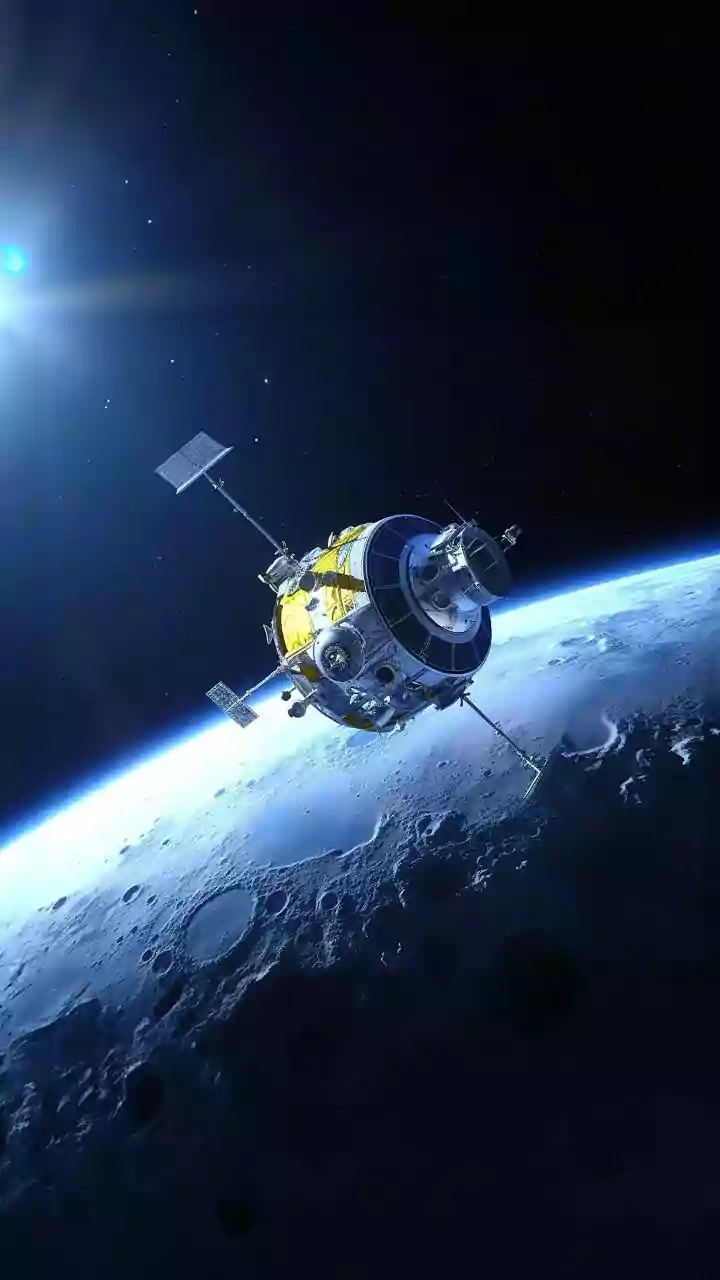
Scheduled for launch in March 2028 aboard India's powerful LVM-3 rocket, Shukrayaan represents the nation's second interplanetary venture after the highly successful Mars Orbiter Mission (Mangalyaan). The mission, formally approved by the Union Cabinet in September 2024, carries 19 scientific instruments from India and international partners. After a 112-day journey, the orbiter will enter a highly elliptical orbit around Venus, which will be gradually lowered using aerobraking—a technique where the spacecraft uses the friction of the upper atmosphere to slow down. This will place it in an ideal orbit to conduct science for over four years, gathering data that promises to redefine our understanding of our planetary neighbour.