





The Moon's Hidden Ingredient
At first glance, the Moon appears to be a barren, airless world. While it lacks a breathable atmosphere, its surface is surprisingly rich in a vital element: oxygen. The grey, dusty material covering the Moon, known as regolith, is composed of about 45%
oxygen by weight. This isn't free-floating gas, however. It's chemically locked away inside minerals like silicon dioxide and various metal oxides. For decades, the challenge for scientists has been figuring out how to break those strong chemical bonds and liberate the oxygen. The ability to do so on-site would be a revolutionary leap for space exploration, a concept known as In-Situ Resource Utilization, or ISRU. Successfully tapping into this vast lunar resource means future missions wouldn't need to haul massive, heavy tanks of oxygen from Earth, dramatically reducing launch costs and complexity.
How to 'Breathe' the Moon
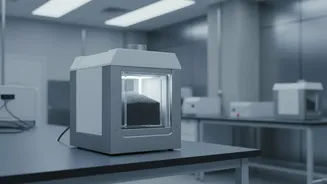
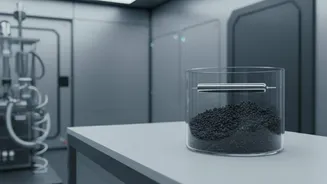
NASA is pioneering a method called carbothermal reduction to crack the code. In a project known as the Carbothermal Reduction Demonstration (CaRD), scientists are testing a system designed to work on the lunar surface. The process involves heating the lunar regolith to extremely high temperatures—over 1,700 degrees Celsius—inside a specialized reactor. At these temperatures, the regolith melts. An agent, such as methane, can then be introduced, which reacts with the molten material to break the oxide bonds. This chemical reaction releases carbon monoxide gas. That gas can then be collected and processed further to separate the oxygen. Recent tests have successfully demonstrated this process in a vacuum chamber that simulates the airless conditions of the Moon, proving the core concept is viable for a future lunar mission.
A Game-Changer for the Artemis Program
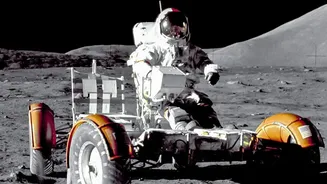
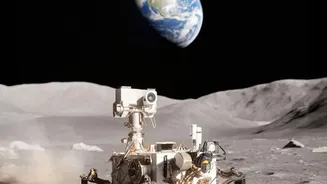
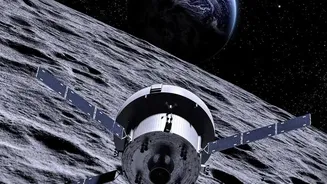
This technological breakthrough is not just an academic exercise; it's a critical enabler for NASA's Artemis program, which aims to establish a sustainable human presence on the Moon. The goal is to move beyond short, flag-planting missions to long-duration stays at a permanent Artemis Base Camp. Living and working on the Moon for weeks or months at a time requires a reliable supply of breathable air. Producing oxygen on-site is far more sustainable than relying on a constant, expensive supply chain from Earth. Every kilogram of material launched from our planet is incredibly costly, so being able to “live off the land” is essential for making a lunar base practical and affordable. This technology could provide the air for habitats and for astronaut spacesuits during moonwalks.
More Than Just Air to Breathe
The potential applications for lunar-made oxygen extend far beyond life support. One of the biggest uses would be for rocket propellant. Liquid oxygen is a common oxidizer, the component of rocket fuel that allows the main fuel to burn. It typically makes up the vast majority of propellant mass. By producing liquid oxygen on the Moon, a lunar base could effectively become a refueling station for spacecraft. This would transform deep space exploration. Rockets launching from Earth could carry lighter fuel loads, knowing they can top up at the Moon. This makes missions to Mars and beyond more feasible, as spacecraft could depart from the Moon with full tanks for the long journey, escaping the Moon's weaker gravity instead of Earth's.
From Lab to Lunar Surface
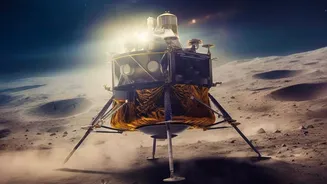
While experiments on Earth using simulated moon dust have been successful, the next major hurdle is to prove the technology works in the harsh lunar environment. A prototype system must be designed to withstand a rocket launch and then operate reliably on the Moon, dealing with abrasive lunar dust, extreme temperature swings, and radiation. The CaRD project, a collaboration between multiple NASA centers and private industry partners like Sierra Space, has developed flight-like hardware designed for these conditions. The plan is to eventually send a demonstration payload to the Moon to test the process with real regolith under actual lunar conditions. If successful, engineers can then design a scaled-up system capable of producing oxygen in the quantities needed to support a bustling lunar base.