





Why Sitting Can Hurt
The human body is designed for movement. When you sit for prolonged periods, especially in a position that isn't ideal, you place static, sustained stress on your muscles and joints. This inaction can lead to a cascade of problems. Muscles in the front
of your body, like your hip flexors and chest muscles, can become tight and shortened. Meanwhile, supporting muscles in your back and core may weaken. This imbalance puts extra load on your joints, particularly in the neck, spine, shoulders, and hips. Over time, this static load reduces joint lubrication, leading to stiffness and pain.
Common Posture Mistakes
Many common habits contribute to this discomfort. 'Tech neck', where the head juts forward to look at a screen, adds significant strain to the neck and upper back. Slouching or perching on the edge of your chair flattens the natural curve of your lower back, increasing pressure on your spinal discs. Having your keyboard too high can cause you to shrug your shoulders, leading to tension. Similarly, crossing your legs can create an uneven load on your hips and pelvis. These seemingly small misalignments, when held for hours each day, accumulate into chronic aches.
Your Ergonomic Workstation Blueprint
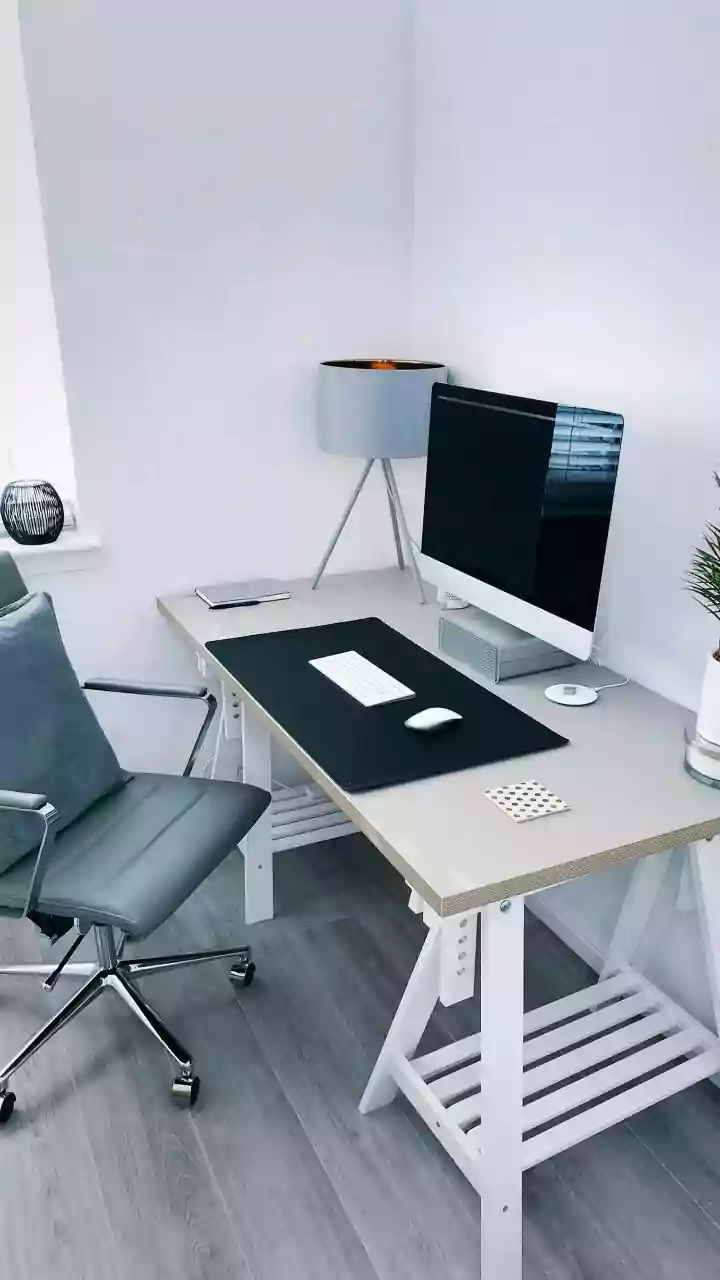
Creating a more comfortable workspace is about making your setup fit your body, not the other way around. Start with your chair. Adjust its height so your feet rest flat on the floor with your knees bent at roughly a 90-degree angle. Your chair should have good lumbar support to maintain the natural curve of your lower back; if it doesn't, a small pillow or rolled-up towel can help. Position your monitor so the top of the screen is at or slightly below eye level, about an arm's length away. Your keyboard and mouse should be close enough that your elbows can rest by your sides, also at about a 90-degree angle, with wrists in a neutral, straight position.
Movement: The Best Medicine
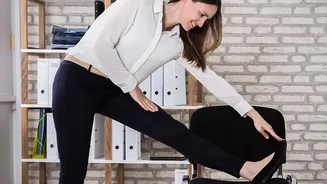
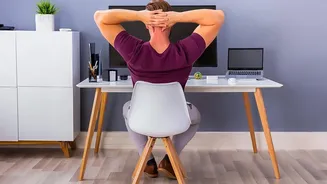
Even with a perfect setup, remaining immobile is still a problem. Movement is crucial for keeping joints lubricated and muscles active. The simplest rule is to change your position often. Set a timer to get up, stretch, or walk around for a few minutes every 30 to 60 minutes. These small breaks can make a huge difference. When you are at your desk, incorporate simple stretches. Gently tilt your head from side to side to relieve neck tension. Roll your shoulders backward and forwards to release stiffness. Extend your arms and stretch your wrists and fingers. A seated spinal twist, where you gently turn to look over your shoulder, can help your back.
Simple Stretches To Do At Your Desk
To combat the effects of sitting, try this quick routine. For your neck, slowly tilt your head toward your right shoulder, hold for 15-20 seconds, and repeat on the left. For your shoulders and chest, clasp your hands behind your back and gently pull your shoulders back to open up your chest. To address wrist strain from typing, extend one arm with your palm facing up, and with your other hand, gently pull the fingers down toward the floor, holding for 20 seconds before switching sides. For your lower back and hips, while seated, bring one knee toward your chest, holding it for a gentle stretch. These small, consistent movements are more effective than occasional, intense efforts.