



A Pit Stop on the Cosmic Highway
Think of the journey to Mars not as a single flight, but as a series of connecting trips. The biggest hurdle in space travel is escaping Earth's immense gravity, which requires enormous amounts of energy and fuel. Launching a massive, fully-loaded Mars spacecraft
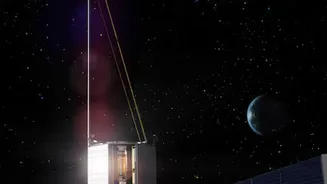
from Earth is a monumental challenge. By establishing a base and orbital outpost like the Gateway station, the Moon becomes a logistical hub. Spacecraft can be assembled in lunar orbit and launched from the Moon's much weaker gravity, requiring significantly less fuel for the long trip to Mars. This approach, central to NASA's Moon to Mars architecture, turns the Moon into a vital waypoint, making the entire enterprise more feasible and affordable.
Living Off the Lunar Land
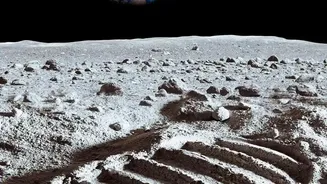
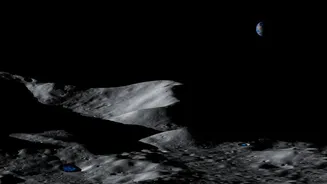
One of the most game-changing aspects of a Moon base is the ability to use local materials, a concept known as In-Situ Resource Utilization (ISRU). Instead of hauling everything from Earth at an exorbitant cost, astronauts could 'live off the land'. Scientists have confirmed the presence of water ice in permanently shadowed craters at the lunar poles. This ice is a goldmine. It can be melted for drinking water, split into hydrogen and oxygen for breathable air, and, most importantly, be used to create rocket propellant. Producing fuel on the Moon would revolutionize deep-space travel, allowing Mars-bound ships to refuel before embarking on their interplanetary journey.
The Ultimate Proving Ground
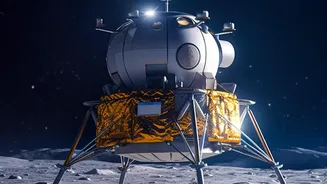
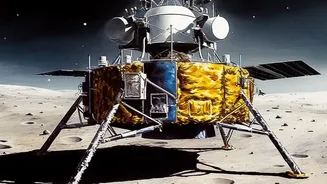
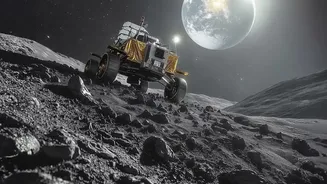
A multi-year mission to Mars is fraught with peril, from equipment failure to the intense radiation of deep space. There is no quick way home if something goes wrong. The Moon, just a few days' journey from Earth, offers the perfect environment to test critical technologies before betting human lives on them. Life support systems, habitats, power generation (including solar and nuclear), rovers, and even 3D-printing construction techniques can all be validated in the harsh lunar environment. NASA's Artemis program is explicitly designed to function as this proving ground, allowing engineers to refine systems and operational strategies in a real-world setting, significantly reducing the risks of a Mars expedition.
Understanding the Human Factor
Beyond technology, there are profound questions about how humans will cope with long-duration missions. What are the psychological effects of being isolated millions of miles from home? How will the human body adapt to years in a low-gravity environment? A lunar base provides a crucial platform for studying these effects. Astronauts living and working on the Moon for extended periods will provide invaluable medical and psychological data. This knowledge is essential for developing countermeasures to protect the health and ensure the peak performance of the first crews to travel to Mars, who will face a journey lasting upwards of two-and-a-half years.
A Hub for Science and Collaboration
A lunar base isn't just a launchpad; it's a world-class scientific outpost and a center for international partnership. Recently, NASA selected three new investigations to scout for resources and potential habitat locations, like underground lava tubes that could offer natural protection from radiation and micrometeoroids. These missions will inform how to build a sustainable presence. The entire Moon to Mars effort, including the lunar Gateway space station, is a massive international collaboration involving multiple space agencies and commercial companies. This shared endeavor not only distributes the immense cost and complexity but also fosters a global ecosystem for space exploration, paving a unified path forward to the Red Planet.