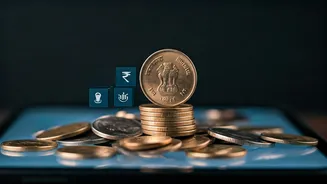









What Exactly is Round-Up Investing?
At its core, round-up investing is a simple, automated way to turn your digital spending into micro-investments. The concept is straightforward: every time you make a payment using a linked account, the app 'rounds up' the transaction amount to the nearest
convenient number (like ₹10, ₹50, or ₹100). The difference—that small, almost unnoticeable 'change'—is then set aside. For example, if you buy a coffee for ₹122, the app might round it up to ₹130. The extra ₹8 is then automatically moved into an investment account. It’s the digital equivalent of dropping your spare coins into a piggy bank, but instead of just sitting there, this money is put to work.
The UPI Connection: Making it Seamless
This isn't a new idea, but its explosion in India is directly linked to the massive adoption of the Unified Payments Interface (UPI). With millions of Indians making multiple digital payments daily, the opportunities for these micro-savings have skyrocketed. The technology works seamlessly in the background. Most round-up apps securely access your transaction data (usually by reading your SMS alerts from the bank) to detect your UPI spends. Once a transaction is detected, the app calculates the round-up amount and, after you’ve accumulated a certain minimum (say, ₹100), it initiates an auto-debit from your bank account via a UPI mandate you approved during setup. It’s a 'set it and forget it' system powered by the very payment network you use every day.
Where Does Your Money Actually Go?
This is the most important part. Your rounded-up change isn't just sitting in a digital wallet; it's being funnelled into an investment product. The options vary depending on the app, but the most common destination for beginners is digital gold. It's easy to understand, highly liquid, and can be bought in tiny fractions, making it perfect for micro-investments. For instance, your accumulated ₹8 might buy you 0.001 grams of 24K digital gold. Other, more advanced platforms might offer options to invest the round-up amount into mutual funds (like index funds or liquid funds) or even peer-to-peer lending platforms. The goal is always the same: to make your passive savings grow over time, transforming loose change into a budding portfolio.
Popular Apps Leading the Charge
Several fintech startups in India have built their entire business around this concept, making it incredibly accessible. **Jar:** Perhaps the most well-known, Jar focuses exclusively on saving in digital gold. It’s incredibly user-friendly and gamifies the saving process to keep users engaged. **Deciml:** Similar to Jar, Deciml also uses round-ups to facilitate micro-investments. It focuses on making investing a daily habit and offers investments in P2P lending options in addition to other asset classes. **Fi:** This neobanking app has integrated features that encourage saving. While it operates slightly differently with its 'FIT Rules', the principle is the same: automating savings based on your spending behaviour, which can then be channelled into investment options like mutual funds. These apps are designed for beginners, often requiring no prior investment knowledge to get started. The sign-up process is quick, and the entire experience is managed through your smartphone.
Is This the Right Strategy for You?
Round-up investing is a phenomenal tool for building a habit. It’s an excellent, low-friction entry point into the world of investing for those who find the idea daunting or believe they don't have enough 'extra' money to start. The psychology is powerful; because the amounts are so small, you barely feel the pinch. However, it’s crucial to have realistic expectations. This is not a get-rich-quick scheme. The returns will be modest initially, reflecting the small size of the investments. It should be seen as a supplement to, not a replacement for, a disciplined investment strategy with larger, regular contributions (like SIPs). Also, be sure to check for any platform fees or transaction charges, as these can eat into your small returns.