






More Than Just Mithai
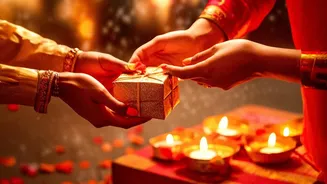
In India, sweets, or 'mithai', are central to any celebration, symbolising prosperity, joy, and the sweetness of life. During Diwali, this significance deepens. Exchanging beautifully arranged boxes of sweets is a gesture of goodwill, a thread that strengthens
bonds with family, friends, and neighbours. But the most cherished treats are often not the ones bought from a store. They are the ones made at home, following recipes passed down through generations. The very act of preparation is a communal activity, a ritual that gathers family members to chop nuts, stir pots, and shape delicacies, sharing stories and laughter along the way. It’s in these moments that the festival’s true spirit comes alive—transforming simple ingredients into vehicles for memory and togetherness.
Ladoos: Spheres of Sweet Tradition
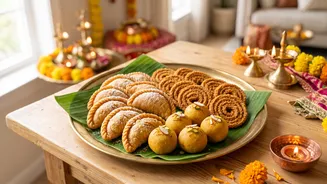
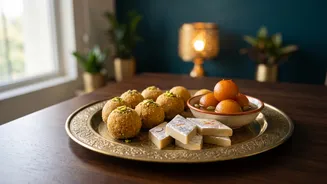
Arguably the most iconic of all Indian sweets, the ladoo is a sphere of happiness synonymous with good news and celebration. Its history is ancient, with origins tracing back to the 4th century BC when it was used as a way to administer Ayurvedic medicine. Today, its role is firmly festive. Making ladoos for Diwali is a cherished family tradition in many homes. The process is a craft honed over generations, whether it’s for Besan Ladoo, made by carefully roasting gram flour in ghee until it turns nutty and aromatic, or the intricate Motichoor Ladoo, with its tiny pearls of fried batter soaked in sugar syrup. The act of rolling the warm mixture between palms is often a lesson passed from a grandmother to a grandchild, a transfer of technique and love that ensures the family’s culinary legacy continues.
Gujiya: Crescent Moons of Joy
In many parts of North India, Diwali would be incomplete without gujiya. These are beautiful, crescent-shaped pastries filled with a sweet mixture of khoya (milk solids), dried fruits, and nuts. Known as Karanji in Maharashtra, this delicacy is a labour of love. Families often form an assembly line to make them: one person rolls out the dough, another carefully places the filling, and an expert in the family pleats the edges into an intricate design. It’s a time-consuming process that fills the home with a sense of shared purpose and anticipation. While strongly associated with Holi, gujiyas are a staple during Diwali in several regions, embodying the festive spirit in their rich, flaky form. Each bite is a delightful crunch followed by a sweet, aromatic filling—a taste that, for many, is the flavour of the festival itself.
An Edible Heritage
While ladoos and gujiyas are famous, the list of homemade Diwali treats is wonderfully diverse, reflecting India's regional culinary tapestry. From the crispy, diamond-shaped Shankarpali in the west to the syrupy Malpua pancakes in the east, each sweet tells a story of local ingredients and inherited traditions. In an age of convenience, where store-bought sweets are readily available, the practice of making these treats at home is a conscious choice to keep a connection to the past alive. These recipes are often unwritten, learned by observation and practice at the elbow of an elder. They carry the subtle adjustments and secret touches of every generation that has made them. This passing down of culinary knowledge is a powerful act of cultural preservation, ensuring that the essence of Diwali is not just celebrated, but deeply felt and tasted.