






Hearing the Universe's Background Music
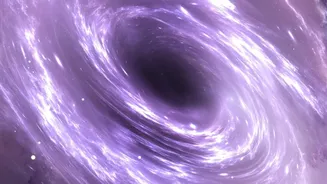
For the better part of a decade, we have been able to 'hear' the universe’s most violent events. When massive objects like black holes or neutron stars collide, they send out ripples in the fabric of space-time itself. First predicted by Albert Einstein
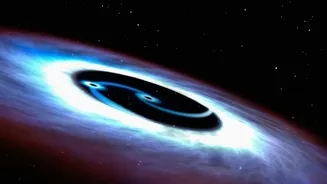
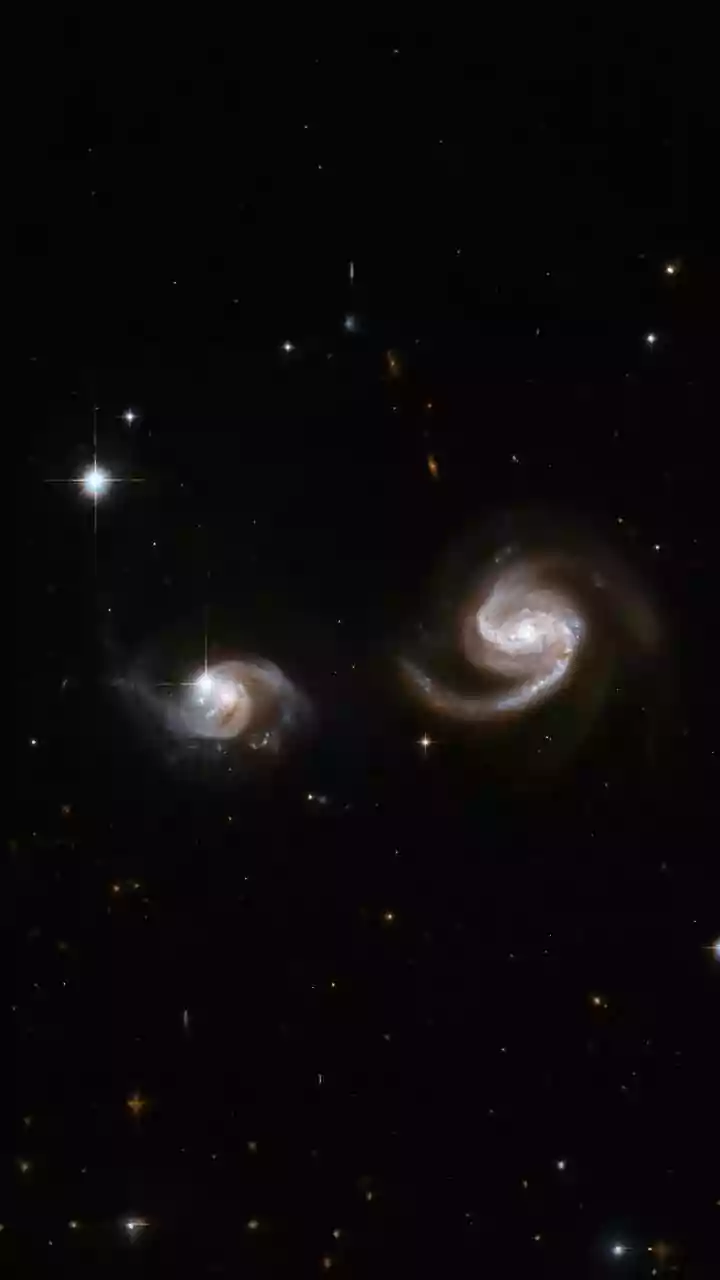
and first detected in 2015, these gravitational waves are like cosmic tremors, giving us a new way to observe the universe. Until recently, observatories like LIGO in the US and Virgo in Italy were best at catching the high-frequency 'shouts' from individual, cataclysmic mergers. But what about the constant, underlying hum of the cosmos? Scientists have long predicted that the combined chorus of countless cosmic events, particularly the slow dance of supermassive black holes at the centres of merging galaxies, would create a persistent, low-frequency gravitational wave background. Now, thanks to a completely different kind of observatory, we have finally heard it.
A Galaxy-Sized Detector
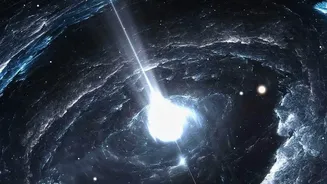
Detecting these ultra-low-frequency waves required a detector the size of our galaxy. Instead of lasers in tunnels, international collaborations like the North American Nanohertz Observatory for Gravitational Waves (NANOGrav) used an ingenious method called a Pulsar Timing Array. Pulsars are the super-dense, spinning remnants of dead stars that send out beams of radio waves like cosmic lighthouses. Some spin hundreds of times per second, with a regularity so precise they rival atomic clocks. By monitoring dozens of these pulsars across the sky for over 15 years, scientists looked for tiny, correlated changes in the arrival times of their pulses. A passing low-frequency gravitational wave would subtly stretch and squeeze the space-time between Earth and the pulsars, causing their signals to arrive nanoseconds early or late in a specific, predictable pattern. After years of painstaking observation, multiple international teams announced they had found compelling evidence of this background hum, opening a new window onto the universe.
Challenging the Black Hole Story
This discovery, while confirming a major prediction, has also thrown up some serious questions for existing models of cosmic evolution. The signal from this background hum appears to be significantly louder—by some estimates, two to three times stronger—than what most standard models predicted. These models are built on our best understanding of how galaxies merge and how the supermassive black holes at their hearts spiral together and eventually collide. The strength of the signal suggests that these supermassive black hole mergers are either more common or involve more massive black holes than previously thought. This challenges our theories on galaxy formation and the lifecycle of these cosmic behemoths. It forces astrophysicists back to the drawing board to figure out what processes could be powering this unexpectedly loud cosmic symphony.
New Mysteries and India's Role
The louder-than-expected hum could point to several exciting possibilities. Perhaps supermassive black holes grow larger and merge more efficiently than our models account for. Or maybe there are other, more exotic sources contributing to the background, like cosmic strings or even echoes from the Big Bang itself. These new questions make the future of gravitational wave astronomy even more thrilling. India is poised to become a key player in this global quest. The LIGO-India project, a new observatory currently under construction in Maharashtra, broke ground in April 2026. When it comes online, which could be before its 2030 deadline, it will join the global network of detectors including LIGO, Virgo, and KAGRA in Japan. Adding a fifth major observatory will dramatically improve the network's ability to pinpoint the sources of gravitational waves, giving astronomers a much clearer picture of the violent and mysterious events shaping our universe.