



The 'Evening Star' Welcomes You
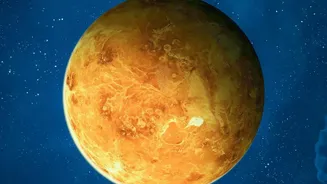
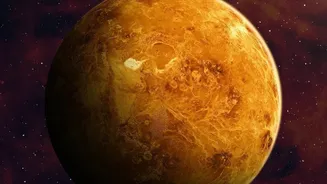
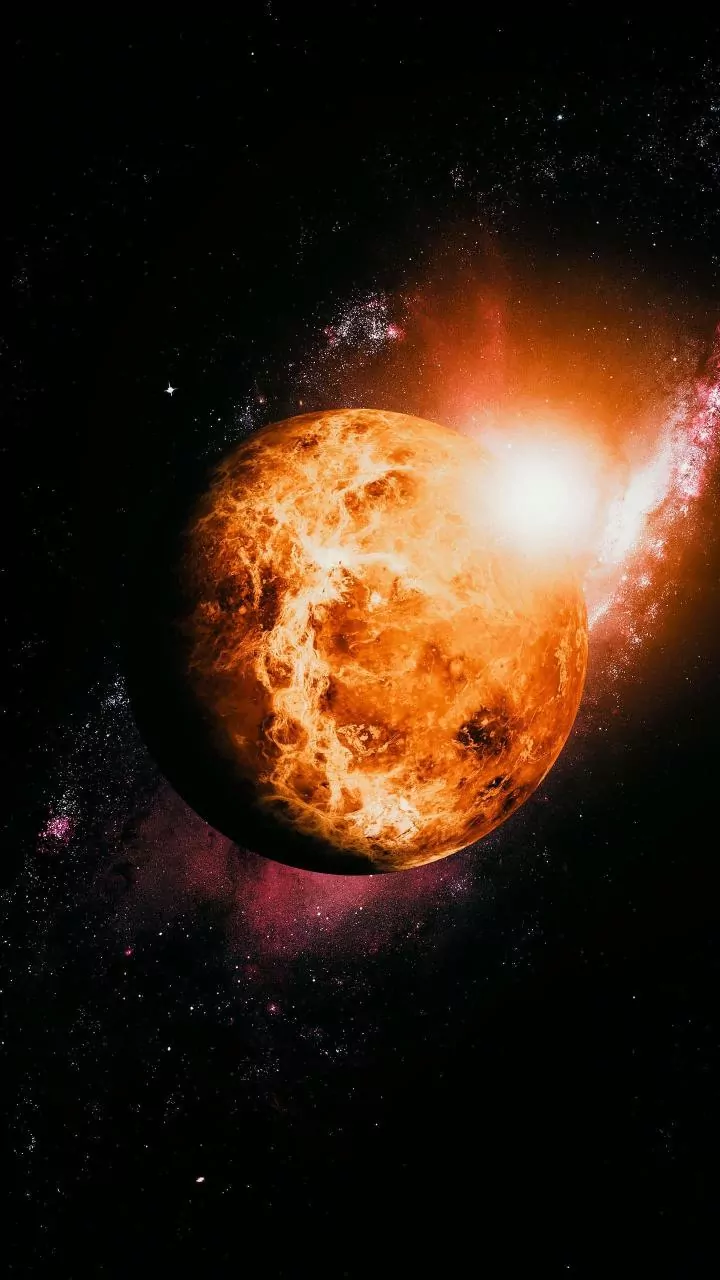
If you've ever glanced west after sunset and marvelled at a single, incredibly bright 'star' that doesn't seem to twinkle, you've likely already met Venus. Often called the 'Evening Star' or 'Morning Star' depending on when it's visible, Venus is the brightest
planet in our night sky, outshining everything except the Moon. Its brilliance is due to its thick, highly reflective cloud cover and its relative proximity to Earth. This makes it an ideal and rewarding subject for beginner astronomers. You don't need any special equipment or knowledge to find it; its sheer brightness makes it pop out from the twilight glow, offering an easy and satisfying win for your first night out.
Why August 2026 Is a Perfect Month
This August is a particularly good time to observe Venus. The planet will be visible all month long in the western sky right after sunset. On August 15, 2026, Venus reaches what astronomers call its greatest eastern elongation. This means it will be at its farthest apparent distance from the Sun in the sky, making it easier to spot. Throughout August, you can watch it shine brightly in the west-southwest as dusk settles. It will appear as a steady, silvery-white light. For those in India, this celestial event provides a wonderful opportunity to connect with the cosmos from your own balcony, terrace, or a nearby open space.
Your Step-by-Step Guide to Spotting Venus
Finding Venus is beautifully simple. Here’s how you can do it: 1. Know the Sunset Time: First, check the local sunset time for your city. In late August, sunset in cities like Delhi and Mumbai occurs around 6:50 PM to 7:05 PM. Those in eastern cities like Kolkata will see the sun set earlier, around 6:05 PM. 2. Look West: About 30 to 60 minutes after the sun has dipped below the horizon, face west—the same direction the sun just set. 3. Spot the Brightest Light: Scan the sky from the horizon upwards. You will not be able to miss Venus. It will be the most prominent and brilliant point of light in that part of the sky, piercing through the evening twilight long before most stars become visible. 4. Notice its Steady Glow: Unlike stars, which appear to twinkle due to Earth's atmospheric turbulence, Venus shines with a solid, unwavering light. This is a key way to confirm you're looking at a planet.
No Telescope? No Problem
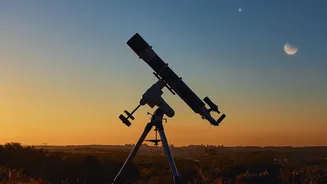
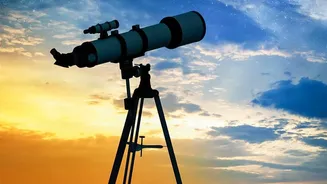
One of the best things about observing Venus is that it requires absolutely no special equipment. Its brightness makes it a stunning naked-eye object. While a telescope would reveal that Venus goes through phases much like our Moon—appearing as a crescent or a gibbous disk—you can appreciate its majesty without one. If you have a simple pair of binoculars, they can help stabilize the view and make the planet appear as a more distinct disk rather than just a point of light. But even without them, the experience of identifying another world with your own eyes is a powerful one. It’s a reminder of the vast and beautiful solar system we are a part of.
Tips for the Best Viewing Experience
To make your Venus-gazing session even more special, consider these simple tips. First, try to find a spot with a clear view of the western horizon, away from tall buildings or trees. While Venus is bright enough to cut through city light pollution, moving to a darker location like a park or the outskirts of town will always enhance the view. Second, give your eyes about 15 to 20 minutes to adapt to the darkness; this will help you see more subtle details in the sky. Finally, check the weather forecast for a clear evening. A cloudless sky is a stargazer’s best friend. You might even consider using a free stargazing app on your phone to help confirm Venus's location and identify other celestial objects nearby, like the star Spica, which Venus will be approaching this month.