

Visas and Border Crossings
For Indian passport holders, both Laos and Cambodia offer relatively straightforward visa processes. Cambodia provides a visa on arrival and an e-visa option, both typically allowing a 30-day stay. The e-visa costs around ₹3,500 and is recommended to
avoid queues at the border. Laos also offers a visa on arrival for Indians. Ensure your passport has at least six months of validity and a few blank pages. The most common overland crossing between the two countries is the Voeung Kam (Laos) to Dom Kralor (Cambodia) border. Direct buses operate between major hubs like Siem Reap in Cambodia and Pakse or Don Det (4,000 Islands) in Laos, making the journey seamless. A bus from Siem Reap to Don Det can take around 8 to 10 hours.
Setting Your Daily Budget
The best part about this route is its affordability. A shoestring backpacker can comfortably manage on ₹2,000 - ₹3,000 ($25-$35) per day in both countries. This budget covers a dorm bed in a hostel, street food meals, local transport, and some activities. For a bit more comfort, a mid-range budget of ₹4,000 - ₹6,000 ($50-$75) will get you private rooms in guesthouses, a mix of street food and restaurant meals, and more flexibility with tours. Laos is often cited as one of the cheapest countries in Southeast Asia, with a dorm bed costing as little as ₹400-₹800 ($5-$10) and a delicious bowl of noodle soup for around ₹100 ($1.25). Cambodia is similarly priced, making the duo a perfect wallet-friendly combination.
The Classic Overland Itinerary
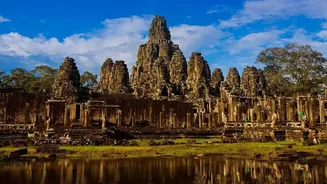
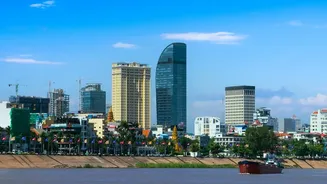
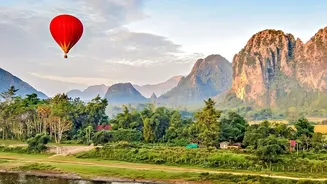
A popular route involves travelling north to south or vice-versa. Many travellers start in Luang Prabang in northern Laos, a UNESCO World Heritage town known for its stunning temples and French colonial architecture. From there, you can take a bus or the scenic new train to the adventure hub of Vang Vieng, famous for its limestone karsts and river activities. Continue south to the capital, Vientiane, before heading to the relaxed 4,000 Islands (Si Phan Don) region. From there, you can cross into Cambodia. In Cambodia, start with Siem Reap to explore the magnificent temples of Angkor Wat. Then, head to the capital, Phnom Penh, to understand the country's recent history, before finishing on the southern islands like Koh Rong for some beach time.
Getting Around on a Shoestring
Overland travel is key to keeping costs down. In both countries, a network of buses and minivans connects all major tourist destinations. Overnight sleeper buses are a fantastic option, as they save you a night's accommodation cost. For example, a journey from Siem Reap to Pakse in Laos can take 11-12 hours by bus. In Laos, don't miss the slow boat journey down the Mekong River from Huay Xai to Luang Prabang; it's a quintessential backpacker experience that takes two days but offers incredible scenery. Within cities, tuk-tuks and ride-hailing apps are the go-to. Always agree on a price before you start your journey if it's not a metered ride.
Accommodation and Food
Hostels and guesthouses are your best friends on this trip. They are not only cheap but also fantastic places to meet other travellers. A dorm bed can cost between ₹400 and ₹1,200 ($5-$15), often including breakfast. For food, embrace the streets. Night markets in places like Luang Prabang and Siem Reap are a feast for the senses and your wallet. You can get a full, delicious meal for under ₹250. Look for local staples like Laap (minced meat salad) and sticky rice in Laos, and Fish Amok (a creamy curry) in Cambodia. Eating locally is the best way to experience the culture and save money.
Must-Do Budget Experiences
While Angkor Wat has a significant entrance fee, it is an unmissable highlight. Save money by renting a bicycle to explore the vast temple complex on your own instead of hiring a tuk-tuk for the entire day. In Laos, hiking to the stunning Kuang Si Falls near Luang Prabang is a must. Other low-cost activities include exploring the countless temples, watching the daily alms-giving ceremony in Luang Prabang, tubing down the river in Vang Vieng, and simply relaxing in a hammock in the 4,000 Islands. Much of the magic of this region comes from its relaxed pace of life, which costs nothing to enjoy.