





Understanding 'Triangle Hair'
The 'triangle' or 'pyramid' bob happens when you have thick hair cut to a single length. Because thick hair has a higher density of strands, a one-length cut causes all that weight to accumulate at the bottom edge. Instead of falling smoothly, the ends
stack on top of each other and flare outwards, creating a triangular shape that is flat at the crown and wide at the jawline. This effect can become more pronounced a few days after leaving the salon, as the hair settles and its natural volume takes over, leading to a bulky, 'helmet'-like appearance that lacks movement. This is especially true for bobs that sit between the chin and shoulders, where the ends hit the widest part of the neck and shoulders, encouraging them to flick out.
The Solution: Strategic Layering
The most effective way to combat the triangle bob is by incorporating layers. But not just any layers will do. The key is strategic weight removal from within the haircut, which is often achieved with 'internal' or 'invisible' layers. Unlike traditional, visible layers that create a shaggy or stepped look, internal layers are cut underneath the surface of the hair. A stylist will lift the top sections of your hair and cut shorter pieces within the denser, underlying sections. These hidden, shorter layers act as a subtle support system, removing bulk and allowing the longer, outer layers to fall more softly and collapse inward, creating a slimmer, more controlled silhouette without sacrificing the clean line of a bob. This technique removes the weight that causes the hair to puff out, encouraging movement and a shape that hugs the head rather than flaring away from it.
Communicating with Your Stylist
Getting the right cut starts with a clear conversation. Simply asking for 'layers' can be too vague and might result in a choppy look you didn't want. To avoid miscommunication, bring inspiration photos of bobs on thick hair that you like (and dislike). Use specific keywords to describe the problem and the desired result. Explain that your hair gets 'triangular' or 'puffy' at the bottom and that you want to 'remove weight' or 'reduce bulk' without losing the overall shape of your bob. Ask for 'internal layers', 'invisible layers', or 'texturizing' to create a softer, narrower silhouette. Mention that you want the cut to collapse inward and have movement, rather than sitting in a heavy, solid line. This specific language helps your stylist understand that you need a structural solution, not just a few visible, choppy pieces on the surface.
Techniques for a Perfect Bob
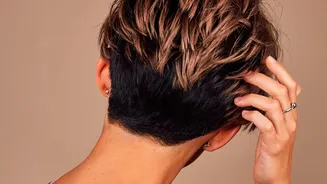
Beyond internal layering, stylists use several other techniques to refine a bob for thick hair. 'Point cutting' or 'slide cutting' are methods where the stylist cuts into the ends of the hair vertically or at an angle. This softens the blunt edge, preventing that hard, shelf-like line and creating a more textured, piecey finish. Another effective approach for very dense hair is an 'inverted' or 'graduated' bob, where the layers are stacked shorter in the back and get longer toward the front. This built-in graduation is a powerful weight-removal machine for the back of the head. For some, a subtle 'undercut' at the nape of the neck can also remove a surprising amount of bulk, allowing the hair above it to lie much flatter. A good stylist will often combine these techniques, tailoring the cut to your specific hair density and texture.
Styling and Maintenance at Home
A great cut is the foundation, but the right styling enhances its shape. When blow-drying, use a round brush to smooth the hair and slightly bevel the ends under, which helps fight the tendency to flick out. Using a smoothing cream on wet hair can also help weigh it down just enough to prevent frizz and unwanted expansion. For a more modern, textured look, apply a texturizing spray or sea salt mist and allow your hair to air-dry, or use a flat iron to create soft, undone waves. This will help showcase the subtle dimension created by the internal layers. To maintain the shape and prevent the weight from returning, plan for regular trims every 6 to 8 weeks. This keeps the layers effective and the ends healthy, ensuring your bob remains chic and manageable.