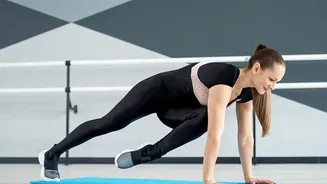







Looking for an exercise that builds serious shoulder and core strength without any equipment? Enter the Dolphin Push-Up, a challenging yet rewarding move that blends yoga and calisthenics. Its secret lies in control, not speed.
What Exactly Is a Dolphin Push-Up?
The Dolphin Push-Up is a
dynamic bodyweight exercise that primarily targets the shoulders, core, and upper back. Think of it as a moving forearm plank that borrows from the principles of yoga's Dolphin Pose. Unlike a traditional push-up where you bend your elbows to lower your chest, the Dolphin Push-Up involves shifting your body weight forward and backward from your forearms. This unique movement creates significant tension in the deltoids (shoulder muscles), abdominals, and the muscles supporting your spine, making it an excellent builder of stability and strength.
The Key Benefits for Your Body
Incorporating Dolphin Push-Ups into your routine offers a host of benefits. First and foremost, it is one of the most effective ways to build strong, stable shoulders. This is crucial for improving posture and supporting other upper-body movements. The exercise also intensely engages your entire core, including the rectus abdominis and obliques, as you work to keep your torso stable throughout the motion. Furthermore, it strengthens the serratus anterior, a muscle that helps with shoulder blade movement and is often underdeveloped. For those interested in yoga, mastering the Dolphin Push-Up is a fantastic way to build the strength required for more advanced inversions like forearm stands or headstands.
A Step-by-Step Guide to Proper Form
To perform a Dolphin Push-Up correctly, start on your hands and knees. Lower your forearms to the floor, ensuring your elbows are directly under your shoulders and your hands are clasped or palms are flat. Tuck your toes and lift your hips toward the ceiling, coming into a position known as Dolphin Pose. Your body should form an inverted 'V' shape. This is your starting position. Begin the movement by slowly shifting your weight forward, bringing your chin towards your hands. Aim to get your nose past your fists, while keeping your hips as high as possible. Your shoulders will now be almost directly over your hands. Pause for a moment, then press firmly through your forearms to push your body back to the starting inverted 'V' position. That completes one repetition.
The Rhythm of Your Breath
The headline's advice is crucial: focus on steady breathing at a comfortable pace. Rushing this exercise negates its benefits and increases the risk of injury. A proper breathing pattern helps control the movement and engage your core more effectively. As a general rule, inhale as you press back into the inverted 'V' starting position. This helps lengthen your spine and prepare for the next rep. Then, exhale slowly and deliberately as you shift your weight forward, bringing your chin towards your hands. This synchronised breathing helps maintain tension and control, preventing you from using sloppy momentum. The goal is a smooth, fluid motion, not a jerky, fast paced one.
Common Mistakes to Avoid
To get the most out of Dolphin Pushups, watch out for a few common form errors. Many people let their hips sag or drop too low as they shift forward, which turns the exercise into a simple forearm plank rock and disengages the shoulders. Always focus on keeping your hips high. Another mistake is moving the head but not the torso; ensure your entire upper body is shifting forward. Finally, avoid walking your feet too close to your elbows, as this can limit your range of motion. If the exercise feels too difficult, start with a smaller range of motion and gradually work your way up as your strength improves.