


More Than Just a Stroll
At first glance, it might look like walking with ski poles, but Nordic walking is a specific fitness technique with its own gear and rhythm. Originating in Finland as an off-season training method for cross-country skiers, it uses specially designed poles to
engage the upper body and propel you forward. Unlike regular walking, which primarily works muscles below the waist, this method actively involves your arms, shoulders, and core with every step. The technique involves planting the poles at an angle behind you and pushing off, creating a smooth, flowing motion. This transforms the walk from a passive leg-day activity into an active, full-body exercise that engages up to 90% of your body's muscles.
The Upper-Body Revolution
The most significant change Nordic walking brings to everyday fitness is its focus on the upper body—an area often neglected during cardiovascular activities like walking or running. The simple act of pushing against the poles activates a whole network of muscles. You’re not just carrying the poles; you’re using them. This action works your back muscles, particularly the large latissimus dorsi, and your trapezius, which can help improve posture. It also engages your chest (pectorals), shoulders (deltoids), and the backs of your arms (triceps). For many people, especially office workers who spend hours hunched over a desk, this can help improve shoulder mobility and reduce muscle tenderness. It effectively integrates a resistance workout into your daily walk without you having to lift a single dumbbell.
A Low-Impact Powerhouse
Beyond just muscle engagement, Nordic walking is a highly efficient calorie-burning exercise. Studies show it can increase calorie expenditure by anywhere from 20% to over 45% compared to regular walking, without necessarily making you feel like you're working harder. This is because the effort is distributed across the entire body. The poles also provide added stability, reducing the load and impact on lower-body joints like knees and hips. This makes it an excellent choice for individuals with joint pain, older adults, or anyone looking for a low-impact yet high-reward workout. By increasing your heart rate more than normal walking, it delivers a robust cardiovascular workout while remaining gentle on the body.
How to Get Started
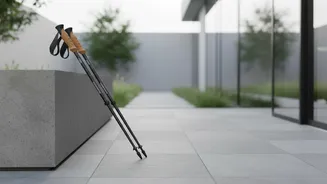
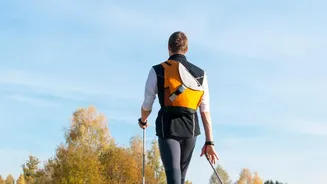
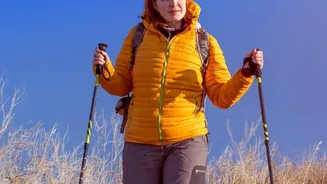
Starting with Nordic walking is straightforward. The key is to learn the correct technique to maximise benefits and avoid injury. The basic movement follows a natural rhythm: your right arm and left leg move forward together, and vice versa. Keep your posture upright, shoulders relaxed, and arms relatively straight, swinging from the shoulder. As you walk, you plant the pole tip opposite your forward foot and push the pole backward. A crucial part of the technique is opening your hand at the end of the push, letting the pole swing forward via the special strap. While you can learn from videos and guides, a session with a certified instructor can be invaluable for mastering the form. The only essential equipment are the poles, which are designed specifically for the activity and differ from trekking poles in their grip, strap, and tip.