


An Art Form Born of the Desert
Lippan Kam, also known as mud and mirror work, is a traditional mural art form that originates from the Great Rann of Kutch in Gujarat. Practiced for centuries by communities like the Rabari and Mutwa, this art was not just decorative but also functional.
Traditionally, women would adorn the inner walls of their circular mud huts, or 'bhungas', with intricate designs made from a mixture of clay and camel or horse dung. These murals served to strengthen the walls and provide insulation against the harsh desert climate. The most magical element, however, is the embedding of small mirrors, or 'aabhla', which capture and reflect even the dimmest light, brightening up the interiors.
The Modern Revival in Urban Spaces
Once confined to village walls, Lippan art is experiencing a significant renaissance in urban interior design. Its growing popularity is partly due to a collective desire for decor that feels authentic, sustainable, and tells a story. Modern artisans and designers have adapted the craft for contemporary living. Instead of being applied directly to walls, Lippan art is now commonly created on MDF boards, making it portable and easy to display as a statement piece in an apartment. While traditionalists still use a dung and clay mixture, many contemporary artists use hardening clays, chalk powder, and strong adhesives for greater durability and a cleaner process, making it suitable for city homes.
Why Lippan Art Complements Minimalism
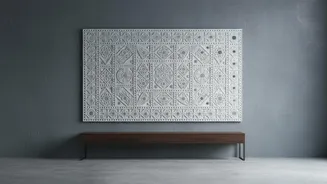
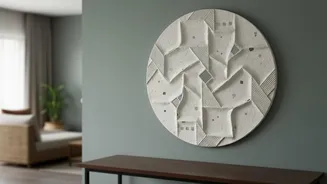
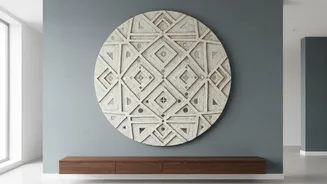
It may seem counterintuitive that a detailed, textured art form would fit a minimalist aesthetic, but that is precisely its unique appeal. The beauty of Lippan Kam lies in its ability to add warmth and character without creating clutter. Most traditional and modern pieces are finished in a monochromatic white or neutral earthy tones, which aligns perfectly with minimalist colour palettes. The geometric and nature-inspired motifs—from peacocks and flowers to abstract patterns—provide visual interest, while the shimmering mirrors add a subtle play of light and shadow. This creates a focal point that is both intricate and serene, enhancing a space rather than overwhelming it.
Ways to Weave Lippan into Your Home
Incorporating Lippan art into a city apartment can be done in various ways, from bold statements to subtle accents. A large, circular Lippan panel hung above a sofa or bed can serve as the primary artwork in a room, grounding the entire space. For a more understated approach, consider smaller, framed pieces arranged in a gallery wall. Beyond wall art, the craft is being adapted into functional decor. You can find Lippan-adorned mirror frames, decorative trays, coasters, and even embellishments on furniture. This versatility allows you to introduce the craft's earthy texture in a way that feels cohesive with your existing decor, whether it’s modern, bohemian, or eclectic.
Choosing the Right Piece
When selecting a piece of Lippan art, consider the scale of your space and the effect you want to achieve. Look for craftsmanship; the mud work should be smooth and the mirrors securely embedded. Decide whether you prefer traditional motifs, which often include figures and animals, or more modern geometric designs, which are often favored by Islamic artisans from the Mutwa community due to religious customs. Many artists today also experiment with contemporary colour palettes, offering pastels or vibrant hues alongside the classic white finish. Whether you buy from an online marketplace, a local artisan, or even try a DIY kit, you are participating in the preservation of a beautiful cultural heritage.