






For over 35 years, the Hubble Space Telescope has been humanity’s eye on the cosmos. But its legendary mission is at risk as its orbit slowly decays. Now, NASA is turning to the private sector for a creative solution to save it.
Why Does Hubble Need a Lift?
Like all satellites in
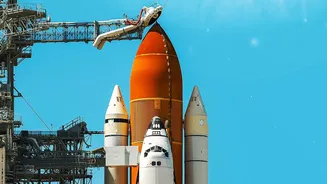
low-Earth orbit, the Hubble Space Telescope is in a constant battle with gravity and atmospheric drag. Though the atmosphere at its altitude of roughly 470-480 kilometres is incredibly thin, it still exerts a tiny pull on the school bus-sized observatory. Since its launch in 1990, Hubble has been gradually losing altitude. Without any onboard propulsion system to correct its course, it is slowly falling back to Earth. Projections estimate that without intervention, Hubble will likely re-enter the atmosphere sometime between 2033 and 2034. This orbital decay was anticipated from the beginning, and during the era of the Space Shuttle, servicing missions would periodically give the telescope a reboost to a higher altitude. The last such boost was in 2002. With the shuttle fleet now retired, a new solution is needed to prevent the iconic observatory from a fiery, uncontrolled end.
NASA's Call to the Commercial Sector
Instead of building a bespoke government mission, NASA has issued a formal Request for Information (RFI), essentially putting out a call to the booming commercial space industry. The agency is asking companies to submit their ideas and capabilities for a mission that could fly by 2032. The proposals could cover one of three main objectives: boosting Hubble to a higher, more stable orbit; servicing it with potential upgrades; or, as a final option, guiding it to a safe and controlled deorbit over an unpopulated area of the ocean. This RFI signals a major shift in how NASA approaches complex orbital challenges, leaning on the innovation and potentially lower costs of private companies. The agency is not yet committing to funding a mission but wants to understand the art of the possible in the modern space economy.
Who Could Answer the Call?
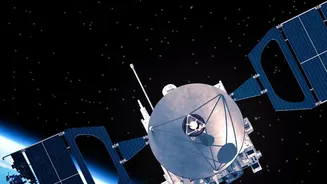
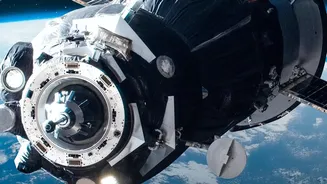
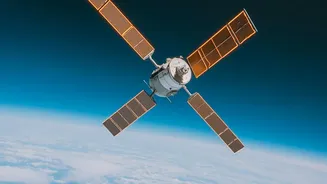
The list of potential suitors is a testament to how much the space industry has evolved. SpaceX is a prominent name, having previously partnered with NASA in 2022 on a study to explore the feasibility of using its Dragon spacecraft for a reboost mission, an effort that was part of the privately funded Polaris Program. That study concluded such a mission was technically possible. While a crewed mission is one possibility, the RFI is also open to robotic solutions. This opens the door for companies specializing in in-orbit servicing and robotics, such as Northrop Grumman with its Mission Extension Vehicle (MEV) or startups focused on satellite life extension. The contractor would be responsible for the entire mission, including the launch vehicle, the servicing spacecraft, and all operations. This 'turnkey' approach allows NASA to act as a customer rather than the operator.
The Challenge and the Ultimate Prize
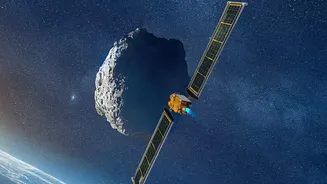
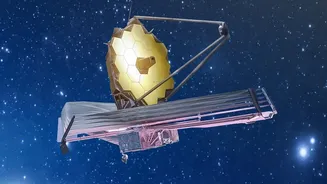
Rescuing Hubble is no simple task. Any mission would need to autonomously rendezvous with and safely dock with a threendecade old telescope that was never designed for robotic capture. The operation must be executed with extreme precision to avoid harming Hubble's sensitive optics and instruments. The technical risks are high, but the reward is immense. A successful reboost to the target altitude of at least 600 kilometres could add 15 to 25 more years to Hubble's operational life. This would mean decades of more groundbreaking science. While the James Webb Space Telescope is a powerful successor, it observes primarily in the infrared spectrum. Hubble remains unparalleled for its sharp vision in visible and ultraviolet light, continuing to provide critical data that no other observatory can. Extending its life preserves a unique and invaluable scientific capability for another generation.