






Know the Rules of the Game
Before you pack a single item, the most crucial hack is knowing the specific rules of the airline you're flying. In India, most domestic carriers like IndiGo, SpiceJet, and Akasa have a standard cabin baggage allowance of one bag weighing up to 7 kg.
They typically also permit one smaller personal item, like a laptop bag or handbag, up to 3 kg. However, enforcement has become much stricter. Gate agents frequently check bag sizes and weights, so assuming you can sneak an oversized bag on board is a risky and potentially expensive gamble. Always check your airline’s website for the exact dimensions (usually around 55cm x 35cm x 25cm) and weight limits before you leave for the airport. This simple five-minute check is your first line of defence against unexpected fees.
Embrace Compression Packing Cubes
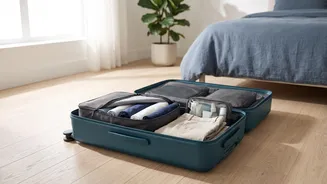
This isn't just about being organised; it's about manufacturing space. Compression packing cubes are a traveller's best friend. These fabric containers allow you to segment your clothes and then use a second zipper to squeeze out excess air, significantly reducing the volume of your items. By using several smaller cubes instead of one or two large ones, you can play a real-life game of Tetris inside your suitcase, filling every available nook and cranny. Roll your clothes before placing them in the cubes to maximise space and minimise wrinkles. This method is far more effective than simple folding and can almost double the amount of clothing you can fit.
Switch to Solid Toiletries
Liquids are heavy, bulky, and subject to security restrictions. The ultimate hack is to eliminate them wherever possible. Solid toiletries have revolutionised travel packing. You can now find solid bars for shampoo, conditioner, body wash, and even perfume and toothpaste tablets. These products are not only lighter and more compact than their liquid counterparts, but they also completely bypass the 100ml liquid rule at security checkpoints. This frees up precious space and weight in your toiletry bag for other essentials. Brands like Lush, Ethique, and Dr. Bronner's offer a wide range of high-quality solid options that last for dozens of washes.
Wear Your Heaviest Items
This is one of the oldest tricks in the book for a reason: it works. Your bulkiest items—be it a pair of boots, a heavy jacket, or a thick sweater—should be worn on the plane, not packed in your bag. While you might feel a bit layered at the airport, this strategy can free up a significant amount of space and weight in your carry-on. You can always remove the jacket or sweater once you're on board. Some savvy travellers even use jackets with large pockets to store heavy items like power banks or books during check-in and boarding.
Choose the Right Bag
The bag you choose is half the battle. Start with the lightest possible carry-on you can find. An ultra-lightweight bag gives you a higher personal allowance for your actual belongings. Secondly, consider a soft-sided bag or a backpack over a rigid, hard-shell suitcase. A soft bag has more give, making it easier to squeeze into a tight baggage sizer if challenged by airline staff. A backpack is also often perceived as being lighter and less conspicuous than a small trolley suitcase, sometimes drawing less scrutiny from busy gate agents.
Maximise Your 'Personal Item'
The personal item is your secret weapon. While Indian airlines technically allow a personal item of up to 3 kg in addition to your 7 kg cabin bag, the key is to make it look unobtrusive. A slim laptop sleeve or a small, sleek backpack is less likely to be challenged than a bulky, overstuffed tote. Use this space strategically for your heaviest, most dense items: electronics, chargers, books, and your solid toiletry kit. This helps keep your main carry-on bag well under the 7 kg limit while still bringing all your necessities.