






What is a Semicryogenic Engine?
Think of rocket engines as having different appetites. Some use solid fuel, while others use complex liquid fuels. ISRO's workhorse rockets have mastered both. A cryogenic engine, which powered the upper stage of the Chandrayaan-3 mission, uses super-cooled
liquid oxygen and liquid hydrogen. A semicryogenic engine is a bit different. It pairs liquid oxygen with a refined, rocket-grade kerosene (similar to jet fuel), which has a major advantage: it doesn't need to be stored at extremely low temperatures. This makes the engine easier to handle, more cost-effective, and allows for more propellant to be packed into the same space, giving it a powerful punch.
Meet the SE2000: India’s New Powerhouse
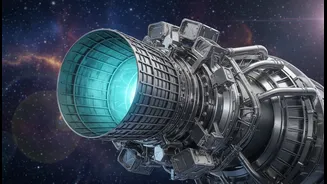
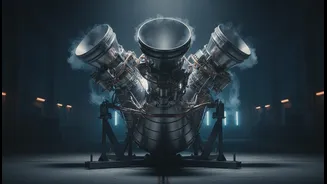
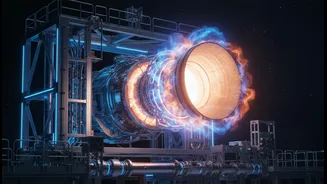
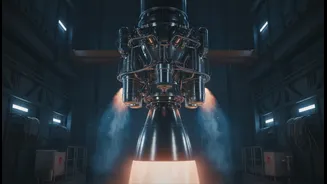
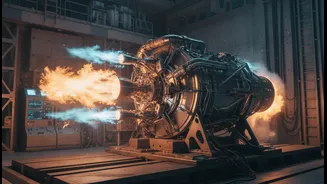
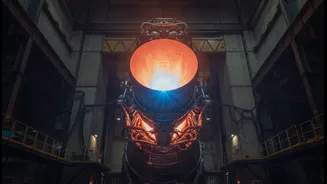
The engine at the center of this development is the SE2000. The '2000' refers to its immense power: a thrust of 2,000 kilonewtons (kN), which translates to about 200 tonnes of force. Developed by ISRO's Liquid Propulsion Systems Centre (LPSC), this engine is a beast designed to power the booster stages of India's future rockets. It operates through a complex process called an oxidizer-rich staged combustion cycle, a sophisticated technology available to only a few space-faring nations. This design allows it to generate enormous thrust with high efficiency, a key requirement for lifting heavy payloads into orbit.
The Latest Milestone: A High-Thrust Test
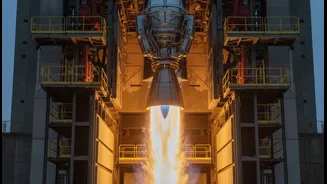
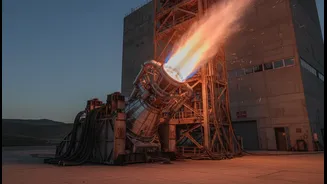
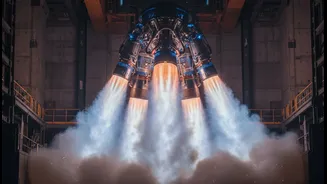
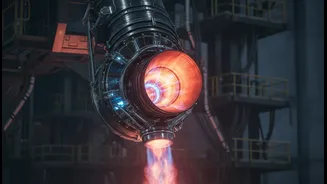
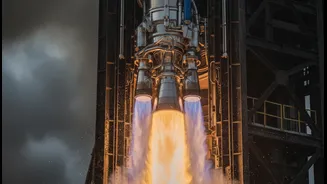
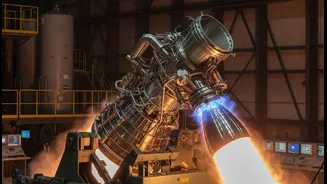
On June 24, 2026, engineers at the ISRO Propulsion Complex in Mahendragiri, Tamil Nadu, conducted a crucial hot test. They fired the engine's 'power head'—which includes all critical systems like the turbopumps and pre-burner, but not the final thrust chamber—and achieved 175 tonnes of thrust for the first time. This is 88% of the engine's total planned power. The successful test demonstrated the stability and performance of the engine's core components at a higher thrust level, giving ISRO confidence to proceed towards a full-power demonstration at the full 200-tonne level.
Why Higher Thrust is a Game-Changer
So, why does all this power matter? More thrust means bigger rockets and heavier payloads. The SE2000 engine will power a new stage called the SC120, which is set to replace the current core stage of India's heaviest rocket, the LVM3. This strategic upgrade will significantly boost the LVM3's capacity, allowing it to lift satellites weighing 5 tonnes to Geostationary Transfer Orbit, up from the current 4 tonnes. This enhancement is crucial for launching heavier communication satellites, reducing India's dependence on foreign launchers, and capturing a larger share of the global commercial launch market. It also opens the door for more ambitious deep-space missions and is a foundational technology for India’s human spaceflight program, Gaganyaan.
The Road Ahead for Indian Rockets
This successful test is a major step, but not the final one. The next phase involves integrating the power head with the thrust chamber for a full, integrated engine test at 100% power. Following that, engineers will test the entire SC120 stage before it can be certified for flight. While this engine itself will not power the very first Gaganyaan flights, its development is critical for the future of the program and for building even more capable rockets, like the planned Next Generation Launch Vehicle (NGLV). Combined with other upgrades, like the improved C32 cryogenic upper stage, this technology ensures India's rockets will be ready for the ambitious missions of the next decade, from building a space station to sending humans to the Moon.