








From Lab to Living Room
For decades, the Indian Space Research Organisation (ISRO) operated with a quiet, methodical competence. Its achievements were a source of national pride, but the excitement was often confined to scientific circles and newspaper columns. The successful
Chandrayaan-3 lunar landing in 2023 changed everything. It wasn't just a technical triumph; it was a nationally televised spectacle that united the country in celebration. That wave of public enthusiasm has now carried over to Gaganyaan, India's ambitious first mission to send its own astronauts into space. The mission is no longer just a series of technical milestones reported by ISRO; it's a developing story followed by millions, complete with heroes, high stakes, and a palpable sense of a looming, historic climax. This is 'countdown culture'— a phenomenon where a national project captures the public imagination so completely that its progress is tracked with the fervor of a pop-culture phenomenon.
What Gaganyaan Represents
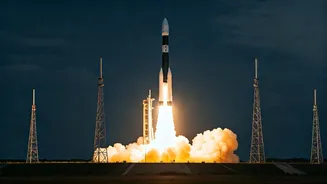
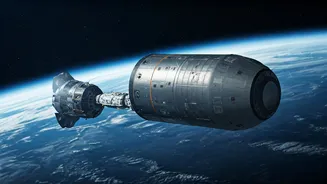
At its core, the Gaganyaan project aims to launch a crew of three members into a 400 km orbit for a three-day mission and bring them back safely, landing in Indian sea waters. A successful mission would make India only the fourth country in the world to independently send humans to space, after Russia, the USA, and China. The preparations are immense, with ISRO conducting thousands of tests to ensure every system is safe and reliable. The launch vehicle is a human-rated version of the powerful LVM3 rocket, specially configured to meet the stringent safety requirements of human spaceflight. This mission is the culmination of decades of work and represents a massive leap in India's technological sovereignty. But beyond the technology, Gaganyaan symbolises a new, assertive Indian identity on the world stage, aiming to secure a seat at the 'high table' of space law and exploration.
Meet India's New Heroes
Central to this new cultural excitement are the four astronaut-candidates, whose names were revealed by Prime Minister Narendra Modi in early 2024. Group Captains Prasanth Balakrishnan Nair, Ajit Krishnan, Angad Pratap, and Wing Commander Shubhanshu Shukla are all experienced Indian Air Force test pilots. Their selection and ongoing rigorous training in Russia and at a dedicated facility in Bengaluru have given a human face to the mission. They are not just anonymous engineers in a lab; they are the chosen few, the embodiment of the nation's aspirations. Their public appearances and updates on their training have turned them into national figures, moving the mission from an abstract concept into a relatable human story of courage and dedication. This shift from celebrating the machine to celebrating the people behind it is a key ingredient of countdown culture.
A Nation Invested
The groundswell of public interest is no accident. It builds on the pride from Chandrayaan-3, which even ISRO's chairman admitted had an impact they never imagined. The government has also framed the mission as a national endeavor, with the Prime Minister setting ambitious long-term goals of a 'Bharatiya Antariksha Station' (Indian Space Station) by 2035 and sending an Indian to the Moon by 2040. This vision positions Gaganyaan not as an endpoint, but as a critical first step in a much grander journey. It inspires young people towards careers in science and technology and creates new opportunities for Indian industries. The mission has become a source of immense national pride and a powerful symbol of an ascendant India, capable of achieving world-class feats on a relatively modest budget.