




The Sun’s Unpredictable Temper
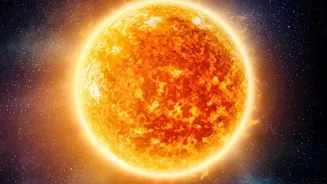
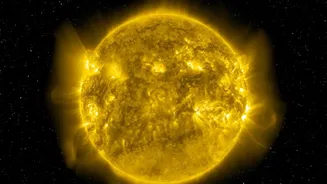
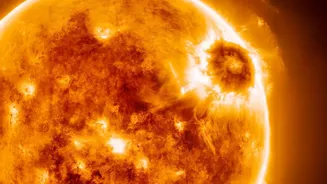
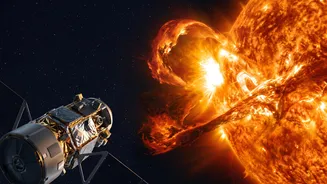
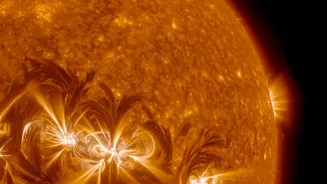
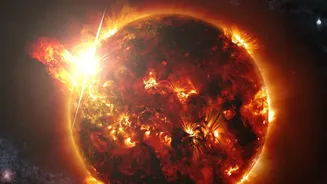
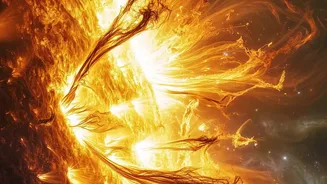
The Sun is not just a benign source of light and heat. It constantly sends out a stream of charged particles called the solar wind. Occasionally, it unleashes much more powerful bursts of energy, known as solar flares or coronal mass ejections (CMEs).
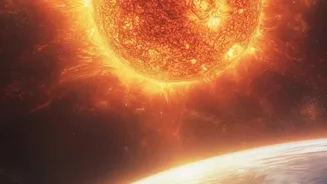
When these eruptions are aimed at Earth, they can interact with our planet's magnetic field and trigger geomagnetic storms. While these storms produce beautiful auroras, they also pose a significant threat to our high-tech society. They can induce powerful electrical currents in power grids, potentially damaging high-voltage transformers and causing widespread blackouts. They can also disrupt radio communications, harm satellite electronics, and create navigation errors for aircraft. As our reliance on this technology grows, so does our vulnerability to a single, powerful solar storm.
The Challenge of Forecasting Space Weather
Predicting exactly when and where a geomagnetic storm will impact Earth has been a major challenge. Satellites can detect a CME as it leaves the Sun, but determining its trajectory and intensity is complex. Current warning systems often rely on monitors positioned about 1.5 million kilometres from Earth, which, for the fastest-moving storms, can provide as little as 15 to 30 minutes of warning. Previous models have struggled to provide forecasts that are both fast and globally comprehensive. Some could produce localised predictions, while others that took a global view were not timely enough to be truly useful for mitigating damage. This short and uncertain window makes it difficult for power grid operators and satellite controllers to take effective preventative measures.
Enter DAGGER: NASA’s AI Forecaster
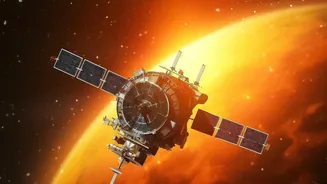
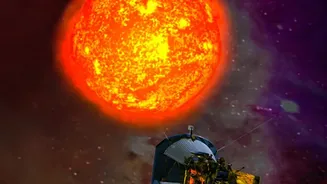
To address this challenge, NASA researchers have developed a new model called DAGGER (Deep Learning Geomagnetic Perturbation). This system uses a form of artificial intelligence called deep learning to analyse real-time data from a fleet of solar-monitoring spacecraft. The AI was trained on years of historical data, learning the complex relationships between measurements of the solar wind and the resulting geomagnetic disturbances on the ground. By identifying subtle patterns that human analysts might miss, DAGGER can predict where an impending solar storm will strike anywhere on Earth with about 30 minutes of advance warning. It can generate a new, updated global forecast in less than a second, and it continues to update its predictions every minute.
What a 30-Minute Head Start Means
While 30 minutes may not sound like much, in the world of infrastructure management, it can make all the difference. This advance warning gives power companies crucial time to reroute power, take vulnerable transformers offline, or otherwise stabilize the grid to prevent cascading failures. Satellite operators can put their spacecraft into a protective safe mode or adjust their orbits to reduce drag and the risk of collision. Airlines, which rely on GPS and high-frequency radio, can alter flight paths, especially over polar routes where the effects of space weather are strongest, to ensure communication systems remain stable and to minimise radiation exposure for passengers and crew. It transforms the response from a frantic scramble into a planned procedure, potentially saving billions of dollars in damages and preventing widespread disruption.
The Road Ahead
DAGGER has already been successfully tested against past geomagnetic storms, accurately forecasting the impacts of events from August 2011 and March 2015. While currently a powerful proof-of-concept, the goal is to integrate this AI into the operational forecasting systems used by agencies like NOAA’s Space Weather Prediction Center. The timing is critical, as the Sun is approaching a period of peak activity in its 11-year cycle, known as the solar maximum. This increased activity means a higher chance of Earth-directed storms, making a reliable early-warning system more important than ever. The development of DAGGER, and other AI models like it, represents a significant step toward safeguarding our technological backbone from cosmic threats.