

A Deep Partial Lunar Eclipse
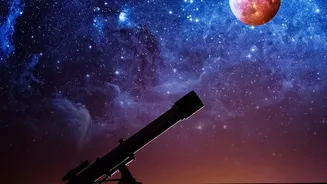
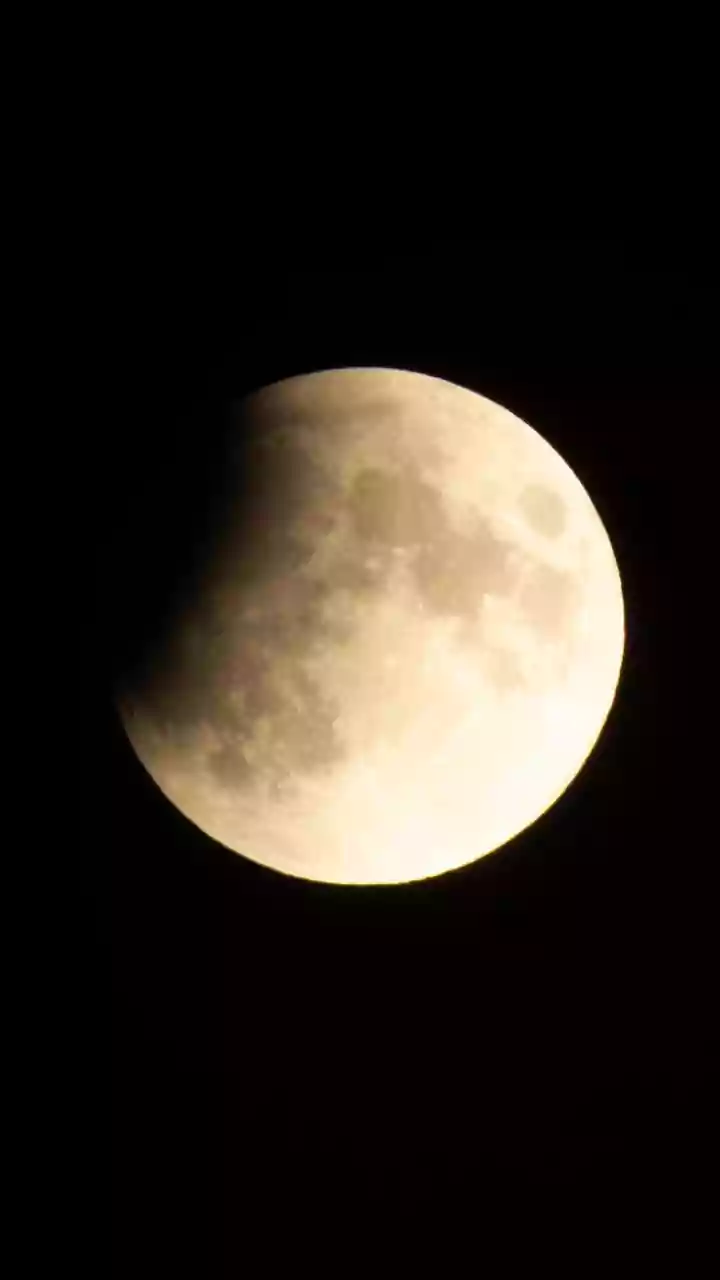
One of the standout events this month is a deep partial lunar eclipse visible across India on the night of August 27-28. A lunar eclipse happens when the Earth passes directly between the Sun and the Moon, casting a shadow over the lunar surface. During
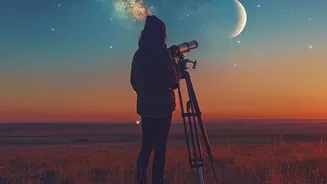
this event, a significant portion of the Moon will pass through Earth's dark inner shadow, the umbra, causing it to appear noticeably dimmer and potentially reddish. The eclipse will be an impressive sight, with about 93% to 96% of the Moon's face falling into shadow at its peak. The best part is that you don't need any special equipment to watch it, though binoculars or a small telescope will certainly enhance the view of the shadowed lunar landscape.
The King and The Red Planet
While the planetary parade of early August has passed, several worlds remain prominent fixtures in the night sky. Throughout the month, you can spot yellowish Saturn rising in the east in the evening. From late August onward, it will be well-placed for viewing. Mars, with its distinct reddish hue, is visible in the east before dawn. Towards the end of the month, very bright Jupiter will begin to make its appearance, rising low in the east just before dawn. These planets are bright enough to be seen with the naked eye, appearing as steady, star-like points of light that don't twinkle as much as distant stars.
The Moon Meets Saturn
From August 28th to the 31st, skywatchers can enjoy a beautiful pairing of the Moon and Saturn. Following the partial lunar eclipse, the bright waning Moon will appear close to the ringed planet in the sky. On the night of August 30, the Moon will be just 5.5 degrees to Saturn's upper left. While they only appear close from our vantage point on Earth, these conjunctions create a stunning visual and make it incredibly easy to locate Saturn. Just find the Moon, and the bright, yellowish point of light nearby will be the famous gas giant.
The Summer Triangle Overhead
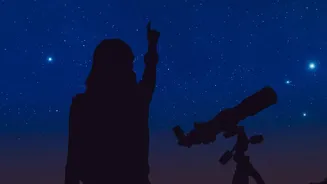
High overhead on August evenings is one of the most famous star patterns of the season: the Summer Triangle. This is not a constellation, but an asterism formed by three of the brightest stars in the sky, each from a different constellation. The trio consists of brilliant Vega in the constellation Lyra (the Harp), Altair in Aquila (the Eagle), and Deneb in Cygnus (the Swan). This giant triangle is easy to spot even from areas with some light pollution. July and August evenings are the ideal time to see it, as it climbs high into the sky after dark. Once you locate it, you can use it as a guidepost to explore the fainter constellations nearby.
A Glimpse of the Milky Way
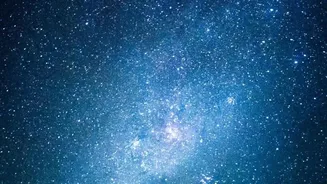
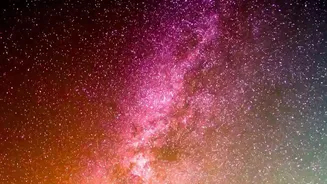
The end of August offers a great opportunity to catch a view of our home galaxy, the Milky Way. On nights without a bright moon and far from city lights, the galaxy stretches across the sky like a faint, glowing river of stars. The Summer Triangle is a useful marker; the Milky Way runs right through it, passing between Vega and Altair. To get the best view, find a dark sky location, give your eyes about 20-30 minutes to fully adjust to the darkness, and look towards the south. The view of countless stars, dust lanes, and glowing nebulae through a pair of binoculars can be breathtaking.