
The Challenge of Faint Light and City Glow
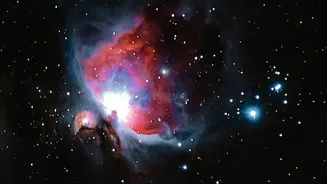
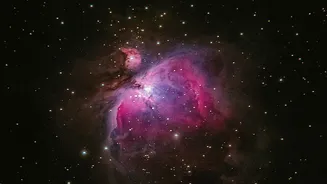
Photographing a deep space object like a nebula or galaxy is fundamentally a battle against two things: faintness and noise. These celestial objects are incredibly dim, and their subtle light has traveled for thousands, or even millions, of years to reach
us. To make matters worse, most of us live under skies contaminated with light pollution. This glow from city lights, streetlamps, and buildings creates a bright atmospheric fog that can easily overwhelm the delicate signal from a distant nebula. For an astrophotographer, this is like trying to hear a whisper in the middle of a rock concert. The unwanted light is 'noise' that drowns out the 'signal' you are trying to capture. A successful image needs a strong signal-to-noise ratio (SNR), where the light from the nebula is much more powerful than all the background noise combined.
Isolating the Signal with Narrowband Filters
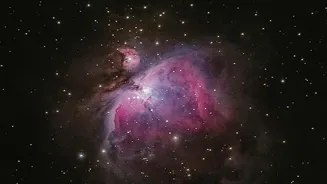
This is where narrowband filters become a superpower for astrophotographers. Think of a filter as a bouncer at a very exclusive club. While a standard camera sensor tries to capture all visible light, a narrowband filter only allows a tiny, specific sliver of the light spectrum to pass through to the camera. Emission nebulae, the vast clouds where stars are born, glow intensely at very specific wavelengths of light emitted by energized gases. The most common filters target the light from Hydrogen-alpha (Ha), Oxygen-III (OIII), and Sulfur-II (SII). By using a filter that only accepts the light from Hydrogen-alpha, for example, the camera effectively blocks out almost all the light pollution, moonlight, and general skyglow. This dramatically improves the contrast, allowing the faint structure of the nebula to stand out sharply against a dark background, even from a suburban backyard.
Painting with a 'Cosmic' Palette
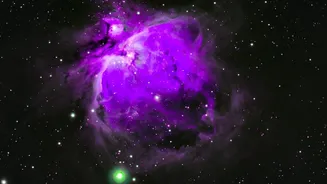
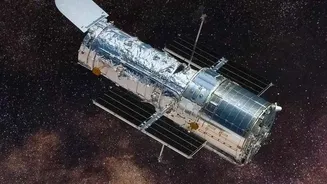
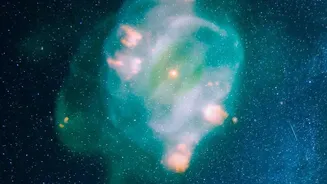
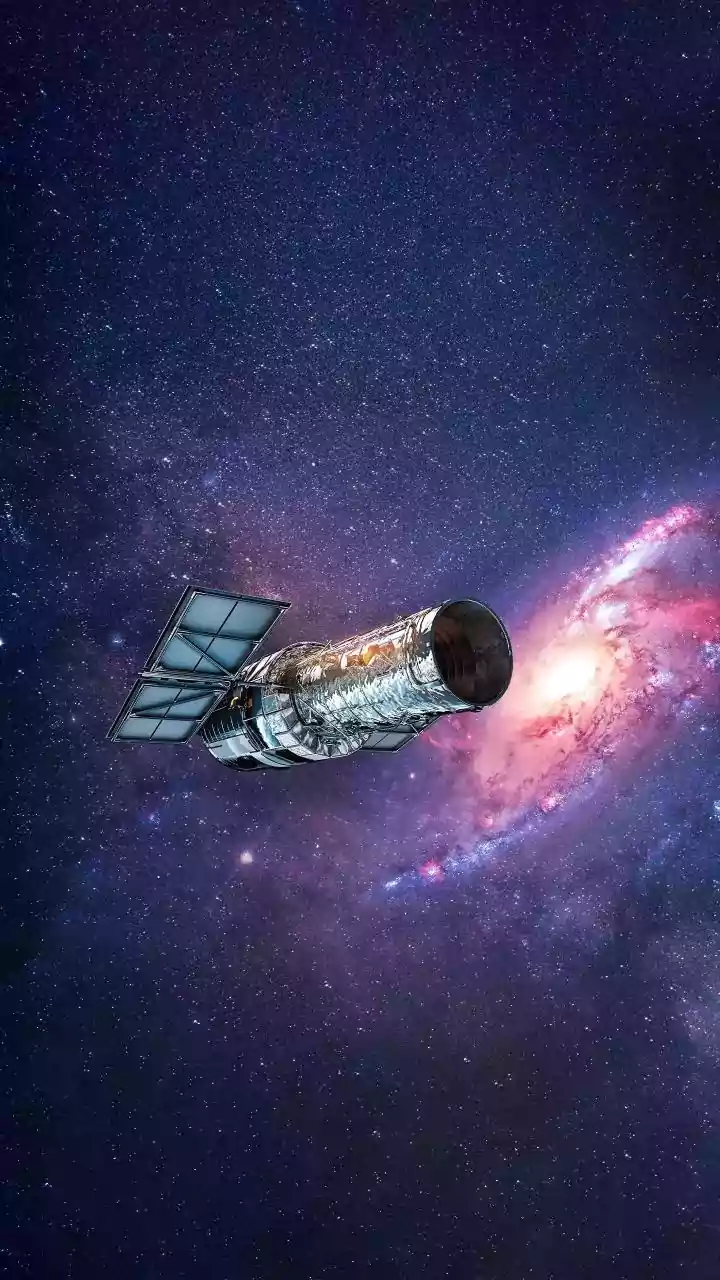
A common question is how these filters create such vibrant colors. The process is a beautiful blend of science and artistry. Since each narrowband filter captures light from a specific gas, the initial images taken with a monochrome astronomy camera are black and white. Each image purely represents the structure of the nebula as seen in that one wavelength. To create the final color image, photographers assign each of these monochrome datasets to a color channel: red, green, or blue. A widely used technique is the 'Hubble Palette', named after the method used for many famous Hubble Space Telescope images. In this scheme, the light from sulfur (SII) is mapped to red, hydrogen (Ha) to green, and oxygen (OIII) to blue. The resulting 'false-color' image isn't what your eyes would see, but it's scientifically meaningful. The vibrant colors reveal the chemical composition and physical structure of the nebula in stunning detail that would otherwise be invisible.
Why Long Exposures are So Critical
While filters clean up the signal, you still need to collect enough of it. This is where exposure time comes in. A single, short snapshot of a nebula will be mostly random noise from the camera's electronics and the sky background. To get a clean image, you need to collect light for a long time. This is done by taking many individual exposures, often lasting several minutes each, and then 'stacking' them together using software. This stacking process averages out the random noise, causing it to fade away, while the consistent signal from the nebula gets stronger and stronger. The result is a much higher signal-to-noise ratio. Determining the 'proper' exposure time is a balance; it needs to be long enough to overwhelm the camera's inherent 'read noise' but short enough to avoid issues like stars trailing due to Earth's rotation. For narrowband imaging, individual exposures often range from 5 to 20 minutes, and a final image might be the result of many hours of total integration time gathered over several nights.