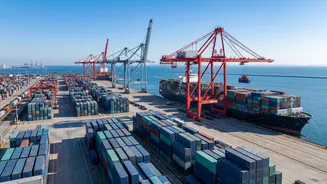







Our Massive Appetite for Foreign Oil
India's dependence on imported edible oil is staggering. The country imports nearly 60% of its total requirement, making it highly exposed to international market dynamics. This gap between domestic production and consumption has widened over the years;
while demand has grown steadily, local oilseed output has not kept pace. The primary oils on our import list are palm oil, sourced mainly from Indonesia and Malaysia, and soybean and sunflower oils, which come from countries like Argentina, Brazil, Russia, and Ukraine. This heavy reliance means that any disruption in these producer nations, whether from weather, policy changes, or geopolitical events, has a direct ripple effect on the supply and cost of oil landing on Indian shores.
The Global Price Tag
The international price of edible oils like palm and soy is determined by a classic interplay of global supply and demand. Factors that can drive prices up include poor weather in major producing regions, increased labour costs, or a rise in demand for biofuels, which use vegetable oils as a feedstock. For example, a drought in South America could shrink the soybean harvest, pushing up soy oil prices globally. Similarly, political decisions in Indonesia or Malaysia regarding palm oil exports can cause immediate price shocks. Because these oils are often interchangeable for many uses, a price spike in one—like sunflower oil due to conflict in the Black Sea region—quickly increases demand and prices for the others, such as palm or soy oil.
The Rupee-Dollar Dance
Here's where it gets even more complicated. All international commodity trade, including for edible oils, is conducted in U.S. dollars. This means Indian importers must pay for their oil shipments in dollars. When the Indian rupee weakens against the dollar, importers have to spend more rupees to buy the same amount of dollars. For example, if a tonne of oil costs $1,000, an importer would pay ₹80,000 if the exchange rate is ₹80 to the dollar. But if the rupee weakens to ₹90, that same tonne of oil now costs ₹90,000. This increased cost is inevitably passed down the supply chain, from the importer to the wholesaler, and finally to the consumer at the retail store. A weak rupee essentially magnifies the impact of high global oil prices.
Government's Balancing Act: Import Duties
The final major variable is the Indian government's import policy, specifically the use of customs duties. These taxes are a powerful tool used to balance two competing interests: protecting domestic farmers and managing consumer inflation. When the government wants to support Indian oilseed farmers from cheap imports, it can raise import duties. This makes imported oil more expensive, encouraging local production. Conversely, when international prices surge and domestic retail prices become too high for consumers, the government can cut import duties to provide relief. This has happened multiple times, with duties on crude edible oils being adjusted to cushion the market from extreme price volatility, demonstrating a constant push-and-pull between farmer support and consumer affordability.