




The Allure of a Story
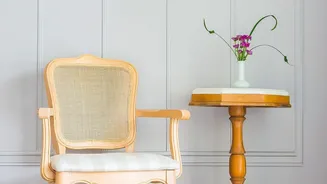
After years of minimalist interiors and catalogue-perfect homes, there's a growing desire for spaces with personality. Vintage and reclaimed furniture offer exactly that—a narrative. Each scratch, faded polish, and slight imperfection tells a story of a life
lived, adding a layer of warmth and character that brand-new items simply can't replicate. In contrast to mass-produced furniture, which often follows fleeting trends, a vintage writing desk or a reclaimed teak cabinet brings a sense of timelessness and individuality. This desire for uniqueness is a reaction to the homogeneity of modern retail, where consumers want to own something special, not just something new.
Sustainability Becomes a Priority
The conversation around sustainability is no longer a niche topic; it has become a priority for many Indian homeowners. The 'fast furniture' industry, much like fast fashion, comes with a significant environmental cost, from deforestation to landfill waste. Choosing reclaimed or vintage pieces is a direct way to participate in the circular economy. It reduces the demand for newly harvested timber, conserves forests, and lowers the carbon emissions associated with manufacturing and shipping new goods. This eco-conscious mindset is particularly strong among younger generations, who are more aware of climate change and seek to make responsible consumer choices. As a result, sustainability in interior design has shifted from an option to a norm.
Old-World Quality and New-Age Economics
There's a simple truth to older furniture: it was built to last. Crafted from high-quality solid woods like teak and sheesham, these pieces were made with an attention to detail and durability that is rare in today's market. While the upfront cost of a vintage item might sometimes be higher than a flat-pack alternative, it is often seen as a long-term investment. These pieces have already proven their durability by lasting for decades. Furthermore, the trend supports a local ecosystem of artisans and craftspeople. Skilled workers in cities like Jodhpur and across regions like Rajasthan and Kerala are transforming salvaged timber, old doors, and architectural elements into beautiful, high-quality furniture, preserving traditional woodworking skills.
Crafting a Modern Indian Identity
The trend is also deeply connected to a cultural shift. Homeowners are moving away from simply copying Western aesthetics and are instead creating spaces that feel distinctly Indian and personal. Incorporating vintage pieces—whether it's a grandparent's trunk used as a coffee table or a hand-carved cabinet from a local market—allows for a beautiful blend of the past and present. It’s a way of honouring Indian craftsmanship and heritage while creating a contemporary living space. This approach doesn't create an old-fashioned home; rather, the juxtaposition of old and new makes the space feel more curated, authentic, and connected to one's roots. Social media has played a significant role, with images of creatively restored and upcycled furniture making heritage pieces aspirational again for a new generation.