





More Than Just Solar on a Farm
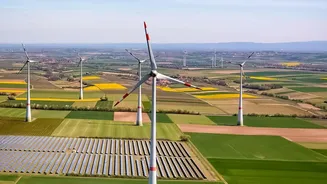
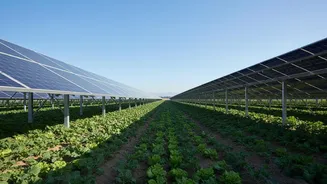
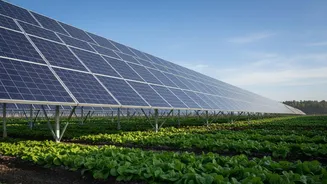
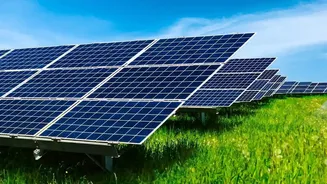
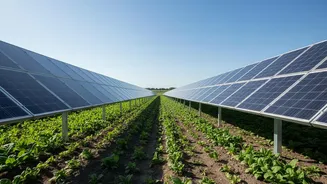
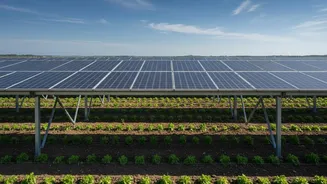
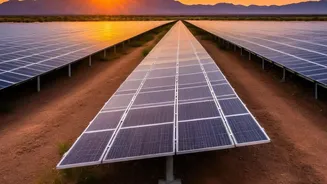
At its heart, agrivoltaics, or agri-PV, is the practice of using the same piece of land for both farming and solar power generation. Instead of dedicating vast tracts of land solely to large-scale solar parks, this model installs solar panels on elevated
structures, high enough for crops to be cultivated underneath or for livestock to graze between the rows. This isn't just about saving space; it's about creating a symbiotic relationship. The panels generate clean electricity, which can power farm operations or be sold to the grid, while the agricultural activity continues below. This dual-use approach is gaining traction as a solution to the intense competition for land between India's growing energy needs and its vital agricultural sector.
The Strategic Power of Partial Shade
The real genius of India's recent agrivoltaics push lies in its focus on microclimates. The partial shade cast by the solar panels creates a cooler, more favourable environment for certain crops, especially in the face of rising temperatures and extreme heat. This shade reduces heat stress on plants and lowers the soil temperature. The most critical benefit for a water-stressed nation like India is the significant reduction in water evaporation from the soil. Studies and pilot projects across the country have shown that this effect can cut irrigation needs substantially, with some estimates suggesting water savings of up to 30%. The panels also act as a physical shield, protecting crops from damage caused by hail or torrential rain, thereby adding a layer of climate resilience for farmers.
Boosting Yields and Farmer Incomes
While it might seem counterintuitive, growing crops under solar panels can actually increase yields for certain varieties. Shade-tolerant crops like tomatoes, spinach, coriander, and various medicinal plants have been shown to thrive in these conditions. Research from institutions like the Indian Council of Agricultural Research (ICAR) indicates that crop yields can increase by up to 30% in some cases. For farmers, the benefits are twofold. They continue to earn from their agricultural output, which can be more stable and even higher, while also generating a new, reliable income stream from selling electricity. In some developer-owned models, farmers receive steady lease payments that can dramatically increase their annual income per acre. This diversification makes farming a less risky and more profitable venture.
Pioneering Projects and Policy Support
India's agrivoltaics drive is moving from theory to practice with several pioneering projects. The Central Arid Zone Research Institute (CAZRI) in Jodhpur has been a key player, developing systems that integrate crop production, electricity generation, and even rainwater harvesting from the panel surfaces. Their work has demonstrated the viability of growing crops like moong bean and clusterbean in the arid conditions of Rajasthan. On the policy front, schemes like PM-KUSUM (Pradhan Mantri Kisan Urja Suraksha evam Utthaan Mahabhiyan) are helping farmers install solar pumps and sell surplus power, laying the groundwork for wider agrivoltaics adoption. As India aims to meet ambitious renewable energy targets, a dedicated national mission for agrivoltaics is increasingly being discussed to streamline regulations and accelerate growth.
Challenges on the Horizon
Despite the immense potential, the path to large-scale adoption is not without its obstacles. The primary hurdle for many small and marginal farmers is the high initial investment cost, which can be significantly more than for traditional ground-mounted solar projects. There are also challenges related to ambiguous land-use regulations, which can create uncertainty for farmers wanting to install panels. Furthermore, not all crops are suitable for growing in shade, and careful planning is required to match the right crops with the right panel density and design. Overcoming these issues will require targeted financial incentives, clearer policies, and continued research and development to create region-specific and cost-effective solutions for farmers across the country.