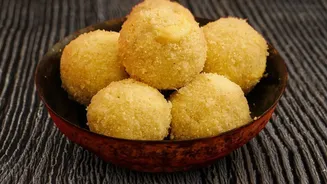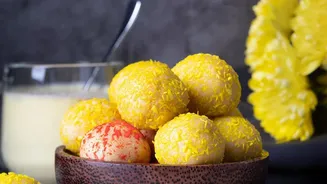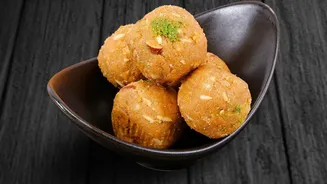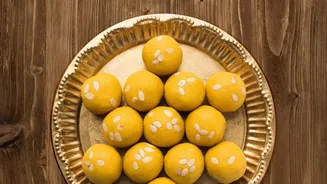



There's nothing quite like a homemade besan ladoo that melts in your mouth. But it can be incredibly frustrating when your labour of love results in hard, dense balls. The good news is that achieving that perfect, soft texture isn't a mystery.
The Roasting Ritual is Everything
The single
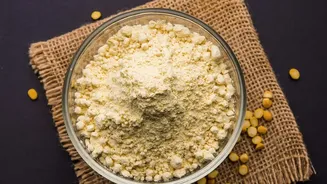
most critical step in making besan ladoo is roasting the gram flour, or besan. This is not a process to be rushed. Roasting on high heat is the primary reason for hard ladoos. While the outside may look browned, the inside of the flour particles remains raw, leading to a pasty taste and a texture that sticks to the roof of your mouth. The key is to use a heavy-bottomed pan on a consistently low flame, stirring constantly. This slow process, which can take anywhere from 20 to 30 minutes, cooks the flour evenly, releasing a beautiful nutty aroma that signals it's ready. Under-roasted besan will taste raw and unpleasant, while over-roasted besan will be bitter and dark. Patience here is your greatest tool.
Get the Ghee Ratio Right
Ghee is what binds the ladoo and gives it that signature melt-in-the-mouth quality. Using too little ghee is a direct path to dry, crumbly ladoos that refuse to hold their shape. On the other hand, too much ghee will create a greasy, loose mixture that is equally difficult to form into balls. A good rule of thumb is to use a ratio of roughly half the weight of besan in ghee. Many experienced cooks recommend adding the ghee in batches. Start with a portion of the ghee to roast the besan, and add more as you go if the mixture appears too dry. The mixture will go from a thick paste to a looser, more fluid consistency as the besan roasts and absorbs the fat. If your mixture is too dry when it's time to shape, you can always mix in a tablespoon of warm, melted ghee.
Mind the Sugar and Temperature
When you add the sugar is just as important as how much you add. A common mistake is adding sugar to the besan mixture while it is still piping hot. This causes the sugar to melt into a syrup, which can make the ladoos sticky, flat, and ultimately hard once they cool. After you finish roasting the besan, transfer it to a separate plate or bowl to stop the cooking process and allow it to cool. The mixture should be just warm to the touch—not hot, but not completely cold either. If it's too cold, the ghee will solidify, and the ladoos won't bind. For the smoothest texture, always use powdered sugar, sometimes called boora or tagar, not granulated sugar which can leave a gritty texture.
Choosing Your Flour and Adding Texture
While standard fine besan works, many sweetmakers prefer a slightly coarser variety, often sold as 'ladoo besan'. This coarser grind gives the ladoos a more traditional, grainy (or 'danedar') texture that is less likely to become pasty. If you can only find fine besan, a popular trick is to add a couple of tablespoons of fine semolina (sooji/rava) to the besan before roasting. This helps create that desirable grainy bite. Another technique involves sprinkling a tablespoon or two of water or milk into the mixture near the end of the roasting process; the sizzle helps create a more granular texture.
The Final Touch: Shaping Your Ladoos
Once your mixture is cooled to the right temperature and the sugar is mixed in, it's time to shape. If you find the mixture is too crumbly and won't hold together, it almost always means you need a little more ghee. Add one or two teaspoons of warm melted ghee and mix again. If the opposite happens and the mixture is too loose or greasy (likely from adding sugar when it was too hot), the best fix is to refrigerate the mixture for about 20–30 minutes. This will help the ghee solidify slightly, making the dough firm enough to handle and shape into perfect, round balls. Press firmly as you roll to ensure they are compact and hold their form.