






Understanding the Urban Glow
The culprit behind our starless urban skies is light pollution, the excessive and misdirected artificial light from buildings, streetlights, and advertisements. In most Indian metros, the sky brightness is rated between 7 and 9 on the Bortle scale, a nine-level
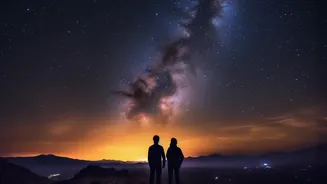
measure of darkness. A Class 9 sky is the inner-city core, where only the moon, planets, and a few bright stars are visible. To truly see the cosmos, you need to find a location with a much lower Bortle rating, where the Milky Way can reveal itself in all its glory.
Finding India's Dark Sky Havens
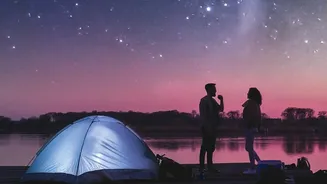
You don't need a trip to the Himalayas to find dark skies, though they certainly help. India has a growing number of accessible spots for stargazing. For the ultimate experience, Hanle in Ladakh is home to India’s first official Dark Sky Reserve, offering some of the clearest skies in the world. Pench Tiger Reserve in Madhya Pradesh holds the distinction of being the country's first Dark Sky Park, blending wildlife with astronomy. For a weekend escape, city dwellers have options too. Mumbaikars can head to the vehicle-free hill station of Matheran or the area around Bhandardara dam. From Delhi, Sariska Tiger Reserve is just a few hours away and even has a privately run observatory. For those in Bengaluru, the hills of Coorg and the historic landscape of Hampi offer impressive celestial views once you get away from town centres.
Timing Is Everything
The best location is useless if your timing is wrong. The single most important factor is the lunar cycle. Plan your trip around the new moon, when the sky is at its absolute darkest. A full moon can be as disruptive as city lights, washing out all but the brightest stars. Seasonally, the post-monsoon period from October to November generally offers the crispest, dust-free atmosphere across much of the country. The winter months from December to February are also excellent, thanks to low humidity. At high-altitude destinations like Spiti and Ladakh, the viewing season is dictated by road access, typically from May to September.
Gear Up (Or Don't)
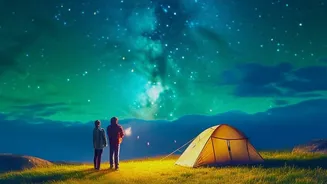
You don't need expensive equipment to start. At a true dark-sky site, the naked eye is enough to witness thousands of stars and the beautiful, cloudy structure of the Milky Way. Before investing in a telescope, consider a good pair of binoculars. They are portable, easy to use, and dramatically enhance the view of star clusters and the moon's craters. The most crucial piece of gear is a torch with a red-light setting. White light from a regular flashlight or your phone screen will ruin your night vision. Allow your eyes at least 20-30 minutes to fully adapt to the darkness; you'll be amazed at how much more becomes visible.
Let Your Phone Be Your Guide
While you should avoid its bright screen, your smartphone can be a powerful astronomical tool. Several apps act as a portable planetarium, helping you identify what you're seeing. Apps like Stellarium, SkyView, and Star Walk 2 use your phone's sensors to show a real-time map of the sky. Simply point your device upwards, and the app will label constellations, planets, and even satellites like the International Space Station as they pass overhead. Some apps also feature information on the mythology and science behind the constellations, adding another layer to your experience.
Join a Community of Stargazers
Stargazing is often more rewarding when shared. India has a vibrant community of amateur astronomers. Clubs like the Bangalore Astronomical Society and Jyotirvidya Parisanstha in Pune organize regular 'star parties' at dark-sky locations, where members bring telescopes and share their knowledge. These events are perfect for beginners looking to learn from experienced observers. Additionally, astro-tourism is on the rise, with companies like Starscapes offering guided stargazing sessions with powerful telescopes in places like Coorg, Kausani, and Mukteshwar, making the cosmos accessible to everyone.