




In the world of healthy eating, quinoa and lentils are pantry superstars. Both are praised for their nutritional punch, but how do they really stack up? We're breaking down the key differences, from protein quality to vitamin content.
The Great Protein Debate
The headline feature
of quinoa is that it's a 'complete protein', meaning it contains all nine essential amino acids our bodies can't produce on their own. A cooked cup of quinoa provides about 8 grams of this high-quality protein. Lentils, on the other hand, are legumes and considered an 'incomplete protein'. While they are packed with protein—a cooked cup offers a hefty 18 grams—they are low in two essential amino acids, methionine and cysteine. However, this is easily remedied. Simply pairing lentils with a grain like rice or wheat creates a meal with a complete amino acid profile, a common practice in many global cuisines.
A Tale of Two Macros
When it comes to the big picture of macronutrients, there are clear trade-offs. Per cooked cup, quinoa contains around 222 calories, 39 grams of carbohydrates, and 5 grams of fiber. Lentils come in slightly higher at 230 calories and 40 grams of carbs, but they deliver a massive 15.6 grams of fiber—more than half the recommended daily value for many adults. Lentils also have a slight edge in the protein department, gram for gram. For those watching their fat intake, lentils are incredibly lean with less than a gram of fat per cup, whereas quinoa has about 3.6 grams. Both have a relatively low glycemic index, meaning they help keep blood sugar levels stable. Quinoa's GI is about 53, while lentils are even lower.
Micronutrient Match-Up
Beyond the macros, these two foods are rich in essential vitamins and minerals. Lentils are a powerhouse of folate and iron, providing significantly more than quinoa. A cup of cooked lentils is also an excellent source of potassium. Quinoa fights back with superior levels of magnesium, manganese, and phosphorus. Both are naturally gluten-free and suitable for a vegan diet, making them versatile for various dietary needs. It's worth noting that both contain 'antinutrients' like phytic acid, which can bind to minerals. However, cooking significantly reduces these compounds, making the nutrients more available.
In the Kitchen: Prep and Versatility
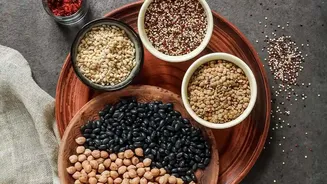
Both quinoa and lentils are celebrated for their ease of preparation. Quinoa generally requires a good rinse under cold water to remove its natural coating, called saponins, which can taste bitter. It typically cooks in about 15-20 minutes, with a ratio of one part quinoa to two parts water. Lentils, especially split varieties like red lentils, can cook even faster, often in just 5-7 minutes, and don't require presoaking. Whole lentils take about 15–20 minutes. Both are incredibly versatile. Quinoa's fluffy texture makes it a great substitute for rice, a base for salads, or an addition to breakfast bowls. Lentils are a classic in soups, stews, and curries, and can also be used as a meat substitute in dishes like tacos or shepherd's pie.