




A Shared Vision for the Moon
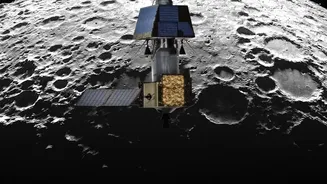
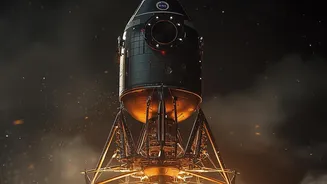
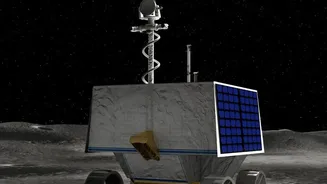
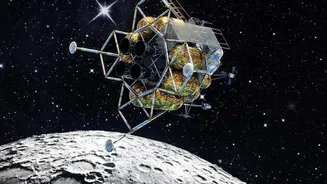
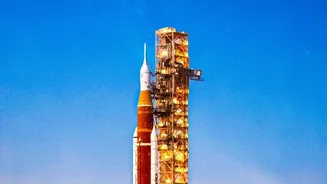
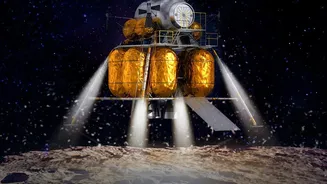
NASA's Artemis program, which aims to establish a sustainable human presence on the Moon, is perhaps the most significant area of converging interests. India became a key signatory of the Artemis Accords in 2023, signaling a strategic shift towards collaborative
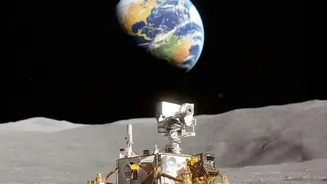
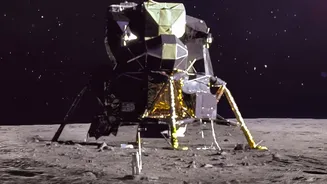
space exploration. This partnership provides a framework for Indian and American space agencies to align their lunar ambitions. Just this month, in August 2026, NASA formally invited ISRO to participate in its ambitious Moon Base program. This invitation, extended during the India-US Civil Space Joint Working Group meeting in Bengaluru, deepens a partnership that goes beyond simple agreements. For India, whose own Chandrayaan missions have achieved remarkable success, this collaboration offers access to shared data, advanced mission protocols, and a role in shaping the future of lunar governance. It directly supports India's long-term goals, including landing an Indian astronaut on the Moon by 2040.
NISAR: A Joint Eye on Planet Earth
The most concrete example of this powerful collaboration is the NISAR (NASA-ISRO Synthetic Aperture Radar) mission. Launched in July 2025, this joint Earth-observing satellite is a technological marvel and a testament to the partnership. NISAR is the first satellite to use two different radar frequencies (L-band from NASA and S-band from ISRO) to monitor changes on our planet’s surface with unprecedented detail. As of mid-2026, the mission is in its science phase, with both agencies releasing data. For India, NISAR is a game-changer. Its data will provide critical insights for managing natural disasters like earthquakes and landslides, monitoring agricultural health, tracking Himalayan glaciers, and understanding the broader impacts of climate change. ISRO has made its S-band data available through the Bhoonidhi portal, empowering Indian scientists and policymakers with vital, actionable information about our home planet.
Exploring the Solar System, Side-by-Side
Beyond the Moon, the quest to understand our solar system offers more ground for synergy. While NASA's ambitious Mars Sample Return mission faces its own set of complex challenges, the scientific goals resonate deeply with ISRO's own celebrated Mars Orbiter Mission (Mangalyaan). Both agencies are driven by the fundamental question of whether life ever existed on the Red Planet. Further out, NASA’s Europa Clipper mission, which launched in late 2024, is currently cruising towards Jupiter’s icy moon, Europa. As of August 2026, the spacecraft is on course for a crucial Earth gravity assist in December that will slingshot it toward the outer solar system. Its goal is to determine if Europa's subsurface ocean has the conditions for life. The learnings from such a mission—from deep-space communication to developing radiation-hardened instruments—provide invaluable data for the entire global scientific community, including Indian researchers planning future interplanetary voyages.
Inspiring the Next Generation
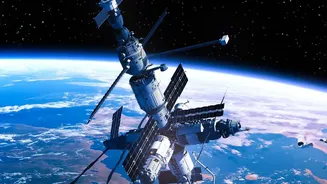
Ultimately, the importance of these missions extends beyond hardware and data. They represent a shared human ambition and serve as a powerful source of inspiration. High-profile collaborations like NISAR and the Artemis Accords create tangible opportunities for Indian engineers, scientists, and students. They foster an environment where Indian talent can contribute to and lead in cutting-edge global projects. The sight of an Indian astronaut on a NASA-partnered mission to the International Space Station in 2025 was a powerful moment, and the invitation to join the Moon Base program suggests even deeper human spaceflight cooperation is on the horizon. As India pursues its own 'Bharatiya Antariksh Station' and crewed missions, the lessons learned from NASA's decades of experience become a vital resource. This collaboration ensures India is not just a participant but a leader in the next chapter of space exploration.