







The Living Wall of Defence
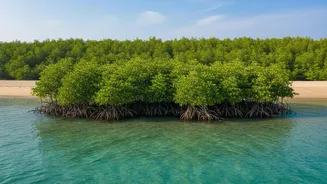
Mangroves are nature’s own coastal engineers. Their dense, tangled root systems act as a formidable 'bio-shield'. When a cyclone-driven storm surge or a tsunami wave crashes ashore, these roots do something a concrete wall cannot: they absorb and dissipate
the energy. They slow down the water, reduce wave height, and trap sediment, which stabilises the shoreline and prevents erosion. Studies following events like the 1999 Odisha super cyclone showed that villages sheltered by healthy mangrove forests suffered significantly less damage than those left exposed. This natural infrastructure is not only effective but also self-sustaining, making it a critical tool for climate resilience.
A Coastline Under Pressure
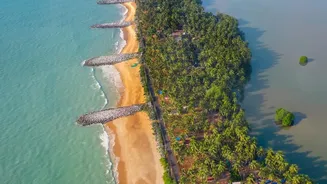
India's eastern coast, home to millions, faces a dual threat. The Bay of Bengal is a hotspot for tropical cyclones, and rising sea levels exacerbate the risk of flooding and land loss. Historically, vast mangrove forests provided a natural buffer. However, decades of deforestation for shrimp farming, agriculture, urban development, and pollution have left many coastal areas dangerously vulnerable. The very shield that protected communities was being dismantled, increasing the risk to life, property, and livelihoods with each passing storm season.
The Power of Community Action
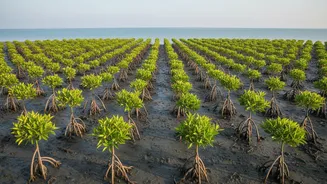
In villages across Odisha, Andhra Pradesh, and Tamil Nadu, local communities are reversing this trend. They are leading afforestation drives, turning degraded mudflats back into thriving forests. In places like Bichitrapur in Odisha, villagers have taken charge of planting and maintenance, combining their traditional knowledge with scientific guidance from government and NGO partners. These initiatives often see women at the forefront, forming self-help groups and committees that manage nurseries, select appropriate species for local soil salinity, and monitor the growth of the saplings. This community ownership is the key to success, ensuring the long-term survival of the new forests. Projects by organisations like the M.S. Swaminathan Research Foundation have shown that involving villagers as primary stakeholders ensures the projects are sustained.
More Than Just a Shield
The benefits of mangrove restoration extend far beyond storm protection. These forests are vital nursery grounds for fish, prawns, and crabs. As the mangroves return, so does marine life, leading to increased catches for local fishermen and bolstering food security. For example, in the Pichavaram region of Tamil Nadu, restoration efforts are directly linked to the livelihoods of over 300 fishing households. Furthermore, these projects create new economic opportunities. Villagers earn income from nursery raising and planting work. In some areas, new ventures like mangrove-based beekeeping and eco-tourism are providing sustainable livelihoods, creating a powerful economic incentive for conservation.
From Saplings to Sanctuaries
Restoring a mangrove ecosystem is a long-term commitment. It takes years for saplings to mature into a protective forest. The journey involves careful site selection, understanding tidal flows, and continuous monitoring to ensure high survival rates. Collaboration is crucial. Successful projects, such as those under the Enhancing Climate Resilience of India's Coastal Communities (ECRICC) initiative, demonstrate the power of partnership between local communities, forestry departments, and organisations like the UNDP. By blending scientific expertise with local knowledge, these efforts are not just planting trees; they are rebuilding entire ecosystems. This community-led model is now seen as a scalable and effective strategy for climate adaptation across India's vast coastline.